Russia has fundamentally revised its aerial attack tactics against Ukraine, shifting to the mass deployment of jet-powered drones 'Geran-4' and 'Geran-5'. According to RBC-Ukraine, the main direction of strikes has become Kyiv and the Kyiv region. In September, according to available information, the Russian Federation is preparing a series of combined attacks using missiles and drones simultaneously; warehouses in several regions and energy facilities are under threat. It is in this context that the Ukrainian command is forced to restructure the entire anti-drone system, since conventional means against classic 'Shaheds' either do not work or work with significantly reduced effectiveness against jet-powered models.
Technical specifications: what makes jet drones a different category of target
The key difference between jet 'Gerans' and traditional gasoline-powered 'Shaheds' is speed and flight altitude. The 'Geran-4' reaches a cruise speed of about 320 km/h and can climb to an altitude of up to 4 km. The significantly larger 'Geran-5' flies at a speed of 450 to 600 km/h and climbs to an altitude of up to 6 km. For comparison: the ordinary 'Geran-2' is a slow propeller aircraft that Ukrainian air defense intercepts with an effectiveness exceeding 90%. Jet models, by contrast, push the target out of the reach of a significant portion of the relatively cheap munitions that have become the backbone of the fight against classic 'Shaheds'.
Why machine guns and interceptor drones are powerless
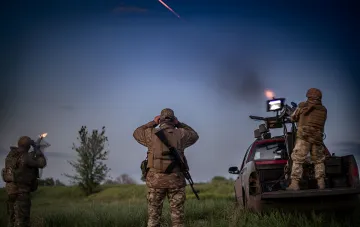
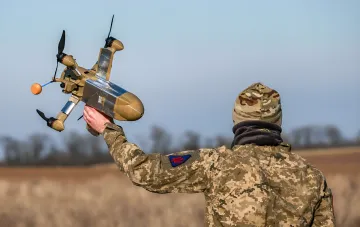
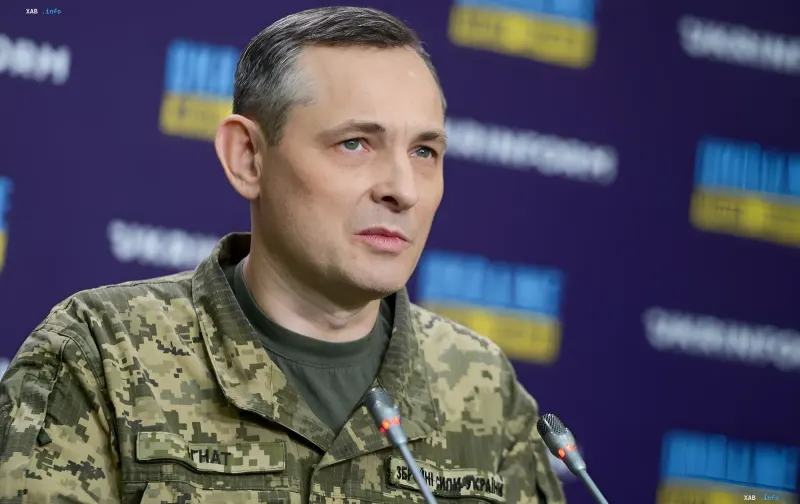
According to Ukrainian military commander Ignat, a typical interceptor drone physically lacks the speed to catch a jet-powered target. Machine gun crews get critically little time to open fire, and at high altitude the target is simply beyond their capabilities. 'Unlike traditional gasoline-powered "Shaheds," jet-powered drones cannot be shot down with machine guns or ordinary interceptor drones,' he emphasized. Even man-portable air-defense systems (MANPADS) face limitations: their engagement ceiling is about 4.5 km, whereas the Russians typically fly jet-powered aircraft at an altitude of 5 km and above. 'The chances of hitting jet-powered drones with MANPADS are lower,' Ignat explained, adding that only in rare cases, when the UAV flies low and slowly, interception with a MANPADS is possible — such episodes have already been recorded.
What Ukrainian military personnel are using now
First and foremost, aviation and surface-to-air missile systems are being deployed to counter jet-powered 'Shaheds'. Pilots intercept such drones not only with missiles but also with aircraft cannons. At the same time, as Ignat notes, aviation cannot operate simultaneously in the same zone where ground-based SAM systems are active — depending on weather conditions and the tactical situation, the command makes rapid decisions on which means to apply and where. In effect, the mass use of jet-powered drones shifts the fight against 'Shaheds' from the relatively cheap tier of air defense to a significantly more expensive and simultaneously more scarce one.
Missile shortage and interception statistics
Ukraine faces an acute shortage of guided air-defense missiles not only for Patriot systems but also for NASAMS and IRIS-T SAM systems, as well as RIM-7 missiles for FrankenSAM complexes. 'The military-political leadership is doing everything possible to ensure that partners provide us with more protective means — guided air-defense missiles for short- and medium-range systems, air-to-air aircraft missiles of various types, especially on the eve of winter,' Ignat stated. The overall interception rate of jet-powered UAVs, according to his assessment, is just over 60%. At the same time, in individual attacks the result was higher: on September 1, the Air Force reported that of the 72 jet-powered drones launched during the day, 57 were shot down or suppressed — almost 80%.
New interceptors and the task for autumn
On August 30, President Volodymyr Zelenskyy stated that the level of damage from Russian UAVs of all types must be brought to over 90%, specifically naming jet-powered drones as the most difficult target. Defense Minister Hennadiy Murchak reported that Ukraine already has four types of potential interceptors capable of shooting down jet-powered 'Shaheds,' and all of them have passed field trials. Work is now underway to bring these developments to the required level as quickly as possible. The task for the autumn period is to raise the effectiveness of drone countermeasures even further and compensate for the shortage of Western missiles with homegrown solutions.
Contradictory data
No significant discrepancies in the figures were found in the provided sources. At the same time, it is worth noting the difference between two indicators of jet-drone interception: Ignat's overall assessment — 'just over 60%' — and the result of the specific attack on September 1 (57 out of 72, or about 79%). These data do not contradict each other: the first figure reflects the average effectiveness over a period, the second — the result of one specific day, in which conditions were probably more favorable for air defense. The difference between 60% and 90%+ (effectiveness against traditional 'Shaheds') clearly demonstrates how much more difficult the task is with jet-powered models. No separate contradiction in drone specifications between sources was found.