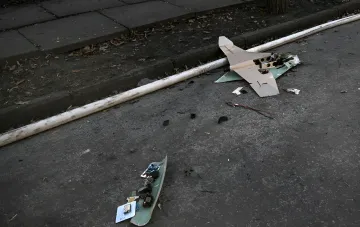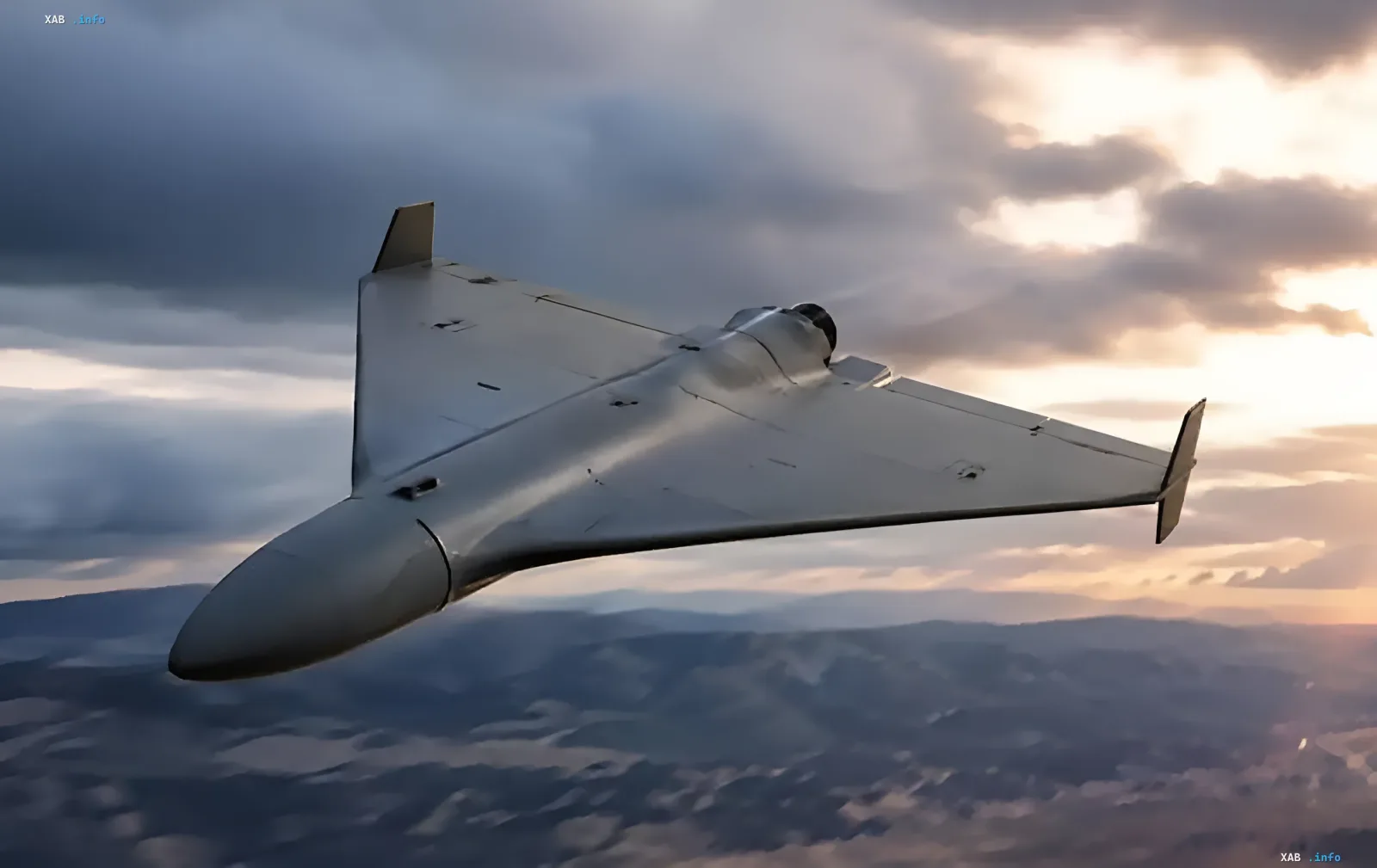
Serhiy "Flash" Beskrestnov, an independent presidential adviser of Ukraine on the development of defense technology, stated that Russia has moved to an industrial scale of deploying jet-powered strike drones against Ukrainian territory. According to his assessment, around 1,500 such devices attacked Ukraine in July 2026, and in August the figure already exceeded 2,500. "Jet-powered Shaheds are launched at Ukraine practically straight from the factory," he emphasized, pointing out that there is virtually no time gap between production and combat use on the enemy's side.
Industrial scale of attacks
According to Beskrestnov, the dynamics of jet drone use show steady growth: if a month ago the volume of attacks was around 1,500 devices, then by the end of August the figure exceeded 2,500. The adviser interprets this number as evidence that the adversary has brought production and launches to a conveyor-belt level, where drones are not stockpiled in warehouses but immediately go into combat once assembly is complete.
Launches "off the line"
The key point of the statement is the minimization of the logistical window between the factory and the target. In Beskrestnov's assessment, it is precisely this model that allows Russia to maintain a high tempo of strikes even with a limited stock of finished equipment: each produced device becomes a combat asset almost immediately. In his words, this changes the nature of the attacks and requires the air defense system to operate in a mode of continuous, rather than episodic, interception.
Strategy of wave strikes on Kyiv
At the time of the statement, according to the outlet, Russia had been continuously attacking Kyiv and the Kyiv region with jet-powered drones for the fourth day in a row. Andrii Kovalenko, head of the Disinformation Counteraction Center, explained the adversary's tactics by noting that launches are carried out in small waves rather than in a single massive strike. In his words, the adversary lacks the resources to deploy a large number of drones simultaneously, so the goal of the wave attacks is to paralyze the capital, exhaust air defense assets, and exert psychological pressure on the population.
Contradictory data
The statements of Ukrainian officials show a difference in emphasis. On the one hand, Beskrestnov speaks of thousands of devices going into attack "practically from the factory," indicating large-scale industrial production. On the other hand, Kovalenko characterizes the launches as a "small number" of drones delivered in waves precisely because the adversary lacks the resources for mass deployment. Both versions agree that the attacks are continuous in nature, but they diverge on the actual volume of equipment: one source underscores the industrial scale, while the other highlights the limited, wave-like nature of the strikes. Independent verification of the exact production and launch figures is currently unavailable.
How Ukraine intends to respond
In public comments, the Ukrainian side links its countermeasures to the need to scale up its own interception and production capabilities. According to reports, the emphasis is placed on expanding the ability to shoot down jet-powered drones and adapting air defense to the continuous nature of the attacks, in order to reduce the attrition effect the adversary is counting on.