Kaja Kallas, the EU High Representative for Foreign Affairs and Security Policy, publicly accused Alexander Lukashenko's regime of using illegal migration as a tool of political pressure on Europe, naming Lithuania as one of the key targets of such activity. According to RBC-Ukraine, she wrote this in a post on the social network X. In Kallas's words, the security of Lithuania's borders is a "shared European responsibility," and European countries must stand up to the use of migration as a weapon by supporting EU states that face the actions of the Belarusian regime.
Tunnels as a sign of organized support
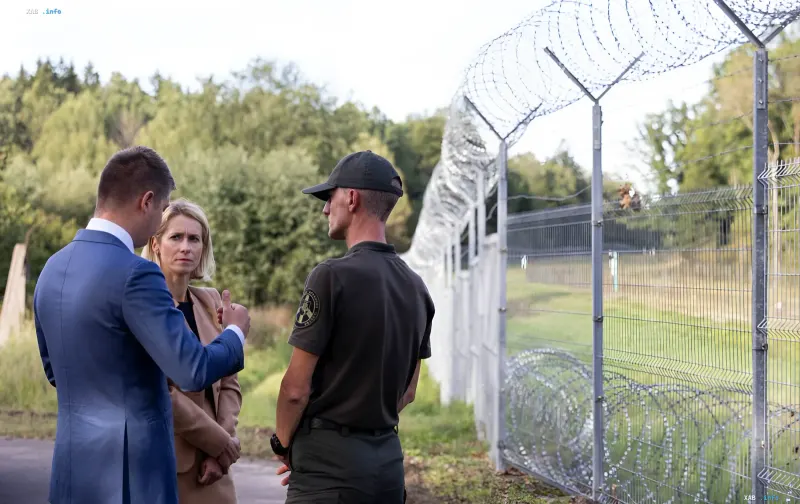
The central argument in Kallas's statement was the migrant-smuggling infrastructure. She noted that "the sophistication of the tunnels used to smuggle migrants indicates organized support and is strong evidence that Minsk is aiding this effort." The context confirms the scale: as late as August 2026, a third attempt to dig a tunnel from Belarus into Lithuania was recorded, and since the beginning of the year the Lithuanian border service has already counted 12 attempts to enter the country illegally through underground passages being dug from Belarusian territory.
"Eastern Flank," sanctions and engineering measures
In response to the described actions, Kallas called for accelerating the implementation of the "Eastern Flank Watch" initiative, working closely with NATO, and continuing sanctions pressure on Minsk. Meanwhile, as previously reported, Lithuania is changing its approach to engineering measures on the border: the country's Cabinet of Ministers plans to establish a new security zone, including by creating wetlands on the border with Belarus and Russia's Kaliningrad region.
Contradictory data
The parties' assessments show a notable divergence in interpreting what is happening. Official Vilnius and Brussels, relying on Kallas's statements, interpret the network of tunnels as evidence of state-organized support for migrant smuggling by Minsk. At the same time, there is no independent public confirmation of the specific mechanisms of such support in the provided materials — the conclusion about "organized support" is the assessment of a European official. Meanwhile, Russian commentators, according to gazeta.ru and life.ru, present the migration pressure not as an independent Minsk strategy, but as a tool capable of distracting the EU from the sanctions agenda and drawing it "seriously" into the conflict. Thus, one side sees a deliberate state program, the other a diversionary tactic, and the factual base (tunnels, border-crossing attempts) is interpreted differently.
Context: a long-standing practice of pressure
The issue of Minsk using migration to pressure EU countries is not new: in previous years Lithuania, Latvia and Poland have repeatedly accused the Belarusian authorities of organizing flows of migrants toward their borders. Kallas's statement fits into this long-term dynamic and, in her words, records an escalation in the form of a shift from ground-level flows to underground infrastructure, which, from the EU's perspective, requires accelerated collective measures on the "eastern flank."