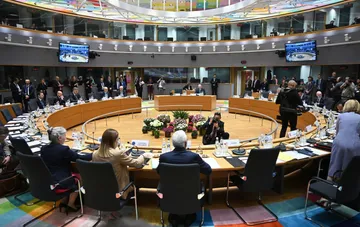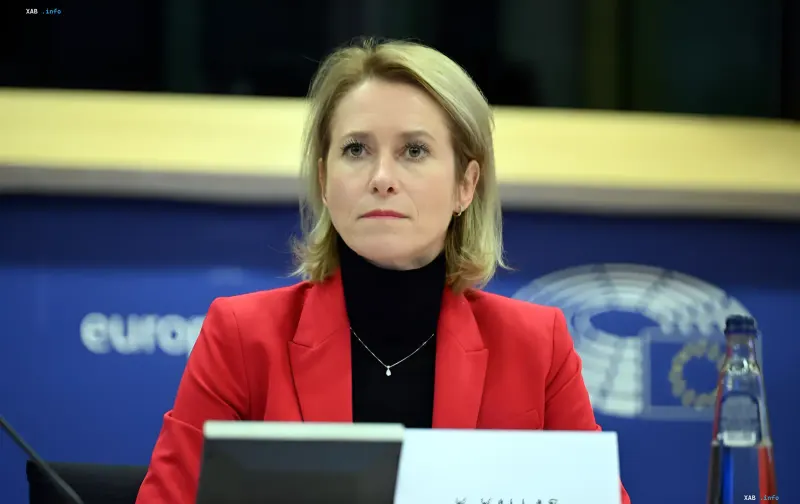
Kaja Kallas, the EU's High Representative for Foreign Affairs and Security Policy, has put forward a proposal to transfer oversight of cases involving the circumvention of sanctions against Russia and Belarus to the European Public Prosecutor's Office (EPPO). This was reported on Thursday, September 11, by two diplomats familiar with the discussions held at a meeting with the permanent representatives of EU member states, which took place on Wednesday in Brussels. Specific legislative initiatives have not yet been detailed, but the idea itself has already been framed as a tool for intensifying pressure on Russia's war machine.
The essence of the proposal: a single prosecutor against "grey" supplies
According to diplomatic sources, the body headquartered in Luxembourg would be tasked with investigating the supply of sensitive goods that could potentially be used within Moscow's military infrastructure, as well as money-laundering operations carried out for the benefit of the Kremlin. The EPPO's remit would also cover market participants who, within the EU, violate the rules on cooperation with sanctioned Russian and Belarusian entities or engage in prohibited transactions. In this way, the prosecution would gain a tool for pursuing not only the ultimate beneficiaries but also the intermediaries providing logistics and financial support for "grey" schemes.
The fragmentation problem: 27 approaches versus a single regime
The key argument in favor of centralization is the chronic fragmentation of law enforcement. Currently, the application of international sanctions is hampered by the diversity of national legal frameworks and the differing approaches of prosecutorial authorities in the 27 capitals. The same transit contract or crypto-asset transaction may be classified differently in Berlin, Paris, and Warsaw, creating "sanctions loopholes" and weakening the deterrent effect. Transferring powers to the EPPO is intended to eliminate this asymmetry, ensuring a uniform standard of evidentiary requirements and procedural safeguards.
Expanding the mandate: from organized crime to sanctions
Today, the European Public Prosecutor's Office investigates serious organized crimes that directly affect the EU's financial interests: money laundering, corruption, and cross-border fraud. The application of international sanctions would be a significant, yet qualitatively new, addition to its powers. Experts note that sanctions cases require specific expertise in export control, banking compliance, and tracking shadow logistics chains — competencies that the EPPO is developing within its current practice but which will require additional regulatory codification.
Context: the 21st package and a cumulative effect of 1.3 trillion euros
Kallas's proposal came against the backdrop of the EU Council's recent adoption of the 21st sanctions package against Russia, approved on July 23, 2026. In terms of scale, it was the largest in four years: 218 individuals and entities were placed under restrictions, with the measures targeting Russia's banking sector, crypto platforms, "shadow fleet," and oil industry. In a separate statement provided to DW, Kallas estimated the cumulative economic impact of Western sanctions on Russia at 1.3 trillion euros, emphasizing that further tightening of enforcement is at least as important as expanding the list of sanctioned targets.
What comes next: from idea to text
At the time of publication, no specific legislative proposals, timelines for introducing directives, or amendments to the EPPO regulation had been announced. Diplomats confirmed that the discussion is at the conceptual stage, and formalizing the initiative will require coordination with the European Parliament, the EU Council, and the prosecution office in Luxembourg itself. Nevertheless, the very fact that the topic has been raised at the level of the committee of ambassadors indicates that Brussels views the centralization of sanctions enforcement as a priority direction for the coming months.