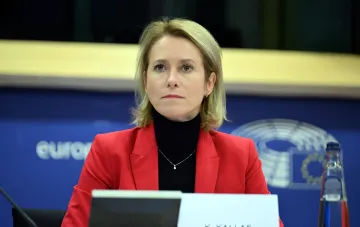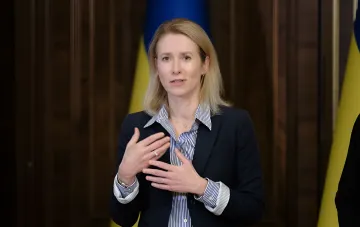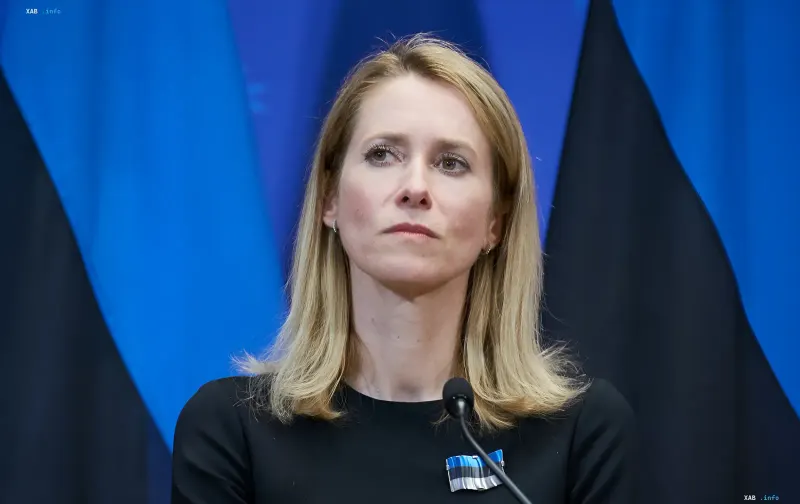
Ahead of the European Union leaders' meeting in Dublin on November 13, EU High Representative for Foreign Affairs and Security Policy Kaja Kallas issued a sharp warning to European partners. According to her, Moscow is purposefully trying to shift the focus of future negotiations to end the war against Ukraine onto the issue of European security, presenting Russia as a party allegedly in need of additional guarantees. «Focusing on Russia's demands regarding European security architecture risks distracting attention from a ceasefire and falling into Moscow's trap. As long as Russia holds to its maximalist demands, we must stick to our own», stated the head of European diplomacy.
«One Aggressor and One Victim»
Kallas urged European leaders not to lose sight of the root cause of the conflict and not to allow the Kremlin to change the negotiation agenda. «We have one aggressor and one victim, and the aggressor has nothing to worry about regarding its security», she emphasized. In her assessment, Moscow's attempt to impose a discussion on its own security is a tool to distract from the ongoing aggression against Ukraine and must not become the basis for compromises.
Moscow's Demands: From 1997 Positions to Finland's Exit from NATO
Earlier, media reported that Russia is once again demanding that NATO withdraw its forces to the positions the Alliance held in 1997. This demand is viewed as part of a broader campaign to revise the entire European security system. Bild, in turn, reported that to end the war in Ukraine, Russia demands Finland's withdrawal from NATO and the alliance's refusal to station military bases in the Baltic states. These statements, if confirmed, significantly expand the scope of Moscow's demands and affect the sovereign decisions of specific states.
Kremlin Denial and Peskov's Stance
Kremlin spokesman Dmitry Peskov denied the Bild publication, stating that no such conditions were put forward. At the same time, he had previously made it clear publicly that Russia wants NATO to document its position on the non-expansion of the Alliance to the east. Thus, even while denying specific formulations from Bild, Moscow's general line—demanding formal guarantees from NATO—remains unchanged and is confirmed at the level of official statements.
Ukraine's Position: The Continent's Security Depends on the War's Outcome
Ukrainian President Volodymyr Zelenskyy, commenting on the issue of Europe's future security architecture, stated that it directly depends on when and how Russia's war against Ukraine ends. According to him, Ukraine is already the continent's defensive line, and any negotiations on European security that fail to take this fact into account will be incorrect. This position coincides with Kallas's assertion that the aggressor must not be allowed to dictate the terms of the discussion.
Call for Europe's Active Participation in Negotiations
Kallas also emphasized that European countries must be present at any conflict settlement negotiations «not just to be present, but to influence the outcome». This statement effectively establishes the EU's position that Europe does not intend to play a passive role in determining the conditions for ending the war and is ready to defend its own interests within the negotiation process. The EU leaders' meeting in Dublin on November 13 served as a platform where this position was publicly cemented before the start of a new round of diplomatic contacts.