The Kyiv International Institute of Sociology (KIIS) has published the results of a nationwide poll in which the majority of respondents rejected a peace scenario involving the withdrawal of Ukrainian troops from government-controlled areas of Donbas and handing them over to Russian control in exchange for security guarantees from the US and Europe. The survey was conducted via telephone interviews from October 8 to 16, 2026, covering 1,031 respondents in government-controlled Ukrainian territory; the formal sampling error does not exceed 4%. According to the institute, sociologists have been asking respondents about this peace condition regularly since January 2026, allowing them to track the dynamics of public sentiment.
How the Question Was Formulated
In the survey, respondents were asked to evaluate a specific conflict-resolution condition: Ukraine withdraws its troops from government-controlled areas of Donbas, notably Kramatorsk and Sloviansk, and these territories come under Russian control. In return, the US and Europe provide Ukraine with security guarantees. Sociologists view this scenario as one of several possible settlement options and have recorded attitudes toward it throughout 2026, comparing responses across consecutive waves.
Main Results
According to the current wave, 61% of those polled called such a condition completely unacceptable. Another 35% of respondents consider a similar option possible, though most characterize it as a difficult decision. Only 7% of survey participants would agree to accept such a condition without hesitation, while 4% remained undecided. Thus, an overwhelming majority rejects the scenario of ceding Donbas in exchange for external security guarantees.
Dynamics: Before and After the "Diesel Agreement"
Since the survey ran from October 8 to 16, sociologists were able to compare responses gathered before the announcement of the so-called "diesel agreement" and subsequent pressure on Ukraine with those gathered after it. Among respondents polled on October 8–9, 57% were strictly against this condition, compared to 62% among those polled on October 10–16. A KIIS press release emphasizes that formally this difference is within the margin of error; however, according to sociologists' assessments, the pressure campaign on Ukraine did not lead to a greater willingness to accept the respective proposal. Compared to late July and early August 2026, no noticeable changes in sentiment have been recorded either.
Regional Picture
Across all regions of Ukraine, half or a majority of respondents reject the proposed condition. The highest share of those ready to approve it was recorded in the east, predominantly in the Kharkiv region: 45% of respondents there would agree, while 51% are strictly against. In other regions, notably the South and the Lower Dnieper region, the share of those strictly against ranges from 60% to 66%. Formally, the maximum figure was recorded in the capital: despite the bombing campaign against Kyiv using ballistic missiles and attack drones, 66% of the city's residents are strictly against such a proposal, the highest reading among all regions.
Context: Kyiv's Statements on Pressure
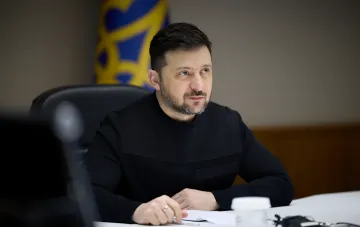
The survey results were published amid statements from Ukraine's leadership regarding external pressure. President Volodymyr Zelenskyy previously noted that Washington's decisions look like pressure aimed at forcing Ukraine into capitulation; among such steps, he cited restrictions on Starlink operations and delays in missile supplies for Patriot systems. According to RBK-Ukraine, presidential advisor Serhii Beskrestnov, known as "Flash", reported that military Starlink was restricted in Ukraine at speeds exceeding 160 kilometers per hour, noting that there was no prior warning, which he claimed disrupted several missions. Against this backdrop, KIIS data record a steady willingness among the majority of the population to reject concessions on Donbas in exchange for security guarantees.