Despite the many years he spent in St. Petersburg, Taras Shevchenko remained a passionate devotee of simple Ukrainian cuisine until the end of his life. According to the recollections of his contemporaries and friends, in particular Varvara Repnina, the poet's absolute gastronomic weakness was borscht with dried crucian carp. It was this dish, as those close to Kobzar testified, that he preferred over other soups, and today Styler — the RBC-Ukraine entertainment project — publishes its traditional recipe so that readers can recreate the flavor familiar to the poet himself.
Kobzar's Gastronomic Weakness
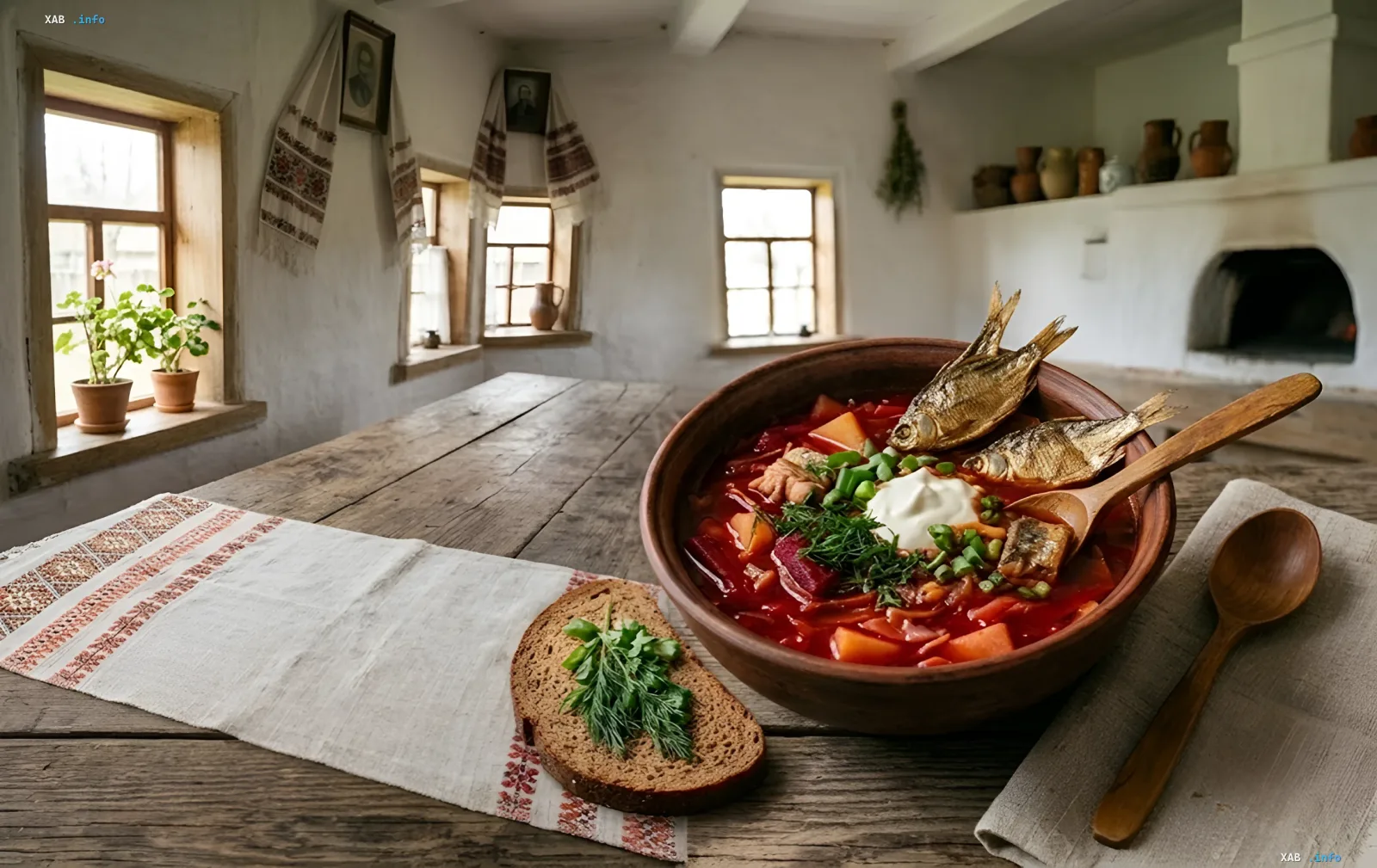
Borscht with dried crucian carp was no delicacy: it was a simple yet highly nutritious dish, often prepared as a fast-day meal. According to descriptions, the main secret lay in the way the fish was prepared — it was dried on straw in the oven, which gave the broth a deep smoked-fish aroma. It was precisely this nuance, rather than the assortment of vegetables, that made the soup recognizable and "homely" in Shevchenko's perception, a man accustomed to the peasant cuisine of his native land.
The Roots of the Recipe in the Cherkasy Region
The recipe was traditional for the Cherkasy region, Kobzar's homeland, where borscht with dried fish was considered one of the basic dishes of the everyday and fast-day table. Crucian carp, readily available in local waterways, were dried and stored, making it possible to prepare a rich soup even in periods when fresh fish was scarce. This approach explains why the dish took root precisely in the southern and central regions of Ukraine and has been preserved in folk memory to this day.
Step-by-Step Recipe for Borscht with Dried Crucian Carp
The base of the broth is soaked beans, which are set to cook together with dried mushrooms; it is this combination that gives the soup its density and depth of flavor. The beets are cut into thin strips and stewed separately, adding beet kvass or a tomato base to preserve the authentic rich color and a pleasant tang. Once the beans are nearly ready, cubed potatoes are added to the pot, and 10–15 minutes later, shredded cabbage. Separately, finely chopped onion, grated carrot, and parsnip root are sautéed in vegetable oil for aroma, after which the finished sauté, together with the stewed beets, is transferred into the soup.
The dried crucian carp are added 10–15 minutes before the end of cooking: according to descriptions, Shevchenko loved precisely the version in which the fish slowly releases its aroma into the broth, becoming incredibly tender. After the heat is turned off, the borscht must be allowed to "rest" under a closed lid for at least 20–30 minutes — during this time the fish flavor fully unfolds. The dish is traditionally served with fresh herbs, sour cream, and a piece of fresh bread.
Echoes of the Tradition Today
Interest in the recipe is no coincidence: the well-known Ukrainian cook Tatiana Shlihtenko recently reminded her followers of this dish, publishing an authentic recipe for borscht with fried crucian carp and urging them to preserve it and be sure to cook it. In her words, it was precisely this borscht that Taras Shevchenko loved, and in southern Ukraine it is still prepared in home kitchens. In the comments, followers reacted with interest to the old recipe, confirming a steady demand for the return of forgotten national flavors. Previously, Styler had written about other forgotten recipes of Ukrainian cuisine, including zhytomyr-style roast (zharko po-zhytomyrsky)."