Independence Day is a convenient excuse to look at Ukrainian cuisine more broadly than through the familiar trio of “borscht — vareniki — salo.” The country has dozens of regional cuisines, and recipes evolve alongside local ingredients, history, and neighboring cultures. Gathering loved ones around one table and cooking something Ukrainian is a simple way to mark August 24 so that the holiday is felt not only in official events but also on the plate. Below are the dishes that gastronomic publications recommend preparing on this very day.
Borscht: a dish with no single “correct” recipe
It makes sense to start the list with borscht. With meat or without, thick or light, with beans, mushrooms, or prunes — every family may have its own version, which is precisely why the dish is hard to call recipe-“standardized.” In 2022, the culture of preparing Ukrainian borscht was inscribed on the Representative List of the Intangible Cultural Heritage of UNESCO, making it not just a soup but part of an internationally recognized cultural code.
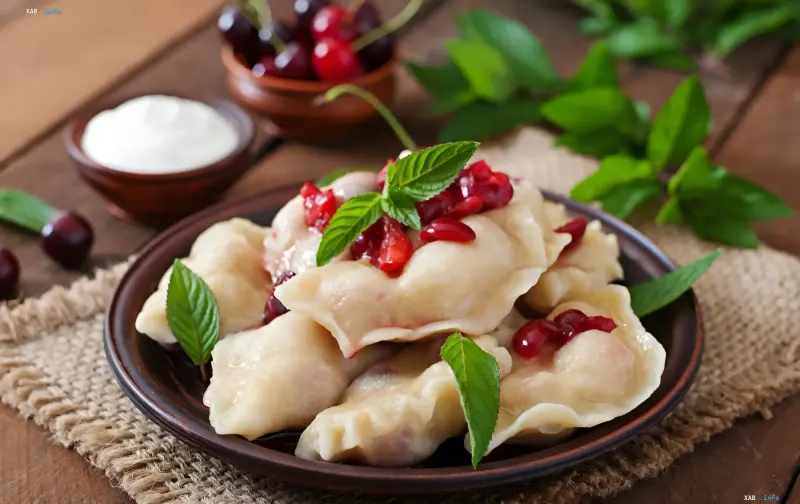
Cherry Vareniki: an August seasonal dessert
August is one of the best months for cherry vareniki: dough, plenty of juicy filling, a little sugar and sour cream yield a dessert that requires no elaborate presentation. If you prefer a savory version, fillings of potato with onion, cottage cheese, or mushrooms work well. Vareniki serve both as the main dish of a festive table and as a reason to argue about whose filling is better.
Carpathian Banosh and Kletski: regional character
Carpathian banosh is a corn porridge traditionally prepared with sour cream or cream and served with brynza cheese and cracklings; modern restaurants offer variations with mushrooms. It is a hearty, expressive dish — creamy, salty, corny, and slightly smoky — a good candidate for those who want to try something Ukrainian but not obvious. Kletski are an example of how a few simple ingredients become a distinct gastronomic category: in Poltava they are eaten with meat, sour cream, cracklings, and sauces, and are also added straight into a bowl of borscht.
Deruny, Kruchenyky, and Kulish: substantial dishes for a feast
Deruny made from potato, onion, egg, and flour require no complicated recipe, but they demand the right balance between a crispy crust and a soft center; they are best eaten immediately, with sour cream or a mushroom sauce. Kruchenyky are meat rolls stuffed with mushrooms, onion, or vegetables, which are braised or baked and easily served by the portion. Kulish, associated with Cossack cuisine, is made from millet in a broth with vegetables, onion, salo, or meat, and works well for a large company, especially outdoors.
Finishing the table: chebureki, Galician syrnik, and a traditional drink
Cheburek is thin, crispy dough with a juicy meat filling, fried to a golden crust; it must be eaten hot and carefully, since the juice inside can be hotter than it looks. For dessert — Galician syrnik: dense, rich, holding its shape well, with possible additions of raisins, zest, or chocolate glaze, served chilled with coffee or tea. The festive table is completed by a traditional drink that is easy to lose among the lemonades, yet it is precisely this drink that puts the final point on a Ukrainian feast.