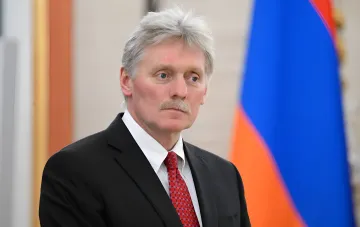
The Kremlin has commented on reports that the European Union is actively forming the composition of a potential negotiating group to end the war in Ukraine. According to RBC-Ukraine, official Russian presidential spokesman Dmitry Peskov stated that Moscow does not intend to set conditions regarding who exactly will join this group, considering such framing of the question 'completely wrong.' Thus, the Russian side has outlined a principled position: the composition of the European delegation is an internal matter for Brussels, not a subject for bargaining.
The Kremlin’s Position: No Conditions on Composition
As RBC-Ukraine reports, Peskov emphasized that Moscow will not dictate to Europeans whom they should include in the negotiating team. According to him, any attempt to tie the group's composition to demands from Russia is the wrong approach to the settlement process itself. The Kremlin is essentially absolving itself of responsibility for which specific European capitals will represent themselves at the negotiating table, shifting this choice onto Brussels and the European states themselves.
Dialogue Instead of Conditions: 'To Understand Their Position'
A key emphasis in Peskov’s statement was placed on the need for direct contact. 'It would be better for us to communicate with the Europeans and understand the extent to which their position can potentially contribute to the peace process,' the Kremlin spokesman stated. This phrasing indicates that for the Russian side, the names on the list are less important than the substance of the position Europeans are ready to voice. In other words, following this logic, Moscow is ready to evaluate European participation based on the substance of proposals rather than the formal composition of the delegation.
Norway and Finland: Absence Is Not Critical
The Kremlin separately commented on the composition of the forming group, noting that the absence of representatives from Norway and Finland—countries that previously made contact with Moscow—does not trouble the Russian side 'too much.' This statement can be interpreted as a signal that Russia does not tie its negotiating expectations to specific Scandinavian capitals and is ready to work with whatever European composition Brussels deems appropriate to send.
Context: The EU Officially Joins the Negotiations
Peskov’s statement came against the backdrop of the European Union's decision to officially join the negotiations to end the war in Ukraine. According to available data, for the next round of negotiations involving Kyiv and Moscow, Brussels plans to send national security advisors from five European countries at once. Thus, the European side is effectively shifting from an observer role to direct participation in shaping the negotiating architecture, which prompted the reaction in the Kremlin.
The Ukrainian Side: Security Architecture and Prisoner Exchange
Concurrently, Ukrainian President Volodymyr Zelenskyy revealed new details about upcoming peace talks involving European partners. Specifically, he spoke about a new security architecture, prospects for NATO membership, and preparations for a large-scale prisoner exchange in the format of 'over a thousand for over a thousand.' The combination of these statements shows that both sides—European and Ukrainian—are building their negotiating agenda around security issues and humanitarian steps, whereas Moscow, according to Peskov, prefers to hear the European position first before evaluating its contribution to the peace process.