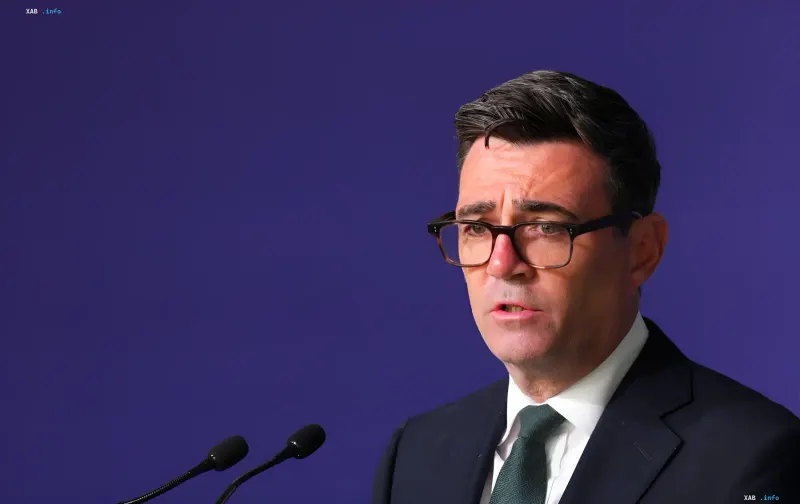
Advisor to the President of Russia, Andrey Fedorov, publicly acknowledged the possible use of so-called "semi-military actions" against the United Kingdom if London does not stop its support for Kyiv. According to RBK-Ukraine, citing the British publication The Standard, he made these remarks in response to journalists' questions clarifying the nature of Moscow's possible "reaction" to the recent steps taken by the British government. In Fedorov's words, "sooner or later there may be not only a verbal, but perhaps some visible reaction from Russia to the actions of the United Kingdom," and among the arsenal of such measures he named a "technical reaction," "hacker attacks from an unknown source," and, what caused the greatest resonance, "semi-military actions," which, by his own admission, he "cannot 100% rule out."
Context: Burnham's Visit to Kyiv and the Storm Shadow Decision
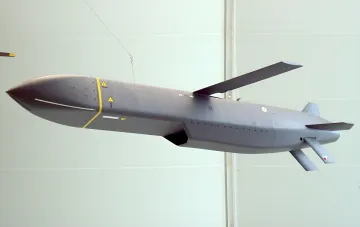
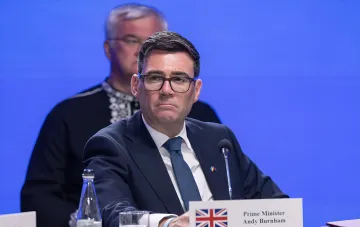
The threat came almost immediately after a statement by the Prime Minister of the United Kingdom, Andy Burnham, made on 24 August in Kyiv on the occasion of Ukraine's Independence Day. Burnham announced that London had authorized Ukraine to produce Storm Shadow missiles on its own territory: the transfer of the relevant technologies, he said, had already been approved, and defense enterprises would be brought into the process. On the same day in Kyiv, the prime minister publicly pledged that Britain would strengthen Ukraine's air defense ahead of winter. It was these statements, it seems, that triggered the rhetoric in the Kremlin.
"Unknown Sources": How the Threat Is Formulated
Answering a direct question from journalists on whether his speech implied a possible military attack by Russia on British factories directly on the territory of the United Kingdom, Fedorov deliberately shifted the focus: "It may not be Russia that attacks them, but… from unknown sources." Thus, the Kremlin advisor did not state outright that an official strike on NATO territory was being prepared, but he also did not rule out attacks on British enterprises producing drones for Ukraine, attributing them to anonymous perpetrators. This formulation allows Moscow to simultaneously transmit a threat and maintain formal denial of direct responsibility.
Contradictory Data
There are notable inconsistencies in the statements of the parties and in the very logic of Fedorov's remarks, which is important to record. On the one hand, the Kremlin advisor lists measures in ascending order — from a "verbal" reaction and "hacker attacks" to "semi-military actions," implying escalation up to an armed confrontation with a NATO member. On the other hand, he insists that any strikes on British factories would be carried out by "unknown sources," not Russia, and that the "hacker attacks" would be "not at the official level." This results in a double position: the threat is addressed to the United Kingdom, but its execution is attributed to anonymous actors. Moreover, in the same stream of statements on 24 August, the Kremlin threatened strikes on Ukrainian enterprises producing long-range weapons and announced "revenge" on Ukraine for attacks on the Russian marketplace OZON — that is, the public rhetoric is simultaneously directed at both Kyiv and London, creating a mismatch over who exactly is considered the object of the "visible reaction."
Parallel Kremlin Statements on 24 August
Fedorov's rhetoric was not an isolated episode. On the same day, 24 August, the Kremlin threatened to strike Ukrainian enterprises producing long-range weapons, while representatives of Vladimir Putin's entourage announced "revenge" on Ukraine for attacks on the Russian marketplace OZON. The totality of these statements, made on the day of the British prime minister's visit to Kyiv, points to an attempt by Moscow to tie together into a single narrative London's support for Ukraine, the production of Storm Shadow missiles, and attacks on Russian civilian infrastructure.
What This Means for Escalation
From an analytical standpoint, the key significance lies not in the specific list of measures but in the very fact that "semi-military actions" against the United Kingdom have for the first time been voiced by a senior Kremlin advisor in the public sphere. Even with the caveat about "unknown sources," such a formulation removes the previously taboo nature of discussing a direct confrontation with a NATO member and creates space for further escalation of rhetoric. For the United Kingdom and its allies, this is a signal that the authorization for Storm Shadow production in Ukraine is regarded in Moscow as crossing a "red line," beyond which, in Fedorov's words, a "visible reaction" may follow in forms that the Kremlin deliberately leaves undefined.