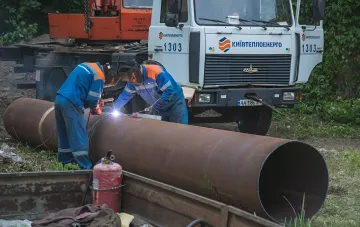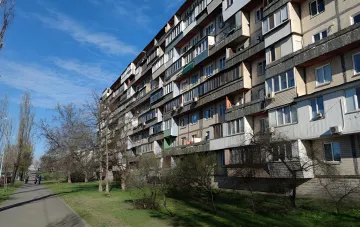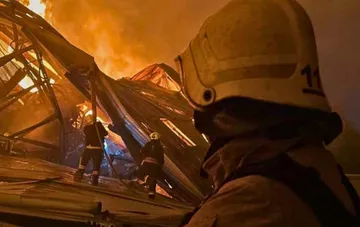
Kyiv has completed 80% of the planned work to prepare the city for the 2026/2027 heating season. This was announced by acting First Deputy Head of the Kyiv City State Administration (KMM), Petr Panteleiev, during the roundtable "Energy Resilience of Ukrainian Communities: Readiness for Winter 2026/2027," held in September 2026. According to him, under the Kyiv Energy Resilience Plan, projects for planned repairs and maintenance of engineering networks have been implemented, and stockpiles of fuel and necessary equipment have been formed. "We need to adapt to a different reality and its risks, learn to manage new projects and algorithms that would ensure energy autonomy," Panteleiev emphasized.
From Generators to Local Power Plants
One of the key changes in the approach to winter 2026/2027 has been the realization that backup power for key water utility facilities, which in previous years was provided by generators, is no longer sufficient. As explained by the KMM, when it comes to facilities with a capacity of 9–10 MW to 20 MW, standard generators physically cannot handle the load. "We essentially need to build a local power plant," the administration noted. That is why the construction of diesel generator sets for the backup of water supply systems has been included in the Energy Resilience Plan. According to Panteleiev, three such sets have already been commissioned, and the completion of construction of the remaining planned facilities is scheduled by the end of 2026.
Expansion of Emergency Response Plans
The second important component of Kyiv's preparation for winter 2026/2027, according to the First Deputy Mayor, is the improvement and expansion of emergency response plans. This is due, as Panteleiev emphasized, to the intensity of enemy shelling, which creates additional risks for the functioning of the city's infrastructure during the cold period. A series of training exercises have been conducted in the capital to prepare personnel and coordinate actions between services. Separate algorithms for assisting people with reduced mobility and citizens requiring continuous medical support have been developed. In addition, the city is forming stockpiles of food products in case food provision needs to be organized, and is also strengthening and optimizing communication channels with Kyiv residents.
Funding and Responsibility
Earlier, Kyiv Mayor Vitali Klitschko reported that the total cost of the capital's Energy Resilience Plan is 37 billion hryvnia. Responsibility for implementing the plan's measures is shared by the city and the state in a 50/50 ratio. Taking into account projects driven by the exceptional specifics of the capital, Kyiv's share is 22 billion hryvnia. According to the publication "Dilo," 12 billion hryvnia has already been allocated for winter preparation. Klitschko also met with representatives of large businesses and agreed on cooperation regarding the preparation of Kyiv for the winter season. Panteleiev emphasized that responding to the potential risks of winter 2026/2027 does not involve simple or universal solutions and requires comprehensive work — technical, legal, informational, and organizational. "This is a challenge for all of us. And everyone at their own level — from an apartment owner to central state bodies — can and must prepare at their own level, and also be able to combine efforts," he stated.
Contradictory Data
No significant contradictions were found between the statements of officials and media data. All four verified sources (RBC-Ukraine, NV, "Dilo," 44.ua) unanimously confirm the 80% readiness figure and the total plan cost of 37 billion hryvnia. The only difference is in the emphasis: RBC-Ukraine and NV focus on Panteleiev's quotes and the progress of work, "Dilo" additionally records the 12 billion hryvnia already spent, and 44.ua highlights the technical aspect of the transition from generators to diesel generator sets. No differences in figures, dates, or facility status were found between the sources.