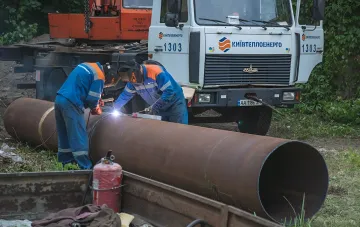
Kyiv Mayor Vitali Klitschko, following an inspection of a municipal nursing home for elderly citizens and persons with disabilities, announced that 60% of facilities permanently housing social service recipients have already been provided with central heating. The capital's mayor emphasized that the connection process is ongoing and municipal facilities are being prepared for potential power outages and other emergencies. The heating season in Kyiv officially began on October 16, 2026.
Status of Heat Supply for Social Institutions
According to the mayor's office, hospitals, schools, kindergartens, and other social institutions are being connected to heat supply first, based on individual requests from their directors. The nursing home inspected by Klitschko has already been connected to central heating. The mayor noted that the city is preparing municipal facilities for winter so that, even under difficult conditions, they can provide residents with heat, food, water, and necessary care. "For people permanently residing in such institutions, the stable operation of all these systems is of critical importance," he stressed.
Backup Power Supply: Generators, Well, and Gas Boiler House
The capital has equipped the nursing home with generators ranging from 10 to 97 kW, its own water well, and a mobile gas boiler house. According to Klitschko, the facility will have the necessary backup power supply to operate refrigeration equipment, food preparation, and passenger and medical elevators. "This is especially important since a significant portion of the residents have mobility impairments," the mayor explained. Thus, even during a complete blackout of the centralized power grid, the facility's basic functions—from storing medicines to moving residents with limited mobility between floors—are preserved.
Vilnius Contribution: 120 kW Solar Panels
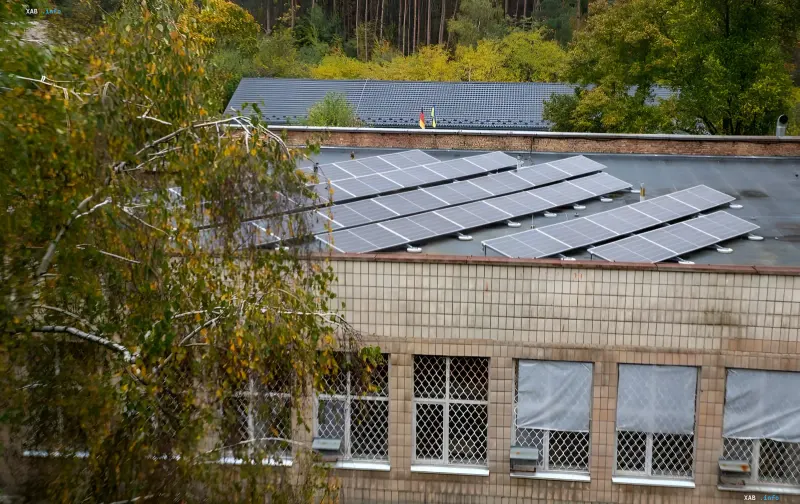
Separately, the Vilnius municipality allocated 80,000 euros for the installation of 120 kW solar panels on the roof of the nursing home. As follows from Klitschko's statement, this generation volume is sufficient to supply two residential buildings and a modular house. Photographs of the facility show rows of photovoltaic modules mounted on the flat roof of a building with a ceramic facade. Solar generation combined with diesel generators and a gas boiler house forms a multi-level energy autonomy system that reduces the institution's dependence on the single city grid.
Residents and Reserve Places
At the time of the inspection, 236 people lived in the nursing home, including 30 internally displaced persons from the Zaporizhzhia region who arrived recently. The facility is also preparing additional places to potentially accommodate other Kyiv residents if necessary. Klitschko emphasized that the city's winter preparation strategy covers not only current residents but also creates buffer capacity for emergency accommodation.
Context: Energy Crisis and the Trend Toward Autonomy
Large-scale preparation of social institutions for blackouts fits into the general trend toward energy independence that swept Ukraine's public and private sectors in 2025–2026. Banks and government programs offer loans for purchasing solar panels, generators, and battery systems, while local authorities increasingly attract international funding to equip critical facilities. The nursing home inspected by Klitschko has become a clear example of how a combination of central heating, backup generators, its own well, and solar generation allows a social institution to function amid multiple power outages.