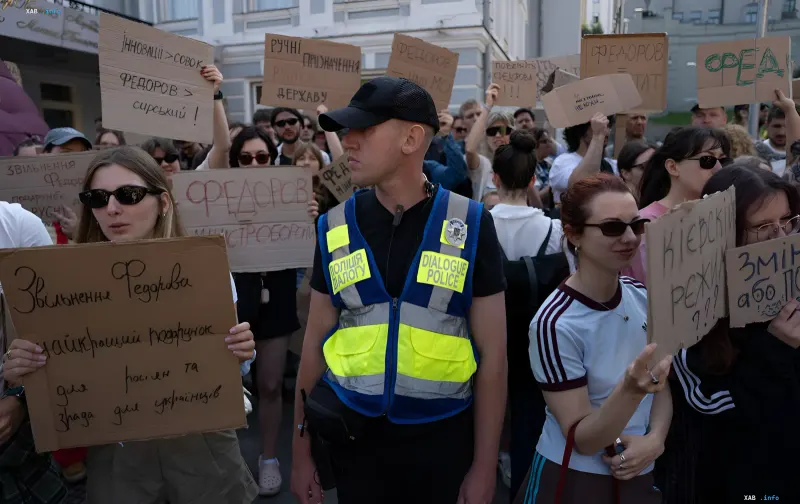
In the center of Kyiv, on August 16, 2026, mass protest actions resumed, timed to the anniversary of the start of a series of rallies in support of former Defense Minister Mykhailo Fedorov. The large crowd of marchers recalled the events of late July of the previous year, when significant personnel reshuffles occurred in the Ukrainian government. Despite exactly one month having passed since the first actions, the protesters' demands remain relevant and unfulfilled by the authorities.
Protesters' Demands: Resignation of Syrskyi and Return of Fedorov
The organizers of the action, in particular Dmytro Koziatynskyi, voiced two key demands that became the leitmotif of all marches over the last month. The first demand — the appointment of Mykhailo Fedorov to the position of Minister of Defense — remains the main slogan. The second demand concerned the dismissal of the Commander-in-Chief of the Armed Forces, Oleksandr Syrskyi. Protesters point out that it was precisely the disagreements between Fedorov and Syrskyi that caused the minister's resignation, as President Volodymyr Zelenskyy had previously stated.
It is worth noting that one of the protesters' demands has already been fulfilled: Oleksandr Syrskyi was replaced by Mykhailo Drapaty. However, as participants of the action note, this did not solve the main problem — the absence of Fedorov in the government. People demand that the president officially nominate Fedorov, and the Verkhovna Rada approve him for the post.
Political Context and Return of the Parliament
The resumption of protests on August 16 has a clear political background. The actions began a few days before the resumption of the work of the Verkhovna Rada. The parliament will gather for a plenary session on Tuesday, August 18, after a one-month break. Protesters hope that under pressure from society and ahead of the new session, the authorities will make concessions and return Fedorov to the Cabinet of Ministers.
According to reporters, the number of people on the streets today is comparable to the preliminary march at the end of July. This indicates that the issue of personnel reshuffles in the defense department remains one of the most painful for Ukrainian society. Posters with inscriptions "Dismissal of Fedorov" and "Kyiv Regime" highlight citizens' dissatisfaction with the current situation.
Contradictory Data
There are discrepancies in the interpretation of the reasons for Fedorov's resignation. The official version of President Zelenskyy boils down to the fact that the cause was disagreements between the minister and the commander-in-chief. However, protesters and a number of independent observers point to deeper systemic problems related to defense management and the transparency of budget expenditures. Some participants of the action claim that Fedorov's resignation was dictated not so much by personal conflicts as by the need to conceal certain aspects of the department's work.
Furthermore, there are inconsistencies in dates and the chronology of events. According to official data, the first actions began on July 16, however, some sources indicate earlier dates for the start of protest activity. There is also confusion regarding who exactly is the initiator of the demands — individual public organizations or a spontaneous citizen movement.
Prospects for the Development of the Situation
In the coming days, it is expected that protests will continue, especially on the eve of the Verkhovna Rada session. If the authorities do not meet the demands of the protesters, the actions may escalate into more massive forms of civil resistance. At the same time, there is a possibility that the government will attempt to compromise, for example, by appointing Fedorov to another position or creating a commission to investigate the reasons for his resignation.
It is important to note that the situation with Ukraine's defense remains critically important, and any personnel changes in the Ministry of Defense will have serious consequences for the country's security. Therefore, the question of returning Fedorov or appointing a new minister will remain at the center of public and political attention.