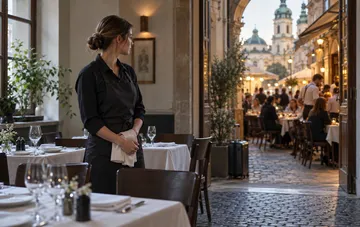
About 20% of restaurants and cafes in Kyiv may suspend their operations for the winter period due to the introduction of new government requirements. According to the latest regulations, by December 4, capital businesses are required to equip their own shelters or safe spaces to continue operating under a yellow threat level, which has proven to be an impossible task for the majority of entrepreneurs.
New Cabinet Requirements and a Dead End for Business
The new government resolution places direct responsibility on restaurant owners for the safety of visitors and staff during air raids. Restaurant market expert Olha Nasonova notes that the state is essentially shifting its functions onto entrepreneurs, most of whom physically cannot meet such strict conditions. The problem is exacerbated by the fact that only 15-17% of capital establishments are initially located in basement premises suitable for adaptation into potential shelters.
Most cafes and restaurants have light partitions made of drywall or aerated concrete, which cannot protect against a blast wave. Even the presence of load-bearing walls or vestibules allows for sheltering employees at best, but certainly not dozens of guests in the dining room. Concluding agreements with nearby municipal shelters also faces legal and logistical obstacles, as the metro or commercial basements in central districts do not provide such an opportunity.
Rising Basement Prices and Unresolved Control Issues
Against the backdrop of new restrictions in Kyiv, demand and prices for basement premises, which previously stood empty even during periods of acute commercial real estate shortages, have sharply surged. Those entrepreneurs who purchased or rented such spaces in advance gained a significant advantage. However, far from every basement meets safety standards, and clear mechanisms for conducting examinations and inspections of premises by state bodies have still not been presented.
Representatives of the restaurant market point to a legal vacuum: it remains entirely unclear who exactly will conduct inspections during air raids, what the penalties and levels of responsibility will be for violators. Business associations are already preparing collective appeals to the authorities demanding a revision of the resolution or clarification of its provisions, offering alternative options for informing clients about nearby shelters.
Winter Freeze and Prospects for the Restaurant Market
Amid the approaching winter and new regulatory barriers, up to a fifth of the capital's public catering establishments plan to go into a temporary freeze. Owners are trying to negotiate reduced rental rates for the winter months with landlords to cut costs on staff maintenance, fuel procurement, and generator operations. This helps protect businesses from complete bankruptcy in hopes of an improvement in the situation by spring.
Experts are also considering options for legally formalizing agreements with visitors, similar to those practiced during the coronavirus pandemic. Such documents could exempt establishments from liability in the event of a client's voluntary decision to stay in the hall during a yellow threat level. Nevertheless, without a constructive dialogue between business and the state, the capital's hospitality industry will face mass closures.