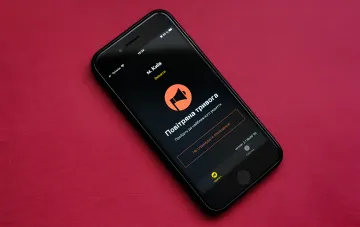
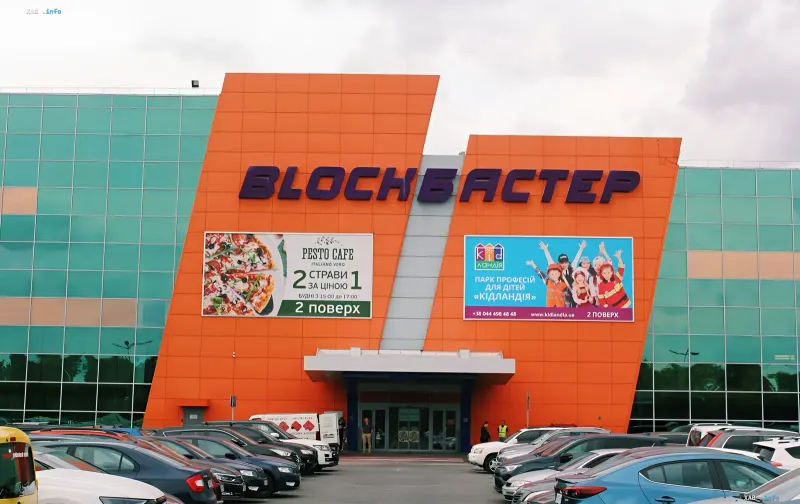
Kyiv has been living under a regime of nearly continuous air alerts for the seventh day in a row, and this is hitting every sphere of urban life, including shopping and entertainment centers. Lavina Mall, Blockbuster Mall, and Mandarin Plaza — the three largest properties of the Mandarin Plaza Group network — shut down during every alert, creating a colossal operational burden on tenants, staff, and security. In an interview with RBC-Ukraine, Alexander Chernitsky, head of the Mandarin Plaza Group board of directors, described the real picture of how the capital's shopping centers operate under conditions where the alert signal can sound up to 11 times a day, with each one lasting 20–30 minutes.
Every Alert — A Full Stop
According to Chernitsky, the damage from the forced downtime is currently impossible to calculate: "It doesn't work that way for us, not day by day." However, the operational costs are obvious. With each signal, the shopping centers close completely: tenants with large show windows begin to close them, some abandon open receipts, some leave their belongings behind. Security is obliged to ensure that no incidents occur in the chaos. Food courts turn into an emergency evacuation zone — visitors who have just sat down to eat are required to leave the premises immediately. Chernitsky admits that sometimes there is resistance from customers who ask to "let me finish eating" or "let me finish my purchase," but safety, in his words, is more important than any commercial interests.
Customer Flow: Different Pattern — Different Outcome
The behavior of visitors during days of prolonged attacks, in the assessment of the head of Mandarin Plaza Group, varies greatly depending on the location of a specific shopping center and its transport accessibility. In properties located near the metro, the logic of waiting in a shelter is more common; in places where people arrive by car, a significant part of visitors immediately leave the city. "Some people cannot afford to just leave, and they wait in the shelter. Some immediately get into their car and drive home," Chernitsky describes. After each alert, some customers do not return — they have already scattered to their homes, which further reduces daily traffic and tenant revenue.
Shelters: From Underground Storage to Special Structures
The question of security infrastructure in shopping centers, according to Chernitsky, has been resolved. Where the building's architecture allowed the use of underground storage facilities with reinforced slabs, shelters were ready from the start. In other cases, the company carried out additional work to strengthen and create special protective structures, which underwent the procedure of acceptance and recognition as shelters. This, in his words, is "certain special measures" without which operation under current conditions would have been impossible.
Differentiation of Alerts: For and Against
One of the most discussed issues in the business community is the idea to divide alerts into a "yellow" level (drone attack) and a "red" level (missile threat), under which businesses would have the right to decide for themselves whether to continue operating. Chernitsky approached this initiative with caution: "However they propose it in the legislation, that is how we will do it." At the same time, he emphasized that the key problem is not in shifting responsibility, but in the absence of a clear mechanism for assessing the threat. "Who will say: the drones are flying not in your direction, and then it will arrive?" he asks. The head of Mandarin Plaza Group emphasizes that he is in favor of a scientific approach to differentiation, but demands precision from the regulator: if it is proven that the threat is directed, for example, at Boryspil, then the city center can operate. For now, in the absence of such clarity, any decision to continue operating becomes a risk that the business is not ready to take on.
Contradictory Data
No direct factual contradictions were found in the provided sources. However, it should be noted that the assessment of "the seventh day of continuous alerts" is an editorial framing statement in the introductory part of the RBC-Ukraine material and is not supported in the interview text by specific chronological data from Chernitsky. The head of Mandarin Plaza Group himself neither confirms nor refutes the exact number of days, but operates with the category of "11 times a day" as a typical scenario. In addition, the question of damage remains open: the company explicitly states that no calculations have been made, and any numerical estimates in this context would be speculative. The second source (retailers.ua) concerns the financial issue — Mandarin Plaza's obtaining of a loan secured by Lavina Mall — and does not intersect with the operational theme of the interview, but indirectly confirms that the group continues active financial activity against the backdrop of current restrictions.