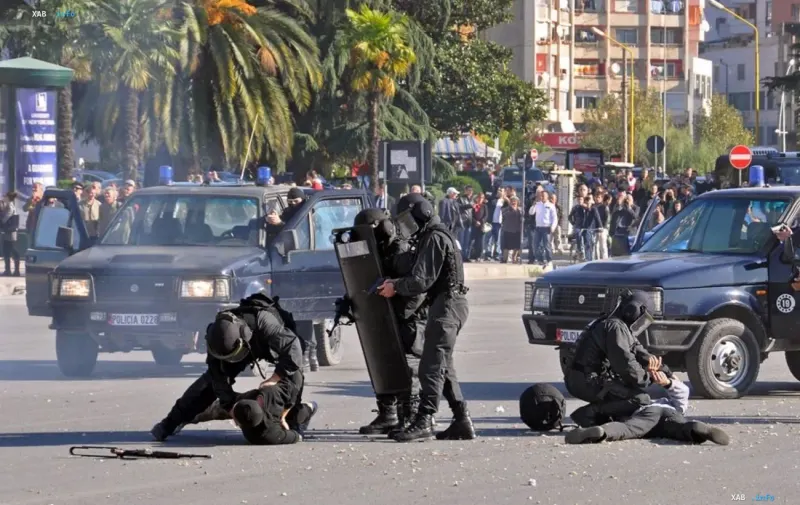
Law enforcement agencies in Albania have used tear gas and water cannons to disperse participants in mass protests. The forceful measures were deployed after a column of demonstrators headed toward the Cabinet building, while other groups of protesters remained stationed near the Ministry of Internal Affairs. The events are unfolding against the backdrop of an ongoing political crisis and a series of corruption scandals.
Escalation of Tensions and Use of Riot Control Equipment
Clashes erupted after protesters dispersed across several central districts of the Albanian capital. Eyewitnesses report that law enforcement officers formed a cordon around government buildings before deploying special equipment to scatter the crowd. The situation on the city's central streets deteriorated sharply as participants ripped up paving stones from sidewalks, threw stones and other objects at officers, and set fire to garbage cans.
Background and Unification of Opposition Forces
Mass demonstrations in the country have now entered their twelfth day. Initially, the protests were initiated by students demanding educational reforms and better conditions for youth. However, on October 24, university professors, school teachers, opposition politicians, and various public figures joined the rallies, forming a unified front.
Corruption Context and Protester Demands
The primary political demand of the large-scale demonstration participants remains the complete resignation of the incumbent government. Public discontent has been fueled by numerous corruption scandals centered around high-ranking officials within Prime Minister Edi Rama's team. Protesters are demanding sweeping political changes and expanded opportunities.
Outcomes and Future Prospects of the Confrontation
The escalation in Tirana demonstrates a profound crisis of trust between Albanian society and the authorities. Law enforcement agencies continue to maintain heightened security control over key government facilities in the capital to prevent further seizures. The future course of events depends on the country's leadership's willingness to engage in dialogue.