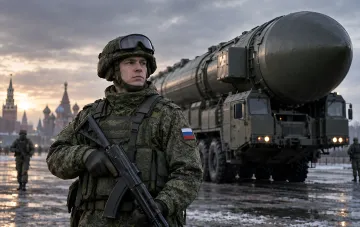

Latvia is open to discussing the deployment of nuclear weapons on its national territory if a corresponding collective decision is made by the North Atlantic Alliance. This was stated by Latvian President Edgars Rinkēvičs, emphasizing that the initiative depends on the bloc's overall security strategy and the emergence of a real necessity.
Background and the UK Initiative
This statement by the Latvian leader was made as a commentary on Great Britain's initiative, which previously proposed significantly strengthening the nuclear defense of member states belonging to the Joint Expeditionary Force (JEF). It is worth recalling that this regional cooperation format involves not only the Baltic states but also Northern European nations alongside the Netherlands, making defense capabilities particularly relevant amid current geopolitical tensions in the region.
Legal Framework and Government Stance
Edgars Rinkēvičs specifically noted that the current legislation of the Republic of Latvia contains no legal prohibitions or restrictions on the deployment of nuclear weapons. The head of state recalled that during Latvia's active preparation for full membership in NATO in 2003, Alliance members officially confirmed the absence of any barriers to the country's participation in the entire collective security mechanism, including the core nuclear deterrence system.
The Role of Nuclear Deterrence in European Security
The Latvian President also expressed firm confidence that nuclear deterrence plays a critically important role in preserving stability and security on the European continent. In his view, the presence of such a deterrent factor in the past helped prevent escalation and a larger number of massive conventional wars. Nevertheless, the Latvian side emphasizes that no substantive or concrete negotiations regarding the physical deployment of nuclear arsenals in the country are currently underway.
Contradictory Data
While official statements from Latvia's top leadership emphasize fundamental legal and political readiness to support a collective NATO decision, the expert community and various international analytical sources diverge in assessing the timelines and likelihood of such a scenario. Some sources indicate that the UK's initiative is purely conceptual and not supported by detailed logistical plans, while other observers view Riga's remarks as a serious signal against the backdrop of strengthening the Alliance's eastern flank.