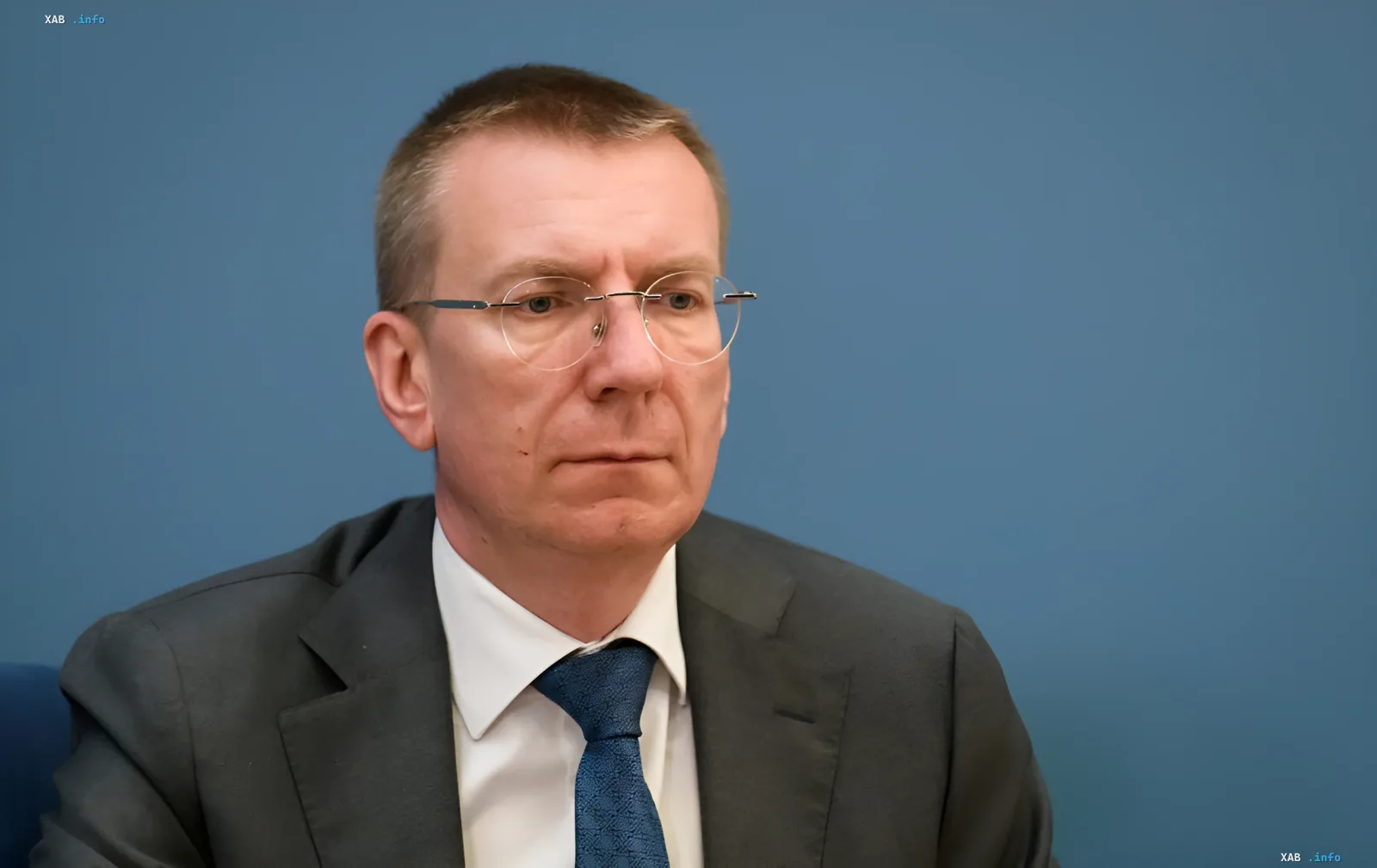
Latvian President Edgars Rinkēvičs, in an interview with the British newspaper The Guardian, issued a stark warning: the technological race in aerial attacks, fueled by the war in Ukraine, calls into question the ability of European countries and NATO to respond adequately to missile and drone threats. According to him, current approaches to preparing for an air war may lose their relevance as early as mid-2027, and air defense, anti-drone, and missile defense systems are facing "serious problems." Rinkēvičs emphasized that this vulnerability affects not only Europe but also Ukraine itself, which has withstood large-scale Russian air strikes for several years in a row.
The "Lightning Speed" of Changes on the Front
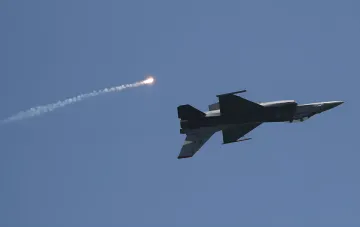
The key thesis of the Latvian leader is the pace at which drone warfare technologies are evolving in Ukraine. Rinkēvičs described it as "lightning-fast," stressing that European defense strategies, developed on the basis of earlier notions of aerial threats, are not keeping up with the adaptation. If Russia decides to launch several missiles at NATO territory, "for many countries this will become a serious challenge that will be difficult to handle," the President of Latvia stated. Thus, even a missile attack of limited scale may exceed the capabilities of the existing air defense systems of a number of allies.
Hybrid Threats: Sabotage, Cyberattacks, Drone Incidents
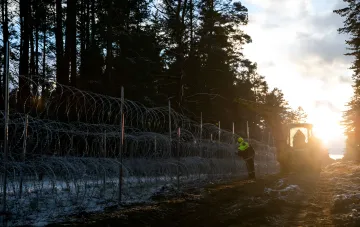
Separately, Rinkēvičs commented on the risk of further escalation by Russia. He stated that he does not expect a conventional military invasion of Russia into NATO countries, but called for readiness for alternative scenarios. In his assessment, acts of sabotage, cyberattacks, as well as drone and missile incidents are already being cited as evidence of testing Europe's readiness. This thesis echoes recent warnings from Poland and Lithuania: in Warsaw, there were reports of increased activity by Russian intelligence services against European infrastructure — railways, bridges, border crossings. Polish Prime Minister Donald Tusk stated that the coming weeks and months could become a period of active Russian actions, and did not rule out that the escalation would spread to Polish territory.
Lithuania Prepares an Evacuation Plan for Vilnius
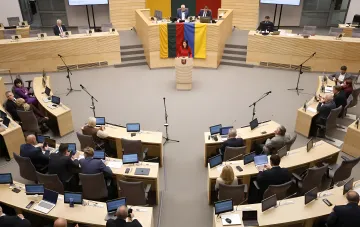
Against the backdrop of these statements, Lithuania announced that it is preparing an evacuation plan for the residents of Vilnius in case of a military threat or a large-scale crisis. One of the possible routes was Poland, considered as a transit corridor for the residents of the Baltic states. Lithuanian Foreign Minister Kęstutis Budrys confirmed that Vilnius and its allies possess the same intelligence information on possible hybrid attacks by Russia, including the scenario of an operation "under a foreign flag" — that is, actions that would not formally be attributed to Moscow.
Contradictory Data
In the threat assessments voiced from different capitals, a divergence in emphasis can be traced. Rinkēvičs directly stated that he does not expect a conventional Russian invasion of NATO, and focused on the technological lag and hybrid scenarios. At the same time, Tusk, in harsher wording, allowed that the escalation "could spread to Polish territory," which sounds like a warning about a broader spectrum of possible actions, including direct military incidents on land. The difference in rhetoric may reflect both a difference in intelligence data and the political necessity of each capital to calibrate its own public message. Neither side refutes the other's statements, however, it is important for the reader to understand that no consensus on the question of "how close Europe is to direct military confrontation" has been formed at this point.
Context: Why Now
Rinkēvičs's statement came against the backdrop of an accelerated escalation of the drone war in Ukraine, where both sides are actively experimenting with new tactics — from mass drone attacks on energy infrastructure to the use of electronic warfare and interception means. Europe, in turn, only in recent years began large-scale rearmament and a review of air defense doctrines, which, according to the Latvian president, does not allow closing the technological gap. In a situation where the war in Ukraine has already entered its fourth year, the question of "whether Europe will have time to restructure" ceases to be abstract and becomes a practical task for defense budgets and alliances.