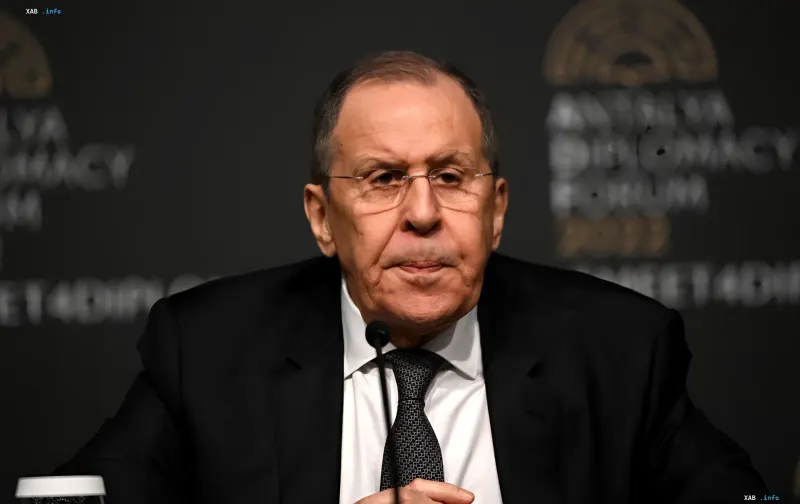
Russian Foreign Minister Sergey Lavrov publicly declared Moscow's readiness to hold a new round of negotiations on Ukraine. In his words, Russia “has never refused dialogue,” and all previous negotiation contacts, in his assessment, were not broken off at the Russian side's initiative. “So if our colleagues are ready, I think they can quite well be restored. We have something to say,” the Russian Foreign Minister stated, as reported by Ukrainian and Russian media citing his remarks.
Moscow's Position: “We Have Something to Say”
At the heart of Lavrov's statement is an emphasis on the fact that, according to Moscow, the initiative to resume contacts lies with the “colleagues,” that is, the Ukrainian and Western sides. The phrasing “we have something to say” underscores that the Kremlin positions itself as a party ready for dialogue on its own terms. The Russian side, in effect, publicly shifts responsibility for the breakdown of previous rounds onto its opponents, transferring the initiative to them.
Trilateral Format and a “Positive Signal” from Washington
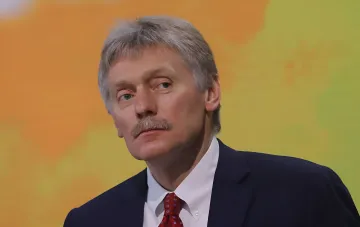
Earlier, Russian presidential spokesperson Dmitry Peskov stated that the Kremlin expects a new trilateral meeting involving Russia, Ukraine, and the United States, and that an agreement on this had already been discussed with American negotiators. Lavrov, for his part, reported that Moscow saw a “positive signal” in the US approach to the peace process, noting that Washington, in his assessment, “takes into account the realities on the ground.” The totality of these statements indicates that Moscow is actively promoting the narrative of an approaching negotiation window.
Contradictory Data
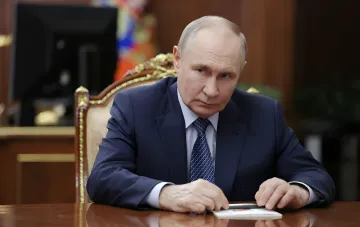
There are notable discrepancies between the statements of the parties. On the one hand, Lavrov and Peskov speak of readiness for dialogue, of a “positive signal” from the US, and of an apparently already discussed trilateral meeting. On the other hand, US President Donald Trump stated that a meeting with the Russian leader will take place only after Russia agrees to end the war against Ukraine. In other words, Washington conditions negotiations on the cessation of hostilities, while Moscow emphasizes its readiness for dialogue without preliminary concessions. Moreover, in some Russian sources the emphasis is placed on the fact that Russia “has never refused non-public contacts with Europe on Ukraine,” which somewhat narrows and reformulates the thesis of readiness for direct negotiations with Kyiv.
Context: A Bet on the Negotiation Track
Taken together, the statements of the Russian Foreign Ministry and the Kremlin press service record Moscow's attempt to take an initiative position in the information space around the peace process: on the one hand, “openness” to dialogue is demonstrated, while on the other, conditions are formulated under which the resumption of contacts becomes dependent on the actions of the opponents. The real dynamics, however, remain tied to Washington's position, which, according to Trump, links any top-level meeting to the end of the war.