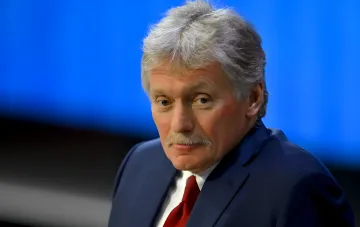
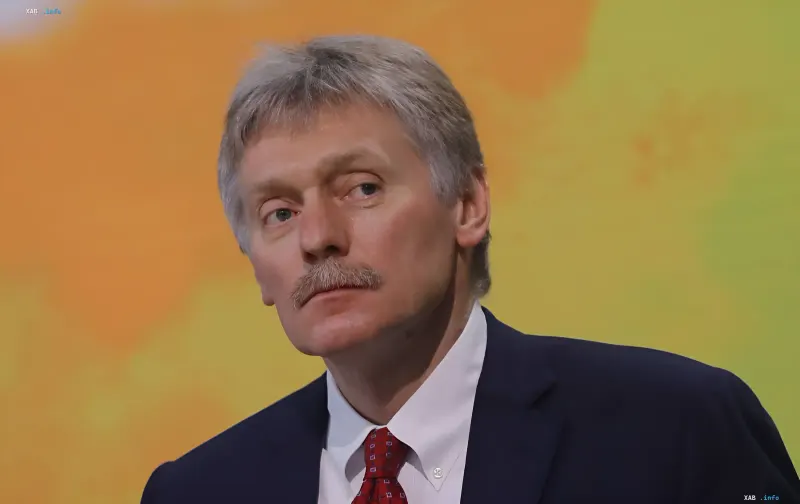
The Kremlin publicly reacted to a statement by US President Donald Trump calling on Kyiv to refrain from attacks on Russian oil refineries. According to RBC-Ukraine, citing Interfax, the official spokesperson for the Russian leader, Dmitry Peskov, stated that Moscow "unconditionally" welcomes any calls for the "Kyiv regime" to cease strikes on "peaceful economic infrastructure." At the same time, the spokesperson emphasized that the Russian side supports calls for Ukraine to refrain from attacking diesel fuel production facilities.
Moscow's position: support without commitment
The key nuance in Peskov's statement lies in its selectivity. When directly asked whether Russia itself would refrain from strikes on Ukrainian economic infrastructure if Kyiv heeded Trump's call, the Russian leader's spokesperson refused to answer. Thus, Moscow expressed approval for limiting one side's actions without taking on any reciprocal obligation. This asymmetry in the wording became the main focus of observers' attention and, in effect, nullified the potential negotiating significance of Washington's initiative.
Washington's argumentation
Recall that on September 13, US President Donald Trump stated that Ukraine's strikes on Russian refineries allegedly lead to rising fuel prices, and it was for this reason that he called on Volodymyr Zelenskyy to stop such attacks. Earlier, the American leader had also claimed that Ukraine should give up strikes on Russian infrastructure, since, in his words, they could trigger a global diesel fuel shortage, and called on Kyiv to "change tactics." Thus, Washington's argumentation is built on the thesis of the impact of Ukrainian attacks on global energy markets and prices for the end consumer.
Context: the August wave of attacks and IEA data
The statements came against the backdrop of Russian oil refineries experiencing the largest wave of attacks since the start of the full-scale war in August. Amid systematic strikes on critical infrastructure, analysts forecast a prolonged decline in Russia's oil refining industry. In particular, the International Energy Agency (IEA) lowered its forecast for Russian oil processing volumes over the next year and a half to 4 million barrels per day — roughly 30% below the levels recorded before the start of the full-scale war. These data indicate that strikes on refineries are already having a measurable impact on processing capacity.
Contradictory data
The provided materials reveal discrepancies in the assessments by the parties involved. On the one hand, Trump and Peskov portray strikes on refineries as a threat to "peaceful economic infrastructure" and a source of rising prices and a potential global diesel fuel shortage; meanwhile, in the available sources, these claims are not supported by specific figures on prices or shortage volumes. On the other hand, the IEA's data on the 30% reduction in the processing forecast and the characterization of August as the most extensive period of attacks point to real and significant damage to the industry. Moreover, the Kremlin's position is internally contradictory: Moscow supports a call for a unilateral cessation of strikes but refuses to comment on its own actions against Ukrainian infrastructure, which prevents the statement from being interpreted as a step toward mutual restraint.
What this means
Taken together, the statements by the Kremlin and Washington paint a picture in which the call to stop strikes on refineries is used as an element of public rhetoric rather than as a basis for mutual commitments. Peskov's refusal to give a symmetric answer effectively leaves Moscow with freedom of action, while Trump's argumentation about the impact of the attacks on global prices is not yet confirmed by independent quantitative data in the provided sources. For the further dynamics, the key factor will be whether the US or other countries develop a mechanism of control and reciprocity, without which the initiative risks remaining merely declarative.