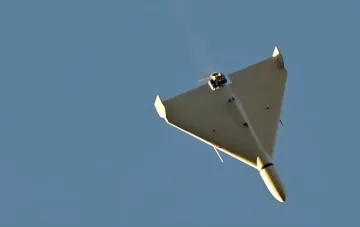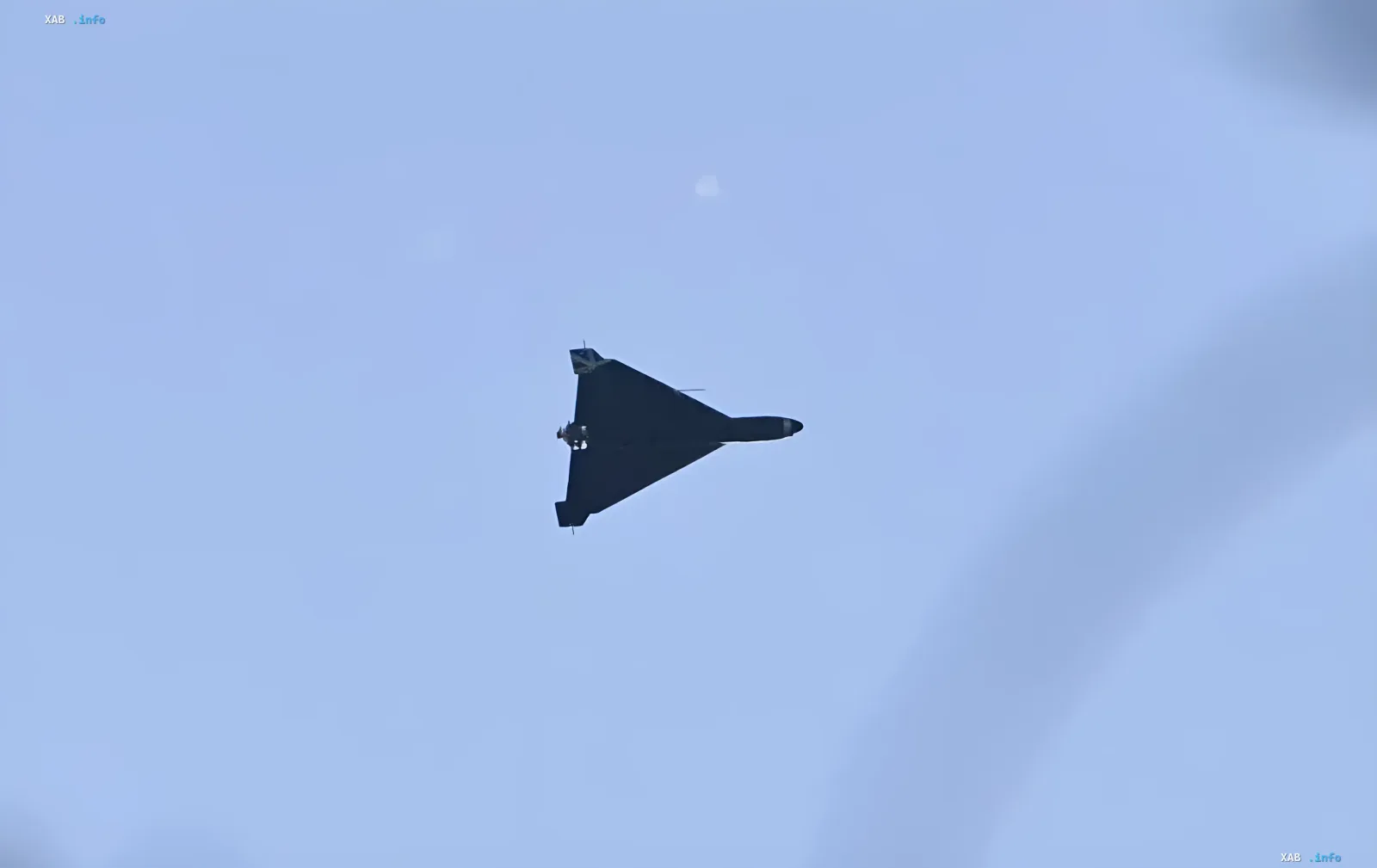
Another episode of aerial confrontation has been recorded in the skies over Ukrainian territory, in which the unmanned systems of both sides are demonstrating increasingly complex tactics. According to RBC-Ukraine, citing the official Facebook page of the company F-Drones, the Ukrainian interceptor drone LITAVR struck a Russian Shahed-type strike drone that, according to published footage, was carrying additional unmanned aerial vehicles on its wings. The incident is a vivid illustration of how the adversary is modifying the configurations of its drones, turning a single carrier into an entire "hive" for the simultaneous engagement of multiple targets.
The "Carrier" Tactic: One Drone — Multiple Threats
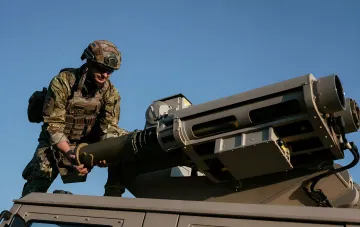
According to F-Drones-UA, such configurations significantly complicate the picture of the aerial threat. A carrier equipped with additional drones on its wings is capable of delivering several means of destruction to different points at once, creating additional challenges for air defense systems. The adversary, according to the company, is deliberately changing the ways in which UAVs are employed, and the means of countermeasures are evolving along with them. The crew of the "Staf" UAV interceptor battery of the 158th OMBR air defense missile regiment destroyed the target, confirming the effectiveness of LITAVR in conditions of a multi-layered attack.
Summer Modernization: Autonomy and Global Control
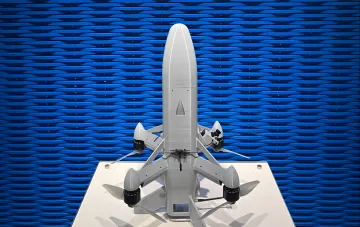
Summer 2026 became a period of active development and refinement of the LITAVR interceptor line for the company F-Drones. In July, the company unveiled a fully autonomous version of the drone paired with the 3D LARAG software complex — a system that allows the interception process to be tracked in real time. The key advantage of the new solution: the command to engage the target can be issued from any point in the world, which significantly expands the operator's tactical capabilities and reduces the reaction time to an aerial threat.
Field Trials and Military Recognition
As early as August 2026, following field trials that approximated combat conditions, the military recognized LITAVR+ as the best interceptor designed to counter jet-powered Shaheds. This was reported by the 1020th air defense missile-artillery regiment. This recognition cements the system's status as one of the most effective short-range interceptors, capable of standing up to high-speed jet unmanned aerial vehicles that pose the greatest threat to ground objects.
Contradictory Data
It should be noted that information about this interception comes from a single source — the manufacturer F-Drones, whose data was republished by RBC-Ukraine. As of the time of publication (September 2, 2026), this episode had not been separately confirmed in the open daily reports of the General Staff of the Armed Forces of Ukraine. That said, the tactic of employing Shaheds with additional drones on their wings had previously been recorded in reports on air attacks, and the combat use of LITAVR within the 158th OMBR is consistent with the known structure of air defense. Thus, the event appears plausible and aligns with the overall picture, although independent confirmation from the command of the Armed Forces of Ukraine is currently absent.
Context: Escalation of the "Drone Race"
The described episode fits into the broader context of a continuous "arms race" in the sphere of unmanned systems. On the one hand, the Russian side is experimenting with new configurations — from Shaheds carrying FPV drones on their wings to combined attacks using different types of UAVs simultaneously. On the other, Ukrainian industry and the military are rapidly adapting their countermeasures, developing next-generation interceptors with elements of autonomous decision-making. LITAVR, with its autonomous version and the 3D LARAG system, represents a response to the growing complexity of aerial threats, where traditional air defense missile systems are not always able to provide sufficient density of fire against massive low-flying targets.