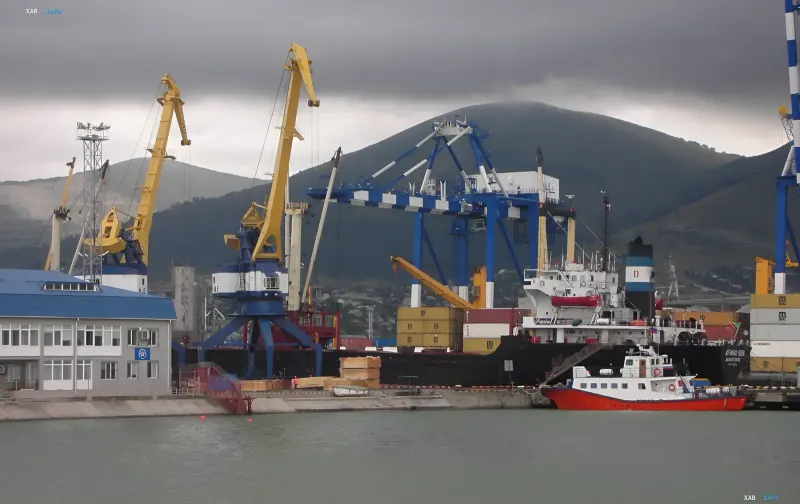
On the night of August 14, 2026, Russia's energy infrastructure on the Black Sea suffered a serious blow. It has become known that the export of crude oil from the Sheskaris liquid terminal in Novorossiysk has been completely suspended following an attack by Ukrainian unmanned aerial vehicles (UAVs). The incident led to critical overfilling of the facility's tanks, forcing the port administration to stop accepting raw materials. The terminal, which is a key hub for loading Russian oil in the Black Sea, has a throughput capacity of about 700,000 barrels per day.
Critical Overfilling and Logistical Deadlock
According to operational data, the drone attack caused damage that made further oil reception impossible. As a result, the terminal's tanks reached a critical level of fullness. This created a domino effect: tankers waiting for loading cannot be serviced, and raw material supplies via pipelines are forced to be restricted or stopped. One of the tankers, which was already in the port for loading, was forced to urgently leave the port area and head out to the open sea to avoid a potential threat.
In connection with the continuing threat of air attacks, the Novorossiysk administration declared a new alert for the city's residents. Warning sirens sounded in the coastal areas, indicating a high intensity of hostilities in this sector. The incident occurred against the backdrop of increased pressure on Russia's logistical arteries, which significantly hampers the country's export potential.
Impact on Export Flows and Global Markets
The Sheskaris terminal plays a strategic role in the export of Russian hydrocarbons. Through it, Urals grade oil, Kazakhstani crude KEBCO, and Siberian Light crude are loaded. The shutdown of the facility in August 2026 deals a blow to supplies to key importing countries. In July, export volumes from this port reached almost 1 million barrels per day, while in June they amounted to about 800,000 barrels. The loss of even part of these volumes creates a shortage in the market and forces buyers to seek alternative sources.
The shutdown has a particular impact on Turkey, which is one of the main buyers of Russian oil. Due to export disruptions following a series of attacks on Black Sea terminals, Turkey has already reduced purchases in July and, according to analysts, is preparing to further reduce supply volumes in August. This could lead to long-term changes in the region's logistical chains.
Series of Attacks on Energy Infrastructure
The attack on Sheskaris is not an isolated case. Over the past weeks and months, strikes on Russia's energy infrastructure have intensified significantly. Last month, similar drone attacks halted the operations of the Caspian Pipeline Consortium (CPC) terminal near Novorossiysk. This led to a reduction in CPC Blend supplies, which also affected the Turkish market.
Furthermore, since the beginning of August 2026 alone, Ukrainian drones have attacked nearly a third of Russia's major oil refineries. Most of these facilities had already been under attack earlier this year, indicating the systematic nature of the campaign to destabilize the aggressor's energy sector. During preliminary attacks near Novorossiysk, a Russian oil tanker was also damaged.
Contradictory Data
During fact-checking of the information about the incident, discrepancies in details were identified between various sources. On the one hand, Ukrainian media and NASA satellite data confirm the fact of a fire and damage to infrastructure at the terminal. On the other hand, official Russian sources often downplay the scale of the damage or attribute it to "local fires" that do not affect port operations. In particular, data on the complete overfilling of tanks and the suspension of raw material reception has not yet been confirmed by official statements from the Novorossiysk administration, although it is indirectly confirmed by the fact of tankers leaving for the sea.