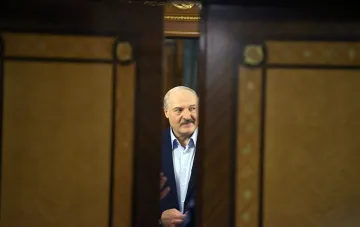
Belarusian President Alexander Lukashenko, receiving a report on Monday in Minsk from the head of the State Customs Committee, Vladimir Orlovsky, stated that the country has no free volumes of potash fertilizers left for Western countries. According to him, all products produced in the current year have already been contracted under previously concluded agreements. "As far as I have been informed by the Prime Minister and the government, we have managed to reorient ourselves to the East. The negotiations with the Americans are proof of that. And how many people here are shouting: 'Ah, potash!'", the Belarusian leader emphasized, commenting on the course of the negotiations and the current state of export flows.
Reorientation of Trade Flows to the East
Lukashenko referred to the fact that "crude economic outbursts" by the European Union and the West as a whole "have not gone anywhere," and it is precisely for this reason that Belarus continues its course on reorienting trade flows. "The crude outbursts in the economic plane by the countries of the European Union, the West as a whole, have not gone anywhere. The reorientation of trade flows to the East is underway," he stated. Thus, the Belarusian leader once again confirmed that, in his assessment, the sanctions pressure from Brussels and Washington has not led to a rupture of economic ties, but has only accelerated the redirection of exports toward the Asian and American directions.
Deal with the US: Trump Called It "Very Good News"
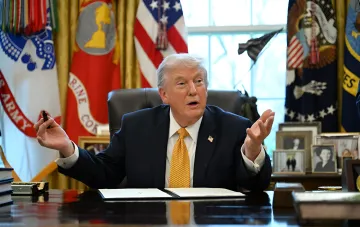
The day before Lukashenko's statement, Washington reported that a large-scale agreement with Belarus on the purchase of potash fertilizers was being prepared, which, according to the American side, should be cheaper than Canadian products. US President Donald Trump publicly called this agreement "very good news" for American farmers and livestock breeders. Earlier, Lukashenko had already mentioned the supply of Belarusian potash fertilizers to the US; however, as he emphasized on Monday, Minsk cannot provide large volumes to the Americans — all of the current year's production has already been allocated under contracts.
Contradictory Data
A notable contradiction arises between the statements of the parties. On the one hand, Lukashenko claims that Belarus has no free stocks of potassium chloride for the West and that the entire production volume has been allocated under contracts. On the other hand, in Washington and from Trump himself, information emerges about the preparation of a new large-scale agreement specifically on the supply of potash fertilizers from Belarus. If all products have already been contracted, it is unclear what volume will be involved in the new deal with the US. Some analysts, citing Lukashenko's words, interpret his statements as an attempt to "drive up the price" before signing a contract with the American side, while others view this as a real limitation of export opportunities against the backdrop of growing demand from Eastern partners. As of the time of publication, no official clarification from Minsk regarding the specific volumes that could be allocated under the new agreement with the US had been received.
The SPOT Issue and Logistics with Russia
Separately, Lukashenko touched on the topic of the introduction in Russia of the system of confirming the expectation of goods (SPOT), which, according to him, does not create serious problems for Belarusian carriers. "How do the measures taken by the Russian Federation to protect its market affect us — the so-called SPOT? In general, of course, I am monitoring the situation and have been informed that you have managed to establish good, good relations with Russia on the introduction of these measures, and our carriers are not experiencing any serious problems," he stated, addressing Orlovsky. This statement indicates that, despite the reorientation of some flows, the Minsk–Moscow logistics link remains a key channel for Belarusian exports.
Context: Potash as a Tool of Geopolitics
Potash fertilizers have traditionally occupied one of the central places in Belarus's export portfolio, where potassium chloride is one of the main hard-currency goods. In the context of years-long European sanctions and restrictions on transit through EU territory, Minsk has consistently been seeking alternative sales markets. Lukashenko's statement about the full allocation of volumes under contracts against the backdrop of preparations for a deal with the US can be viewed as an element of a trade-diplomatic strategy: on the one hand, demonstrating the priority of Eastern partners; on the other, creating an artificial shortage to strengthen the negotiating position before the American buyer. The outcomes of the upcoming negotiations and the actual volumes of supplies to the US will serve as an indicator of how successfully Belarus is implementing its declared "reorientation to the East" under the continuing sanctions pressure from the West.