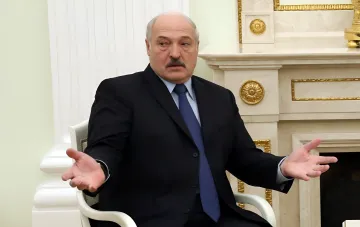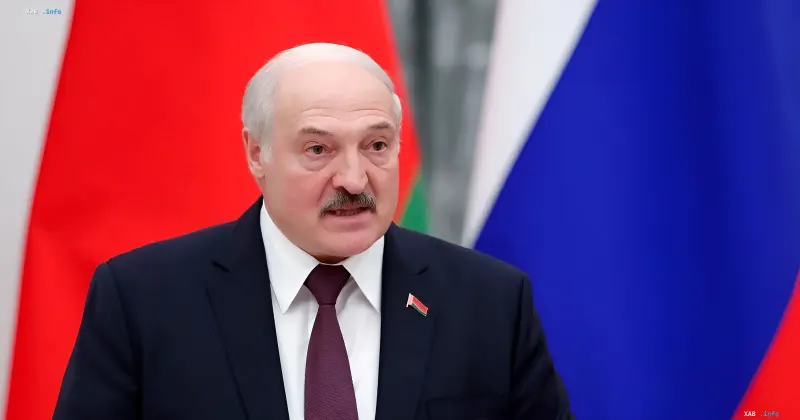
At the 4th Minsk International Conference on Eurasian Security, Belarusian President Alexander Lukashenko made a series of statements regarding the state of global security and the prospects for resolving the Russia-Ukraine conflict. According to him, although the United States is not physically present in the region, it still exerts influence over many of its areas, and US President Donald Trump's policy, despite not receiving full support from all sides, has through its actions "effectively prevented World War III and continues to do so."
Trump as a guarantor against a nuclear scenario
Speaking at the conference on November 3, Lukashenko warned that a large-scale war could escalate into a nuclear conflict, emphasizing that "you cannot run away from this across the ocean." In his estimation, the risk of conflicts in the world has reached a critical level, and the world "has never changed as fast as it is now," while the level of competition between major powers has, in his words, "reached its limit." It was in this context that the Belarusian head of state linked the actions of the American president to the preservation of global stability.
Forecast on Ukraine and Minsk's readiness for negotiations
Lukashenko expressed confidence that the Russia-Ukraine war will end "in the coming months." He stated that Minsk is ready to contribute to efforts to resolve the conflict, including organizing peace talks between Moscow and Kyiv, and warned against attempts to drag Belarus into the war. Separately, the Belarusian president praised a recent humanitarian ceasefire agreement in Oleshky in the Russian-controlled Kherson region and stressed the role of both countries' human rights commissioners. "We need to continue moving in this direction. We must expand such corridors and identify places where de-escalation is possible," he stated.
Moscow's position: Lavrov on the new world order
In his speech at the same conference, Russian Foreign Minister Sergey Lavrov stated that a "fierce struggle is unfolding for the right to determine the principles" that will form the basis of a new world order, and that this model must ensure "genuine equality among modern nations." The Russian diplomat accused EU calls for a ceasefire and truce in the Ukrainian conflict of aiming to drag out the war, arguing that such steps were designed to give Ukraine time to restore its combat capability. According to him, Russia insists on eliminating the root causes of the conflict rather than accepting yet another temporary ceasefire agreement.
At the same time, Lavrov confirmed that Russia "will always be ready for dialogue" with parties that no longer intend to engage in confrontation, but "will not pursue anyone" in the pursuit of this. "We have never closed the doors to the western part of the continent, inviting partners to cooperate in building a Eurasian security system," he emphasized, adding that Moscow will not shy away from cooperation with those who abandon confrontational intentions and demonstrate a commitment to finding a fair balance of interests.