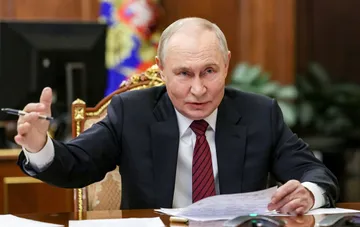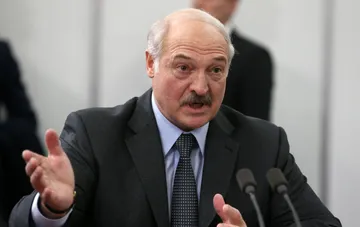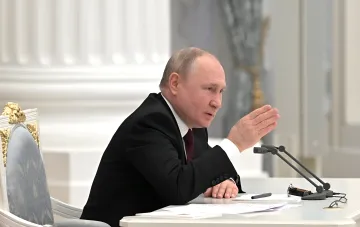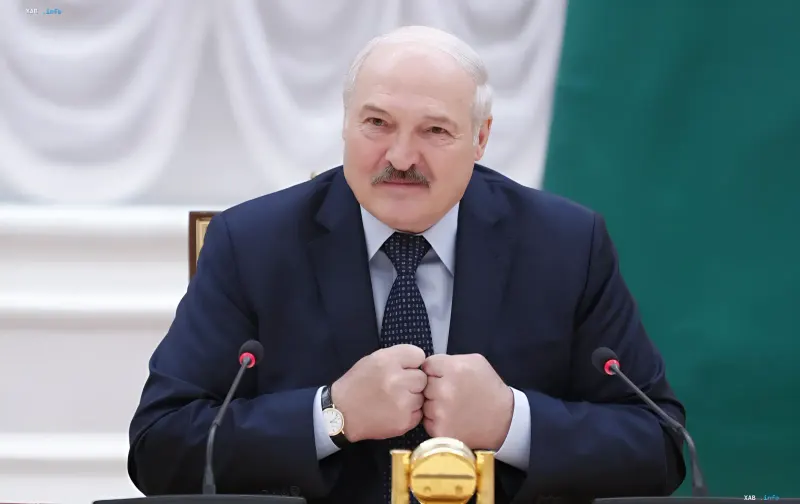
Belarusian President Alexander Lukashenko has made a series of statements outlining his own version of the reasons why, according to him, Russia's war against Ukraine was not ended in 2025. He claimed that Vladimir Putin was initially prepared to stop hostilities but changed his decision following a Ukrainian drone attack on his residence, which Lukashenko dates to December 2025. The Ukrainian outlet RBC-Ukraine, which reported these remarks, characterizes the Belarusian leader's statements as unfounded.
The "collapse of agreements" and the role of the strike on the residence
The central element of Lukashenko's narrative was his version that it was the strike on Putin's residence that derailed potential agreements on creating a demilitarized zone in Ukraine and ending the fighting. Citing the Russian leader's position, the Belarusian president stated: "Putin understood, I know this for sure, that one cannot trust the Ukrainians here, read the West. I don't think Zelensky would have dared to strike Putin's residence if Europe hadn't approved it. That is his (Putin's – ed.) opinion." Thus, according to Lukashenko, the conclusion regarding the lack of trust in Kyiv and Brussels was formulated by Putin himself.
The "line of contact" as a basis for negotiations
Lukashenko further claimed that in 2025, the war could have been ended "along the line of contact," after which, he said, it would have remained to negotiate the nature of the border. "And we could have continued to negotiate about where this border will be, how it will be, what will be there," he added. In this part of the statement, the Belarusian leader effectively describes a scenario in which hostilities cease without changing the front line, and negotiations are reduced to fixing and formalizing the current border.
Rhetoric about "respect for the Ukrainian people"
Lukashenko made a separate point of saying that, according to him, "Putin respects the Ukrainian people" and "recognizes" them: "He respects this people, he recognizes them," he stated. The Ukrainian outlet that reported these words emphasizes that such phrasing from the Belarusian leader is not being heard for the first time and characterizes them as false. This thesis itself is not supported by any documents or statements from the Russian side in the reported material.
Context: the offer to fly to Moscow
These statements were made against the backdrop of an earlier episode also described by RBC-Ukraine: Lukashenko had proposed that Volodymyr Zelensky fly to Moscow with him to meet Putin. According to the publication, the Ukrainian president responded to this proposal and, in turn, addressed the Belarusian leader, but the details of this response are not disclosed in this material. Thus, Lukashenko's new words about "Putin's plans" fit into a series of his public appearances in which he positions himself as a mediator and an informed observer of Moscow's intentions.
It should be noted that all the above-mentioned claims about Vladimir Putin's intentions and the reasons why, according to Lukashenko, the war was not ended in 2025, are unilateral statements by the Belarusian leader. The provided material does not contain confirmation of these versions from the Kremlin, nor does it provide a detailed reaction from the Ukrainian side. The Ukrainian outlet that served as the source interprets these words as an attempt to shift responsibility for the continuation of hostilities and as an assessment that does not correspond to the facts.