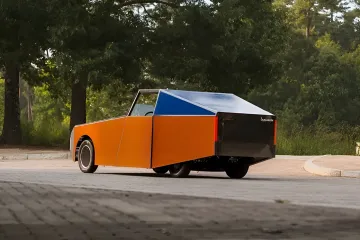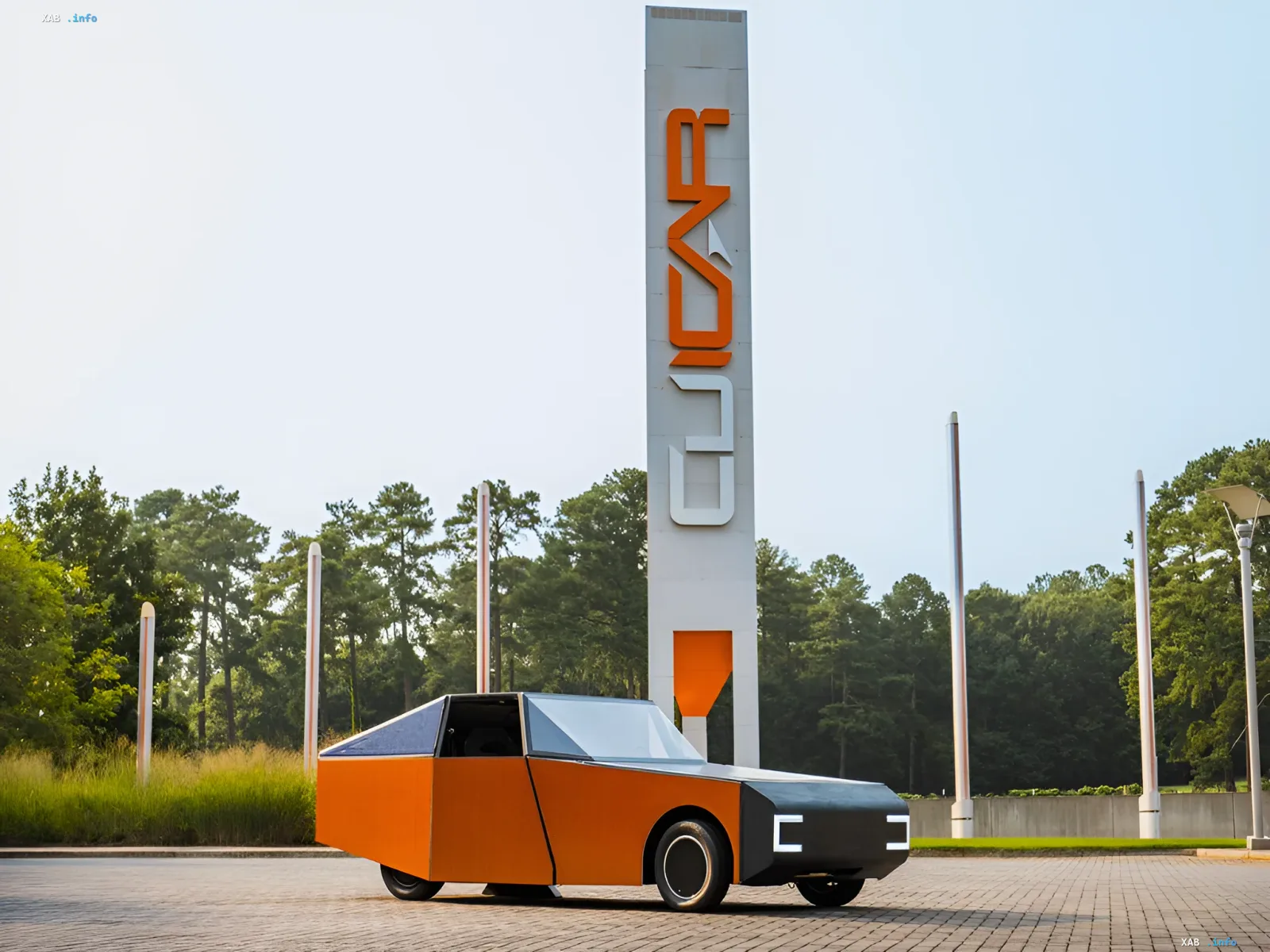
In a world where vehicle electrification is becoming the norm and energy efficiency is taking center stage, students from Clemson University, supported by BMW, have unveiled a revolutionary project. The experimental electric vehicle Deep Orange 17, unofficially dubbed Luminetta, sets an ambitious goal: to produce more energy than it consumes in typical urban conditions. This is not just a concept car, but a functional prototype created to solve real-world urban mobility challenges.
From idea to reality: two years of work on 'energy positivity'
The project launched in the fall of 2024 at the initiative of BMW. A team of 16 master's students was given a complex task — to create a so-called energy-positive electric vehicle. This is the term developers use to describe a car capable of generating more energy than it spends on daily trips. About two years of intensive work later, the students presented a two-door prototype where efficiency was prioritized over power and conventional automotive solutions.
Construction and aerodynamics: weighing only 550 kg
The key factor in Luminetta's success was extreme lightness. The car weighs only about 550 kg — approximately three times less than a comparable modern production car. This weight was achieved thanks to a composite chassis using steel for passenger protection, aluminum, carbon fiber, and metal connecting elements manufactured via 3D printing. Even the angular body was designed primarily for efficiency. When creating its shape, the developers were inspired by the boxfish, known for its aerodynamically favorable form.
Solar revolution: 1700 cells in the body
Luminetta's main feature is hidden right in the body. More than 1700 solar cells, developed with the involvement of the German Fraunhofer Institute for Solar Energy Systems (ISE), are placed on its external surfaces. They are capable of generating electricity both while driving and while parked. Moreover, the solar panels generate electricity even under partial shading. For a car that spends most of its time in an urban environment among buildings, trees, and other vehicles, this is particularly important.
Simulation and results: 50 km of range from the sun
Developers simulated the operation of Luminetta in four cities with different climates: Greenville in the USA, Frankfurt in Germany, Madrid in Spain, and Mumbai in India. For a daily route of about 19 km, the solar panels on average generated an amount of energy equivalent to approximately 50 km of driving. Thus, in the calculated scenario, solar generation provided about 2.5 times more range than the daily trip itself. This is why developers call Luminetta an energy-positive vehicle.
Future of the project: from master's degree to CES 2027
On August 7, 2026, all 16 participants of the project completed their master's degrees in automotive engineering, but the story of Luminetta does not end there. The prototype will remain at the International Automotive Research Center at Clemson University in Greenville and will continue to be used as a research platform. The public debut of the car is planned for the CES 2027 exhibition. Electronics were not forgotten either. A proprietary interface was developed for the car, which displays vehicle and energy system parameters in real time. The multimedia system supports Apple CarPlay and Android Auto.