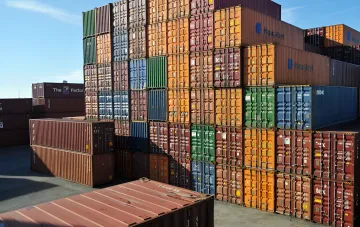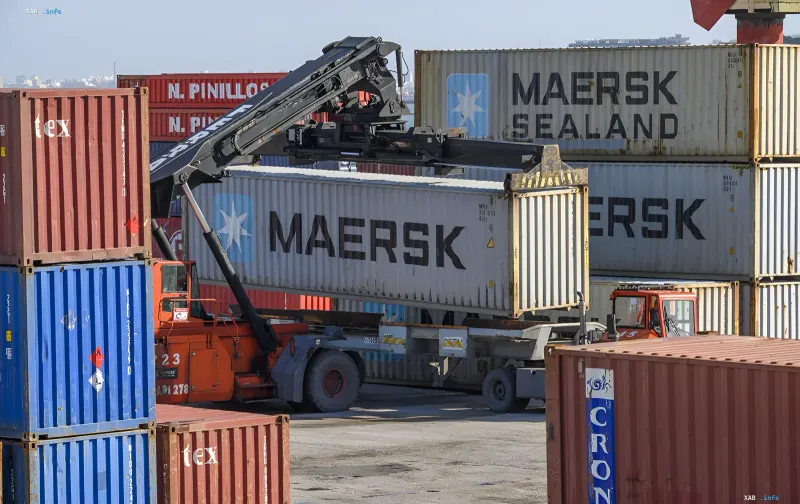
The Danish logistics group AP Moller – Maersk is suspending operations at a large multimodal container terminal in Boryspil, operated by BIT VANTAGE LLC. This is reported by RBC-Ukraine, citing a statement from Maersk Ukraine. The company explained the decision as being due to 'operational reasons,' without disclosing details, and clarified that the changes affect import shipments that have not yet arrived at the terminal, are in transit, or are only being planned for dispatch. Clients with such shipments are advised to contact representatives of Maersk's intermodal department for further instructions.
What Exactly Is Suspended and Who It Affects
According to the operator's own wording, the pause does not fully affect already cleared and on-terminal cargo — the emphasis is placed on 'operational reasons' and on the status of specific shipments. Maersk explicitly identified three categories of shipments falling under the changes: import shipments that have not yet arrived at the terminal; shipments that are currently in transit; and shipments that are only being planned for dispatch. For all these cases, the company directed clients to the intermodal department so that they could receive individual instructions on the further movement of cargo. Thus, this is not about the operator's complete withdrawal from the region, but about a temporary adjustment of operations at a specific site.
The Role of the Boryspil Hub in Central Ukraine's Logistics
The large multimodal, so-called 'dry' container terminal in Boryspil serves as a key transport and logistics hub for Kyiv Oblast and all of Central Ukraine. Through this site, global operators handle cargo consolidation, customs clearance, storage, and the subsequent distribution of clients' import and export shipments in the capital region. The loss or restriction of such a node automatically shifts the load to alternative routes and terminals, which, given limited capacities and heightened logistical pressure, may lengthen delivery times and increase cargo handling costs for end clients.
Who Is Maersk and How the Company Operates in Ukraine
AP Moller – Maersk is one of the world's largest global operators of maritime container shipping and integrated logistics, headquartered in Copenhagen. The company has been present in the Ukrainian market since 1993 and provides comprehensive intermodal 'door-to-door' transportation, combining maritime lines, rail and road transport, as well as land terminals. It is precisely this multi-link model that makes Maersk's solutions an indicator of the state of the entire supply chain: when one of the land nodes becomes problematic, the company is forced to reroute entire cargo flows.
Context: Strikes on Logistics and the Insurance Question
The decision was made against the backdrop of intensified Russian strikes on warehouse facilities and civilian infrastructure in Kyiv Oblast, including in Boryspil. Systematic shelling of logistics hubs creates a direct threat to the preservation of cargo and the lives of personnel, and also critically complicates international insurance of such shipments. For a global operator working under corporate compliance and risk-management standards, the inability or sharp increase in cost of insuring warehousing and transit operations becomes a standalone operational constraint — it is in this context that the company frames its decisions as 'operational.'
Not the First Step: The Black Sea Port Precedent
The suspension of operations at the Boryspil terminal is not Maersk's first decision to change its work with Ukrainian port facilities due to the security situation. In July, the company temporarily suspended the service through the Black Sea Fish Port, citing the situation in the Black Sea that affects operational activities. Alongside this, Maersk publicly pointed to broader global factors pressuring its routes, in particular the consequences of the suspension of vessel transit through the Red Sea for the global economy. The combination of these factors — local security at land nodes, the situation in the Black Sea, and global shifts in maritime routes — forms the overall backdrop against which the operator redistributes risks and adjusts operations at individual sites.