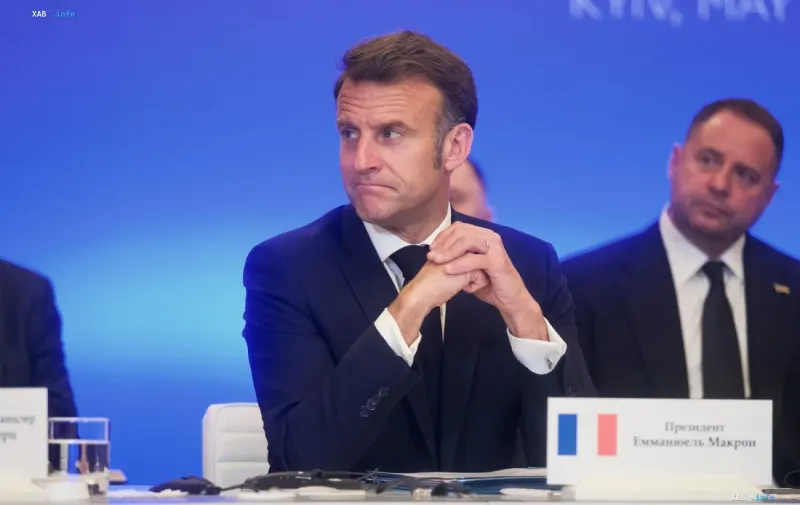
Latvian Prime Minister Andris Kulbergs stated that French President Emmanuel Macron has agreed to begin negotiations on Latvia's accession to the French nuclear deterrence initiative. This is reported by RBC-Ukraine, citing Reuters. According to Kulbergs, he "was in active contact with the French president on closer cooperation between Latvia and France in the field of security and defense." Macron, in turn, expressed his commitment to strengthening France's military presence on Latvian territory, primarily in the area of air defense.
Context: France's "new level" nuclear doctrine
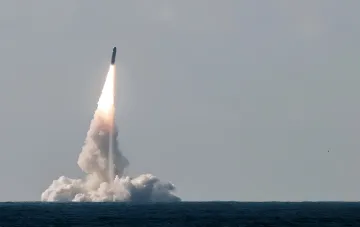
The decision to begin negotiations with Riga fits into Paris's broader course, which in March 2026 announced a "new level" nuclear deterrence strategy. As European analysts previously noted, France intends to expand the scope of its nuclear doctrine by involving allies in collective defense mechanisms. In April 2026, Macron and German Chancellor Friedrich Merz discussed the implementation of this strategy at the bilateral level, as well as the future EU budget. Latvia's accession to the initiative would be the first step toward extending the French nuclear umbrella to the Baltic states, which would radically change the security architecture in the region.
Link to the EU sanctions list vote
According to sources, Paris's move followed Riga's agreement to abstain from voting on an agreement among the 27 EU member states to remove two Russian oligarchs — Alisher Usmanov and Mikhail Fridman — from the sanctions list. A direct causal link between these two events is not formulated in the statement by the Prime Minister of Latvia; however, the chronological sequence recorded in the publication points to a possible political conditionality of the arrangements between the two capitals.
Security in the Baltic region
Latvia remains one of the Baltic states where Russia periodically displays provocative activity. In particular, cases of drone flights near the state border have been recorded, and on certain occasions Russian unmanned aerial vehicles crossed the republic's airspace. Recently, Latvia and Poland scrambled NATO aircraft in response to the threat of Russian drones. Against this backdrop, the strengthening of the French military presence, especially in the area of air defense, is viewed by Riga as a critically important element of collective defense.
Contradictory data
In European media and the expert community, Macron's position on expanding nuclear deterrence is a subject of disagreement. On the one hand, NATO allies welcome Paris's readiness to "share" the nuclear umbrella, which strengthens the alliance's deterrent potential on the eastern flank. On the other hand, a number of European politicians and analysts criticize this strategy, arguing that it "puts all of Europe at risk," as it blurs the clear boundaries of nuclear status and could provoke escalation. Moreover, the question of whether Macron's agreement is a direct response to Latvia's position on the EU sanctions list vote remains debatable: official Paris has not publicly confirmed or denied the existence of such a link, and the wording "after" in the RBC-Ukraine publication allows for both an interpretation of direct conditionality and a coincidence in timing.
What comes next
Negotiations between Latvia and France on the format of Riga's participation in the nuclear deterrence initiative, according to Kulbergs's statement, are only just beginning. Specific mechanisms — from the deployment of air defense elements to participation in exercises and the exchange of intelligence data — will be determined during working contacts between the defense ministries of the two countries. For Latvia, which has no nuclear arsenal of its own and relies on collective security guarantees, potential accession to the French doctrine would be the most significant shift in defense policy in recent years.