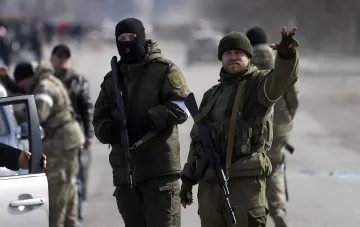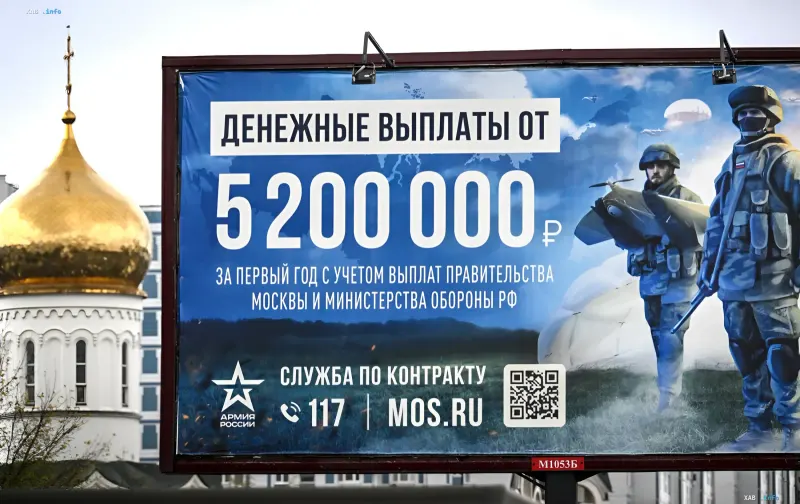
Russia's war machine is facing a serious manpower crisis. According to sources, the Russian army's monthly losses have reached 40,000 people, with more than 60% of them being killed. Current mechanisms for recruiting contract soldiers are no longer sufficient to fill these gaps, forcing the Kremlin to discuss the possibility of a new wave of mobilization.
Lack of volunteers and problems with UAVs
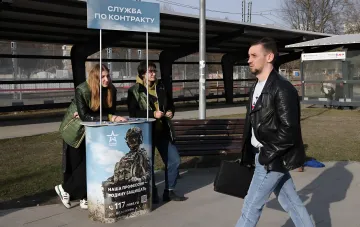
According to an RBC-Ukraine report, the recruitment of contract soldiers is being carried out at full capacity, but these measures are insufficient for both forming new units and fully covering losses. Moscow is experiencing particular difficulties in staffing unmanned systems units. Despite offering service in these units to students and young people as a safer and more prestigious option, the flow of applicants remains insufficient.
Scenarios for a new draft
Experts and sources in military circles do not rule out that Vladimir Putin may expand mobilization immediately after the September Duma elections. Estimates suggest that between 100,000 and 300,000 people could be mobilized. At the same time, the draft will likely be conducted gradually rather than all at once. This approach will allow the Kremlin to avoid a sharp public shock and reduce the burden on training centers, which are physically unable to simultaneously accept, arm, and train hundreds of thousands of recruits.
If the scenario of a new mobilization is implemented, its real effect may only be felt in winter or even next year. Earlier, Ukrainian President Volodymyr Zelenskyy stated that Russia plans to mobilize between 300,000 and 500,000 people in late September or early October.
Preparation of law enforcement agencies
Parallel to the discussion of the draft, the Center for Countering Disinformation of the National Security and Defense Council of Ukraine recorded an alarming signal: Rosgvardia (the National Guard) has for the first time included provisions on protection against threats during mobilization in its civil defense regulations. The agency believes this indicates that law enforcement officers are preparing to suppress possible protests that may arise after the announcement of the mobilization decree.