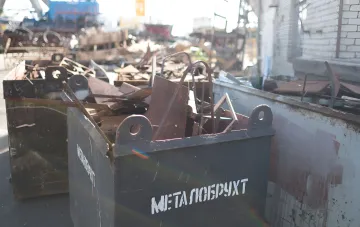
The European Union's new protective restrictions on steel imports and the Carbon Border Adjustment Mechanism (CBAM) pose a serious threat to the Ukrainian metallurgical industry. Although these regulatory measures were originally planned to curb excessive imports from China and other third countries, Ukrainian producers have fallen under their scope, facing additional pressure during wartime.
Impact of European Trade Barriers on Ukrainian Metallurgy
Member of the European Parliament Karin Karlsbro stated during the Ekonomichna Pravda Export Forum in Kyiv that current restrictive measures regarding Ukrainian products need to be reviewed. According to her, Brussels must take into account the current realities in which Ukrainian businesses operate, suffering from military actions, disrupted supply chains, and high energy prices. Restrictions on steel imports combined with new requirements of European environmental policy lead to domestic enterprises losing their competitiveness in foreign markets.
Karlsbro emphasized that formally, none of the introduced restrictions were designed specifically against Ukraine; however, in practice, they have become an additional burden for the state's economy. The parliamentarian noted that she has personally seen enterprises forced to cease operations not only due to war-related destruction and electricity costs, but also as a result of the negative impact of the CBAM mechanism.
Scale of Potential Losses and Implementation of the Carbon Tax
The Carbon Border Adjustment Mechanism (CBAM) officially came into effect in Ukraine on January 1, 2026. This tax applies to imports into the European Union of basic product categories such as steel, cement, fertilizers, electricity, aluminum, and hydrogen. Industry experts and analysts have repeatedly warned about the risks to Ukrainian industry, yet the European Commission has not yet provided separate exemptions for the country, despite force majeure circumstances in the form of a full-scale war.
According to estimates by the GMK Center analytical hub, total losses to the Ukrainian economy from the new European restrictions could exceed one billion dollars by the end of the year. Specifically, due to strict steel quotas, the country risks losing between 850 million and one billion dollars in foreign exchange earnings, while export losses directly resulting from the CBAM mechanism are estimated at another 400–450 million dollars.
European Integration Prospects and the Need for Temporary Exemptions
The situation with trade restrictions appears contradictory against the backdrop of Ukraine's official course toward European integration. On the one hand, the state is consistently moving toward full membership in the European Union, while on the other hand, Ukrainian producers are facing new barriers in the European market. In the European lawmaker's opinion, Ukraine should not be subjected to economic punishment due to the specifics of EU trade policy.
Karin Karlsbro insists that Brussels must consider introducing temporary exemptions for Ukraine regarding metal product quotas and the CBAM mechanism for the duration of martial law. Such steps would help support the country's industrial potential and preserve jobs in key economic sectors at a time when enterprises are simultaneously fighting for survival amid shelling and logistical crises.