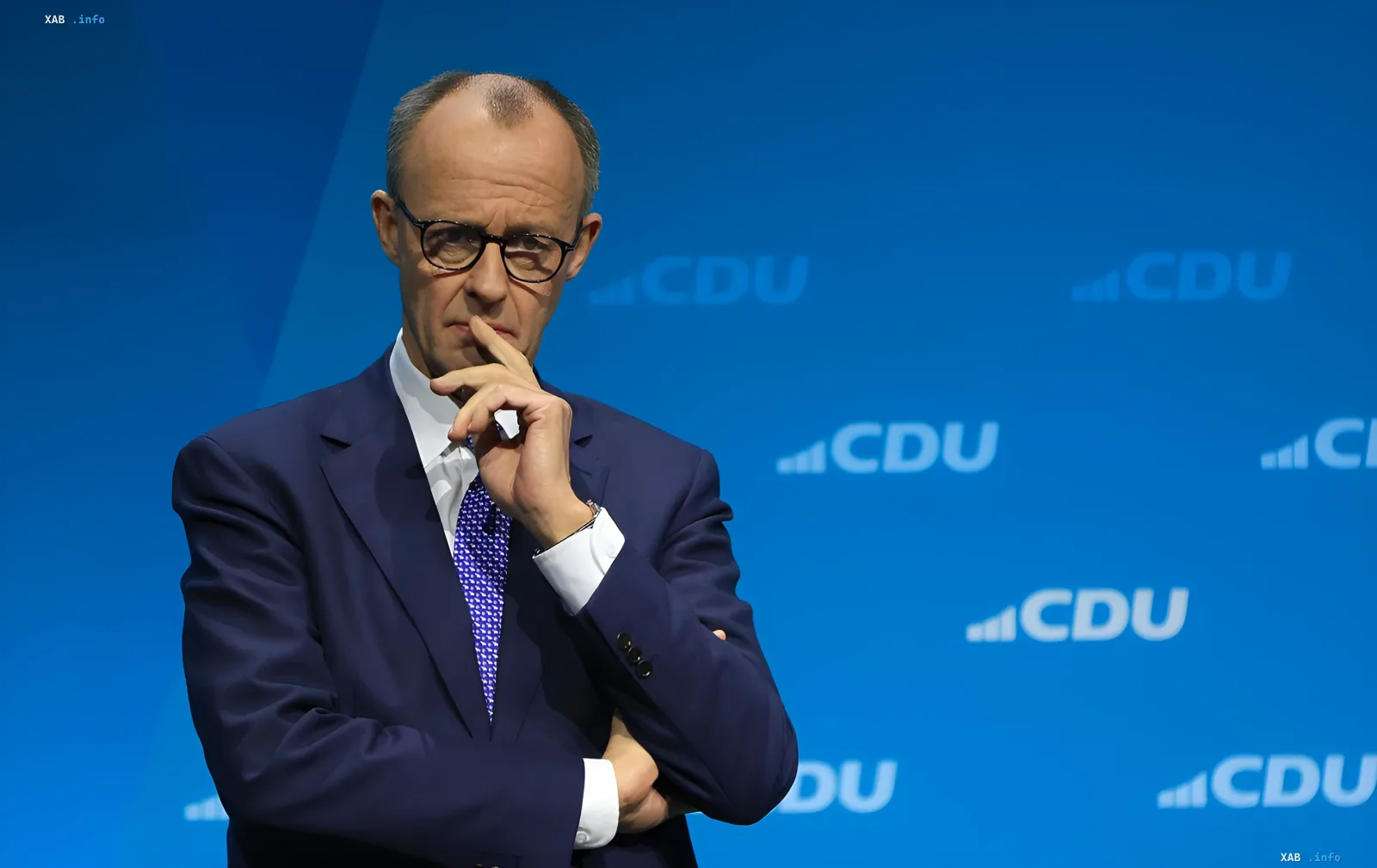
German Chancellor Friedrich Merz has abruptly cancelled a trip to New York scheduled for next week, where he was due to address the UN General Assembly and receive the Henry Kissinger Prize. A statement from the chancellery emphasizes that "contrary to initial plans, the Chancellor will not travel to New York next week, as his presence is required in Berlin." Instead of the US visit, Merz will attend a meeting of the CDU leadership on Monday and a faction meeting in the Bundestag on Tuesday. The decision comes amid growing pressure from his own party colleagues.
The decision to cancel the visit and its formal justification
The official version from the chancellery boils down to an organizational necessity: the head of government needs to be in the capital to work with the party and the faction. However, observers link the cancellation to the political climate. In recent days, a number of conservatives have openly criticized Merz, accusing him of the fact that his low personal popularity is directly reflected in the party's weak results in recent regional votes. According to the data cited in the materials, the 70-year-old Chancellor, elected in May 2025, has the lowest approval rating ever recorded for the head of the German government.
Internal crisis within the CDU
On the eve of the Sunday regional elections, dissatisfaction is growing within the CDU over the leader's strategy. Critics point to a series of the party's poor results and are calling for a course correction. Merz himself acknowledged last week that the government would have to "draw conclusions" from the ultraright's convincing victory in the Saxony-Anhalt regional elections, stating that this "will change the country's politics." Thus, the cancellation of the UN visit looks like an attempt by the Chancellor to personally lead the party campaign and maintain control of the situation ahead of the vote.
The threat from the AfD and the erosion of the CDU's position
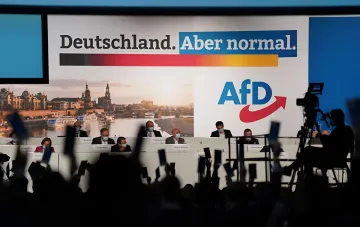
The context for the intra-party crisis was the historic result of the "Alternative for Germany" (AfD). According to reports, the anti-immigration party achieved its best result in history in the eastern German region on 6 September, falling just three seats short of the absolute majority needed to form the first ultraright regional government since World War II. Support for the CDU, which had led this region since 2002, has dropped sharply. Earlier, the Bild newspaper reported that the AfD had for the first time overtaken all other political forces in the country in popularity, gaining around 26% public support. In autumn 2025, the party was already accused of ties with the Kremlin, being called Putin's "puppet as a German party."
Contradictory data
The provided materials contain inconsistencies in the chronology of the regional votes. On the one hand, the text states that the cancellation of the visit is linked to the elections "on Sunday" (i.e., the nearest Sunday vote), while on the other hand, 6 September is cited as the moment of the AfD's historic result in Saxony-Anhalt. It is unclear whether the "Sunday" vote refers to the same region or to another, since the sources do not name the specific entity for the upcoming elections. Moreover, the claim of the "lowest approval rating in history" for the Chancellor is an assessment and is not supported in the primary materials by a specific figure or a reference to a poll. These discrepancies require clarification before the final publication of details.
Context and possible consequences
The cancellation of the visit to the UN General Assembly, where Merz was to receive the prestigious Henry Kissinger Prize, is symbolic: it shows that domestic political problems in Berlin have become more important than the international diplomatic agenda. If the CDU fails to stabilize the situation ahead of the Sunday elections, this could strengthen the position of the AfD and change the balance of power in the eastern states. For a Chancellor who already has a record-low approval rating, a failure at the regional level threatens further erosion of support and will complicate the implementation of the "changes" he has announced in the country's politics.