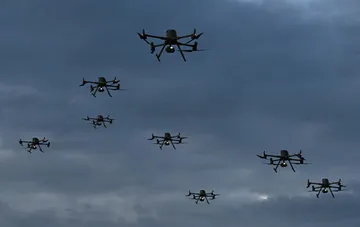
On the RBC-Ukraine podcast "TSE BAZA" (THIS IS THE BASE), volunteer, veteran, and Victory Drones project head Maria Berlinska stated that attempts to draft defense-industrial complex engineers into front-line combat are counterproductive. According to her, miltech—the military-technical sector—currently delivers 95–97% of battlefield destruction, while artillery and tanks "have long taken a back seat." In this logic, Berlinska believes that pulling industry specialists into the active ranks amounts to "shooting oneself in the foot."
Miltech as the Foundation of Enemy Combat Casualties
Berlinska estimates the total number of defense industry engineers across Ukraine at a maximum of 120,000 to 150,000, defining the "defense sector" specifically as miltech. By her assessment, drones and related technologies form the overwhelming majority of destruction, whereas traditional armored vehicles and artillery have lost their former roles. At the same time, she admits that the "age of tanks" might return, but only when effective active defense against drones emerges.
Personnel Shortages and the Sector's "Old Disease"
The Victory Drones head described attempts to lower the reservation quota for the defense-industrial complex as an effort to "cure an old disease that was left untreated for too long." According to her, the front line needs constant replenishment every month, and although robots have taken over a significant share of tasks, the need for people remains. That is why, in her view, the government "sometimes panics in search of solutions and tests various hypotheses": some of them will work, while others, she is certain, will "miss the mark"—primarily regarding the defense industry.
Government Position and Industry Reaction
Previously, it was reported that the government planned to reduce booking quotas in the defense sector to 85%, which drew a strong reaction from the industry. Simultaneously, the executive director of Tech Forces of Ukraine noted in an interview with RBC-Ukraine a growing shortage of personnel in the defense sector. Berlinska, in turn, pointed to a severe staffing famine: according to her, industry colleagues say among themselves that "qualified personnel are in very short supply."
Rhetorical Question and Systemic Risk
Berlinska called the very question of whether engineers should be pulled to the front line a rhetorical one. Her position is that losing miltech specialists will impair the front's ability to generate the bulk of destruction, meaning personnel decisions regarding the defense sector require extreme caution. Thus, the discussion surrounding defense industry reservations is not merely a personnel issue, but a strategic one: the resilience of the very tool that currently dictates the course of combat operations depends on it.