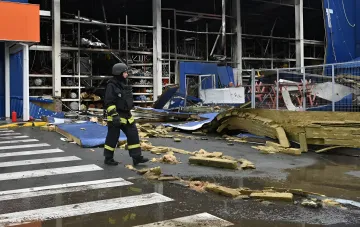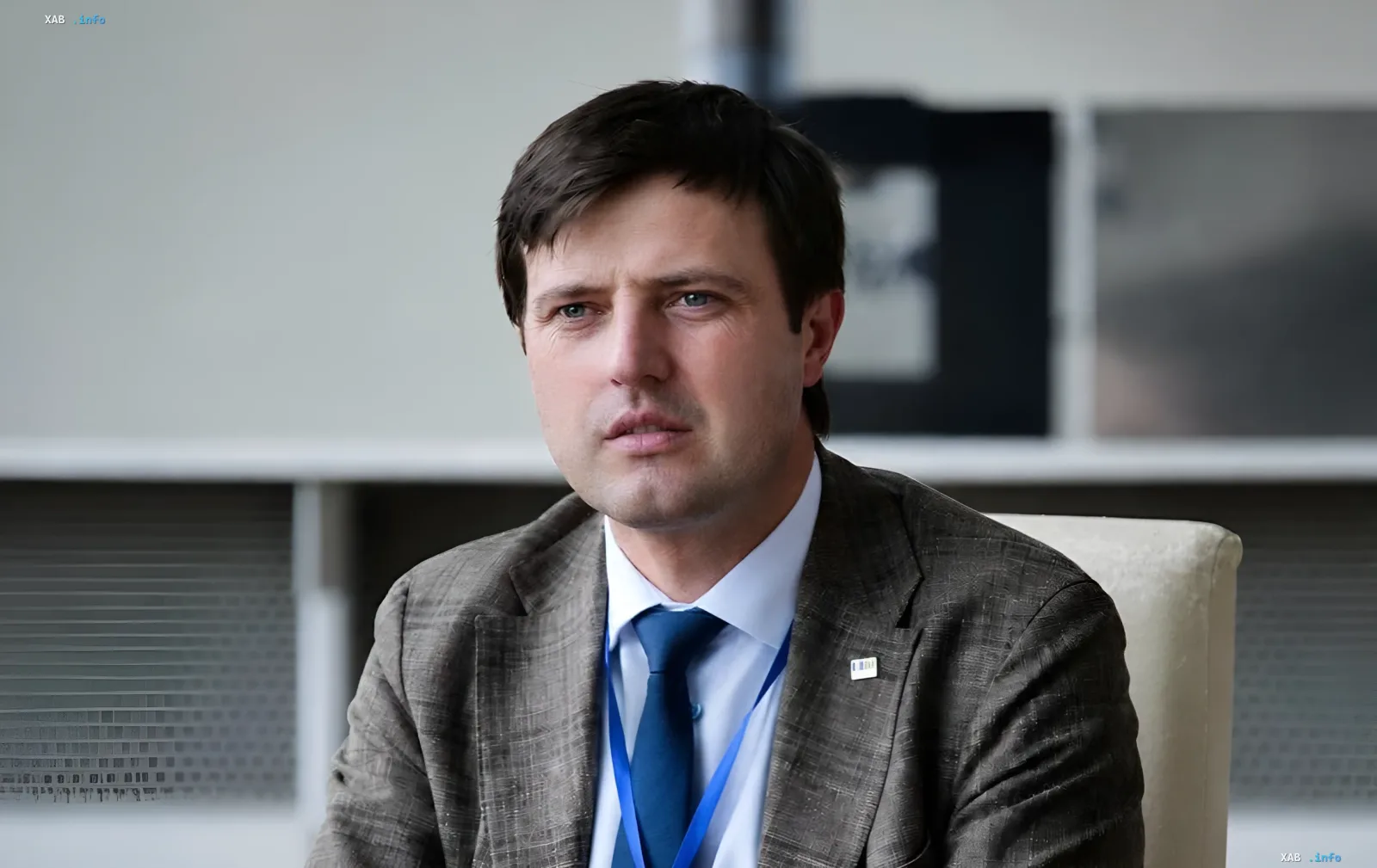
Russian strikes on Ukraine's warehousing and logistics infrastructure have created a problem for domestic producers and retail chains that goes far beyond the simple physical destruction of facilities. The key question, which still has no unambiguous answer, is who and in what proportion should bear the losses arising from the destruction of warehouses where goods belonging to different participants in the supply chain are stored simultaneously. Speaking against the backdrop of RBC-Ukraine's report citing Interfax-Ukraine, Minister of Agrarian Policy and Food Taras Vysotsky stated that there can be no universal formula for allocating damage and that each case requires an individual approach.
Rejecting the Linear Model: Why 50/50 Does Not Work
Vysotsky directly rejected the idea of automatically establishing a "fifty-fifty" proportion or placing 100% of the responsibility on one party. According to him, the share of cost price and the built-in margin differ radically across different types of products at each stage of the supply chain. "There must be an individual, fair approach to the distribution of losses. It cannot be a linear model. It cannot be 100%, it cannot be 50% to 50%," the minister emphasized. Among the factors that need to be considered in each specific case, he named the supplier, the retail chain, the product segment, the specifics of logistics, as well as the stage at which the product is transferred between participants in the supply chain, and the margin of the specific type of goods.
Legislative Vacuum and the Ministry's Limitations
At the same time, the Ministry of Agrarian Policy acknowledges a significant limitation: the department has no access to the bilateral commercial contracts between producers and suppliers, which makes it impossible to comment on the terms of loss allocation in specific situations. The relevant legislative amendments, according to Vysotsky, can be addressed by a separate bill that has already passed its first reading in the relevant parliamentary committee. The Ministry of Agrarian Policy is in favor of supporting it and is working on the corresponding clarifications. Thus, at the present time, the legal framework for the systematic allocation of responsibility among supply chain participants under conditions of military risk remains incomplete.
Damage Registry and Insurance System: Two Levels of Protection
Until the legislative mechanism is ready, the main tool for recording the damage inflicted remains registration in the International Registry of Damage Caused by the Aggression of the Russian Federation against Ukraine. "Its purpose is to record and then cover the corresponding losses in one way or another," the minister explained. The long-term solution, according to the Ministry of Agrarian Policy, should be a national system of insurance against military risks, the launch of which is being worked on by the Ministry of Economy. By design, insurance will allow covering war-inflicted losses without having to determine each time which specific supply chain participant is obliged to compensate them, thereby defusing the acuteness of the question of proportions.
Scale of Damage and the Rebuilding of Retail Logistics
Russian strikes on the food warehouses of Ukrainian retailers are systematic in nature. The attacks hit logistics centers, warehouses and production facilities; among the most affected were "Epitsentr," Rozetka, "Nova Poshta," "Silpo," Novus, as well as the companies Liqui Moly, Puma and Intertop. Ukrainian retailers have already begun rebuilding their storage and delivery system, moving to a network of small distribution warehouses. This decision particularly hits chilled products: transportation costs for them, according to available data, have risen by approximately 35–50%. In parallel, the State Property Fund has begun searching for warehouse space for the affected business — formally, hundreds of thousands of square meters are at the disposal of the state, which could potentially be utilized.