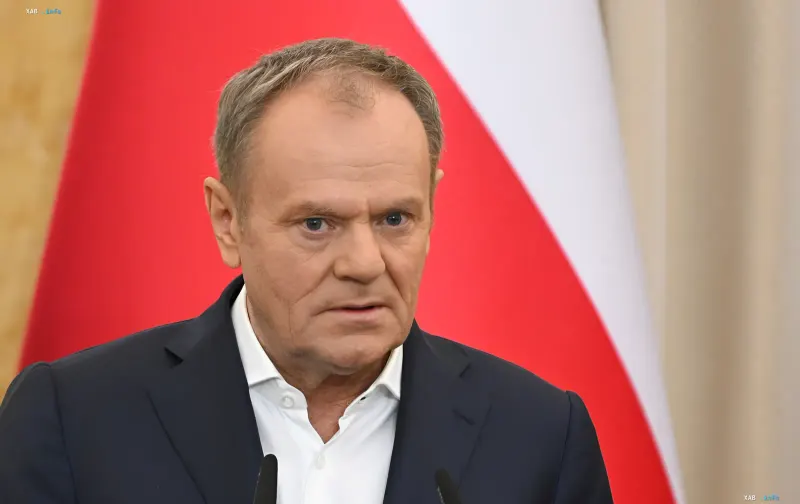
The situation on NATO's eastern flank has intensified following an incident that occurred in the night of July 30. Polish Prime Minister Donald Tusk officially confirmed that the cruise missile which violated the country's airspace was equipped with a warhead. According to him, there is a high probability that the projectile was launched from Russian territory.
Incident details: armed projectile
During a massive strike on Ukraine, one of the Kh-101 cruise missiles deviated from its course and crossed the border. The object fell 50 kilometers from the city of Lublin. Tusk emphasized that the missile was armed, making the incident particularly serious from the perspective of international security.
Polish authorities responded promptly to the border violation. In the Lublin Voivodeship, law enforcement officers discovered a crater at the site where an unidentified object, spotted during an air raid alert, had fallen. According to the Prime Minister, the Polish armed forces were prepared to shoot down the missile had it continued its flight over the country's territory.
Intentional violation or malfunction?
Although Tusk leans towards the theory of the missile's Russian origin, Polish Foreign Minister Radosław Sikorski, in an interview with the BBC program "World at One," called for caution in drawing conclusions. He noted that at this stage, it is impossible to accurately determine the motives behind the border violation.
"We do not know whether this was a technical malfunction or an intentional act, but at this stage, we must keep all options open," Sikorski stated.
Responsibility and ally support
Despite the uncertainty regarding the causes of the incident, the Polish leadership expressed gratitude to EU and NATO leaders for their solidarity and readiness to provide assistance. Sikorski emphasized the need for strict adherence to the plan to support Ukraine, placing special emphasis on the supply of air defense systems.
In the minister's opinion, Russia is attempting to break Ukraine's resistance through strikes on critical infrastructure, specifically heating and energy sectors. "They have destroyed 80% of Ukraine's electricity generation capacity, which affects both the civilian population and the defense sector," the diplomat noted.
In the night of July 30, Kyiv and western regions of Ukraine came under attack. Sikorski believes that Vladimir Putin, acting out of desperation, is throwing all available weapons into the fight, which increases the risk of similar incidents on the borders of partner countries.