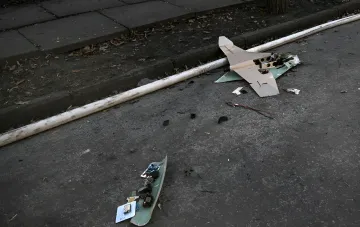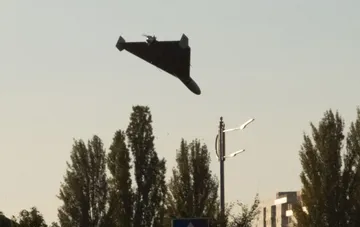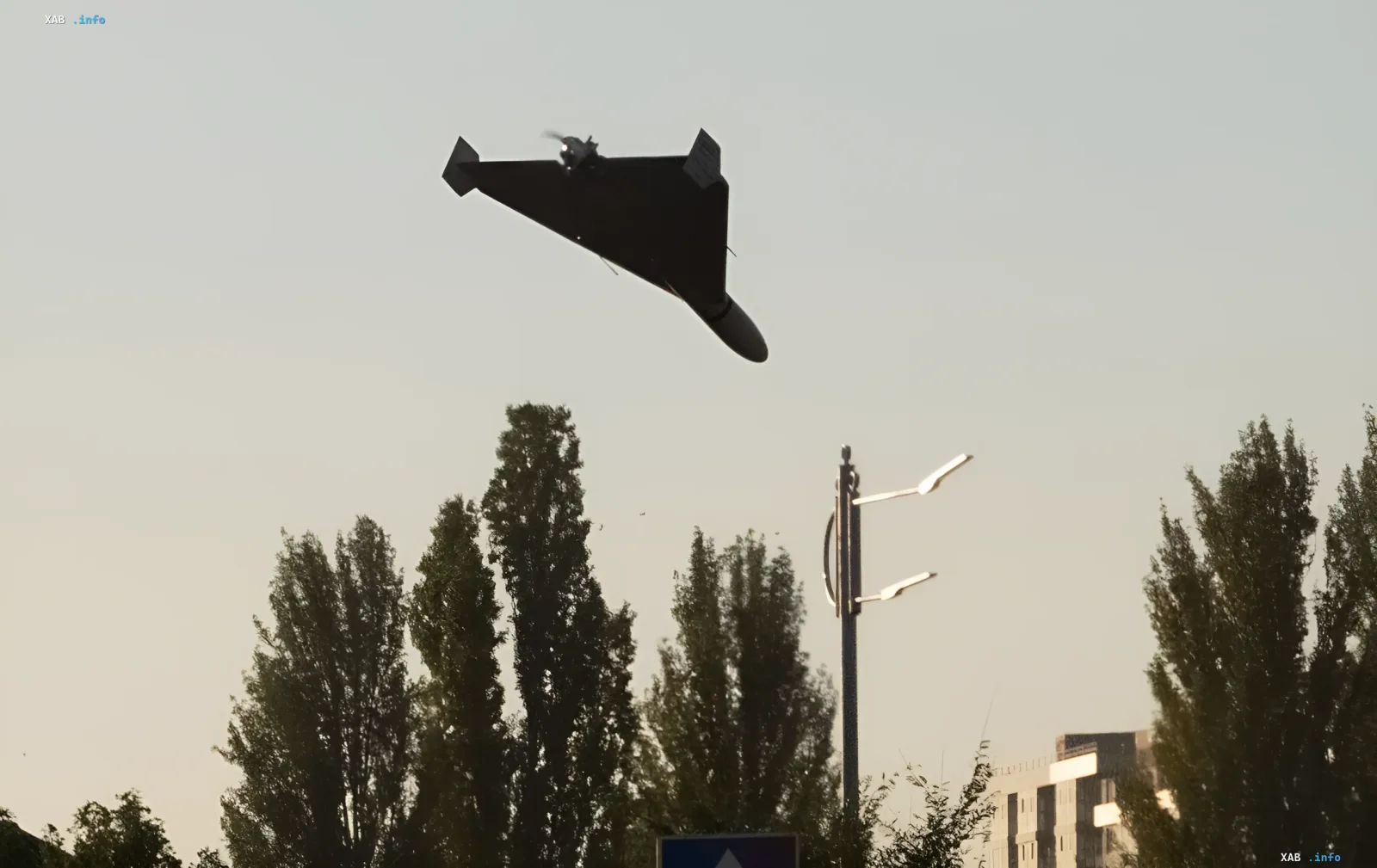
On the evening of August 30, 2026, during the latest Russian strike on Ukrainian territory, an unidentified aerial object was detected in the airspace of the Republic of Moldova, passing through the Transnistrian sector. This was reported by the Moldovan Ministry of Defense, according to RBC-Ukraine. According to the Air Operations Service of the country's National Army, the unidentified target was detected at 15:50, and the object crossed the state border from the Odesa region of Ukraine. The incident occurred against the backdrop of a massive aerial attack, which, according to Chisinau's assessment, was the cause of the unauthorized intrusion into national airspace.
Timeline of the incident
According to data from Moldova's defense ministry, the object's entry into the country's airspace was recorded in the area of the settlements of Limanske (Odesa region, Ukraine) and Dnestrovsk (Transnistrian sector). At 15:59, the aerial target left Moldovan territory and returned to Ukrainian airspace over the same Dnestrovsk–Limanske stretch. Thus, by the calculations cited by Moldovan media, the object remained over the country's territory for about nine minutes before crossing the border. The ministry reported no crash of the device or explosion on Moldovan territory in connection with this specific incident.
Official position of Chisinau
The Moldovan Ministry of Defense emphasized that the unauthorized incursion into the airspace was a direct consequence of the latest Russian strike on Ukrainian territory. The ministry stated that the overflight occurred as a result of today's aerial attacks by Russian forces against Ukraine. Chisinau also reported that the country's defense structures, together with international partners, are keeping the situation under control and taking security measures. "National authorities, together with partners, continue to monitor the airspace to ensure the safety of the population," the Moldovan defense ministry noted.
Contradictory data
There are a number of inconsistencies between the official wording and the media coverage of the event that are important to take into account. First, the Moldovan Ministry of Defense deliberately uses the neutral terms "unidentified target" and "aerial object," without disclosing the exact type of device (drone, missile, or other means), while some media immediately classify it as a drone in their headlines and context. Second, the official quote from the ministry contains an unusual and somewhat unclear formulation regarding "Russian forces," which makes precise attribution difficult. Third, unlike earlier incidents in which explosions and fires were recorded on Moldovan territory after devices crashed, in the case of August 30 there is no information about damage — the object, according to available data, merely crossed the border and left it. These differences in classification and in the details of the event's outcome make the picture incomplete and require clarification from Chisinau.
Context: a series of border violations
As observers note, this is far from the first case in which the consequences of Russian aggression have spilled beyond Ukraine and created a threat to neighboring states. Russian drones and missiles have repeatedly crossed the border and maneuvered in Moldovan airspace during successive attacks. In particular, on the night of August 27, 2026, five drones flew into Moldova after Russia's attack on Ukraine, violating the border after the end of a massive shelling of Ukrainian territory. In addition, on August 17, 2026, a Russian "Bandierol"-type drone penetrated Moldova, where an explosion occurred: the incident took place near the settlement of Talmaza in the Stefan Vodă district, where a fire broke out after the device crashed. Thus, the August 30 incident continues a growing series of violations of the country's airspace.
Response and security measures
Against the backdrop of recurring incidents, Chisinau emphasizes coordination with international partners and continuous monitoring of the airspace. The priority, as stated by the defense ministry, remains ensuring the safety of the population. Experts remind that each such intrusion increases pressure on Moldova and raises questions about the need to strengthen air defense and diplomatic response, since the country finds itself in a risk zone due to hostilities taking place beyond its borders. The situation remains dynamic, and additional clarifications on the nature of the object and the consequences of its overflight may come from the authorities of the Republic of Moldova.