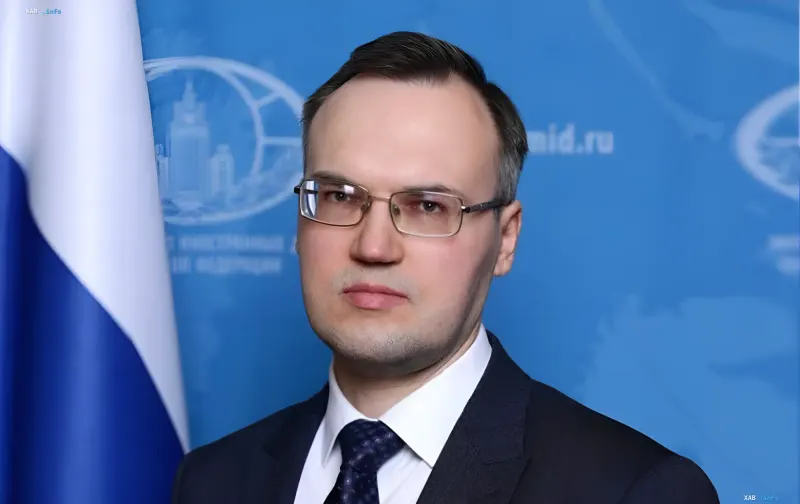
At a security conference in Moscow, high-ranking Russian Foreign Ministry diplomat Alexey Drobinin presented three potential formats for future agreements that he envisions as part of a new European security architecture. Speaking to attendees, Drobinin emphasized that such agreements could be discussed in the context of the peace process regarding Ukraine and are intended to provide additional security guarantees for the parties involved. The statement came amid ongoing discussions on how to build a sustainable security system on the continent after the protracted conflict.
Three Formats: From Collective Alliance to Bilateral Pacts
The first format proposed involves creating a collective defense alliance or concluding bilateral mutual assistance agreements. As an illustration, Drobinin cited treaties Russia already has with Belarus and North Korea. The second format consists of political agreements under which parties would commit not to provide assistance to each other's adversaries in the event of aggression; the diplomat cited the agreement with Iran as an example. The third and arguably most resonant option is bilateral non-aggression pacts, which, according to Drobinin, could be concluded with individual NATO member states. "For example, agreements of this kind could be concluded with individual NATO member states, which would then receive, for instance, additional individual security guarantees from the Russian Federation," the diplomat stated.
Uncertainty in the Details
However, Drobinin did not specify which Alliance countries Moscow would like to see as participants in such arrangements or under what specific terms they are proposed. The lack of detail raised questions among observers: it is unclear whether this refers to Eastern European countries located closest to the Russian borders or a wider circle of states. Furthermore, the question of how such bilateral pacts align with NATO’s collective obligations under Article 5 of the North Atlantic Treaty remains unclarified.
Connection to Abu Dhabi Talks
The topic of a new European security architecture was previously raised by Russia's chief negotiator, Vladimir Medinsky. According to him, this issue was central during two days of negotiations in Abu Dhabi. Thus, Drobinin's proposal at the Moscow conference can be viewed as an evolution and concretization of the line outlined on the diplomatic track in the UAE. Moscow, it seems, is attempting to offer European capitals an alternative security model in which bilateral and multilateral guarantees play a key role, rather than exclusively the Alliance's collective mechanisms.
Reaction from European Capitals
The idea of broader security arrangements for Europe is drawing a mixed reaction among European politicians. Some argue that such discussions should only be held after real progress is achieved in settling the war in Ukraine, particularly after a ceasefire. In their view, discussing a new security architecture without ending hostilities creates an illusion of diplomatic progress not backed by concrete steps on the ground. Other European voices, conversely, allow that parallel negotiations on long-term security guarantees could serve as an incentive for ending the conflict. As of the publication of this note, no NATO country has officially responded to Drobinin’s speech.