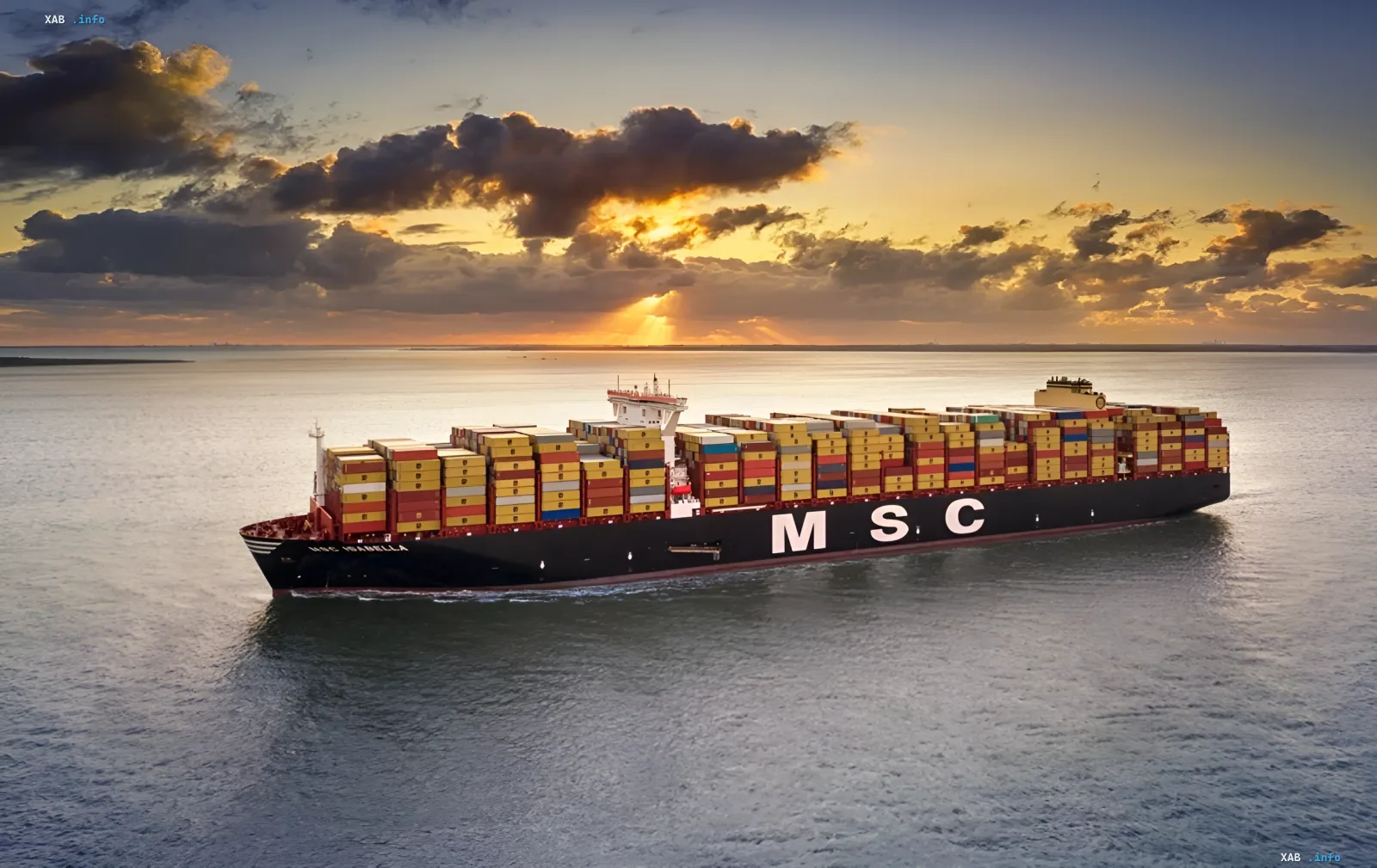
One of the world's largest container shipping lines, MSC Mediterranean Shipping Company, has suspended the acceptance of new bookings at the port of Novorossiysk. The decision was made against the backdrop of ongoing Ukrainian drone strikes on Russia's Black Sea infrastructure. This is stated in an official MSC message sent to the company's clients, and was also confirmed by an employee of the carrier's St. Petersburg office.
The attack on MSC ULSAN III as the trigger for the decision
The direct trigger for the suspension of operations was the attack on the container ship MSC ULSAN III, which was en route to Novorossiysk. According to the publication, following the incident, the company officially notified clients that it could no longer accept new requests for cargo loading and unloading at the port. MSC recommends that clients seek alternative routes until security conditions allow regular shipments to resume. Freight forwarders, in turn, are already advising their clients not to plan deliveries along this route.
Context: restrictions since 2022 and intensifying strikes
It is worth noting that MSC has limited its operations in Russia since 2022, amid the war against Ukraine. Due to the sanctions in force, the company now transports only food products and medicines into Russia. However, even this narrow segment of logistics has been put at risk: Ukrainian drone attacks, which began in mid-summer 2026, have significantly complicated imports from China via the Black Sea, according to employees of logistics companies. The operations of the key Russian port complex in Novorossiysk, according to RBC-Ukraine, were already at a minimal level before MSC made its decision to suspend operations.
Broader context: strikes on ports and "long-range sanctions"
The MSC suspension is only the visible part of a larger process. It was reported that near the Russian Black Sea ports of Novorossiysk and Tuapse, drones attacked at least five grain ships. This occurred against the backdrop of a general intensification of Ukrainian strikes on logistics infrastructure. In addition, on the night of August 12, 2026, Ukraine applied so-called "long-range sanctions" against Novorossiysk: during the operation, a large number of various Ukrainian weapons systems worked in coordinated fashion for the first time. The cumulative effect of these strikes makes the Black Sea route for container shipping extremely risky.
Contradictory data
Characterizations of MSC's actions in various sources show discrepancies. The company's official message and the confirmation from the St. Petersburg office refer specifically to a "suspension of the acceptance of new bookings" — that is, a temporary measure that allows for the resumption of operations. At the same time, the headlines of several publications (including The Moscow Times) characterize the event as MSC's "exit" from "Russian Black Sea ports," implying a more radical and possibly irreversible nature of the decision. The exact timeframe between the attack on MSC ULSAN III and the publication of the client notification is also not fully disclosed in open data, leaving uncertainty over whether the suspension is a reaction to a specific incident or the result of accumulated risk over the entire period of summer strikes.
Implications for the logistics market
MSC's decision, even in the form of a temporary suspension, carries symbolic and practical significance: the company remains one of the largest players in the global container market, and its withdrawal from a specific port signals a systemic increase in risk for the entire Black Sea logistics corridor. For Russian importers dependent on supplies from China, this means further cost increases and longer supply chains. For Ukraine, it is confirmation of the effectiveness of the strategy of pressuring the adversary's port infrastructure. The situation remains dynamic, and the resumption of regular MSC shipments through Novorossiysk will depend on changes in the situation in the Black Sea.