The US space agency NASA has announced the selection of 302 projects under the SBIR/STTR (Small Business Innovation Research / Small Business Technology Transfer) innovation support program. The agency will allocate up to $171 million for early-stage research and technology development that could support Moon and Mars exploration. The focus areas include power generation, robotics, and infrastructure preparation for future missions. This was announced on November 22, 2026.
Two-Stage Funding System
The program provides funding across multiple phases. Phase 1 contracts will receive up to $225,000 each: these funds are intended to verify the potential and technical feasibility of proposed solutions. In Phase 2, 98 projects continuing development started in 2025 were selected. Each can receive up to $1.3 million to demonstrate and mature the technology toward deployment readiness. Thus, the agency funds the full cycle — from idea to nearly production-ready prototype.
Robotic Arm and Freeze-Resistant Battery
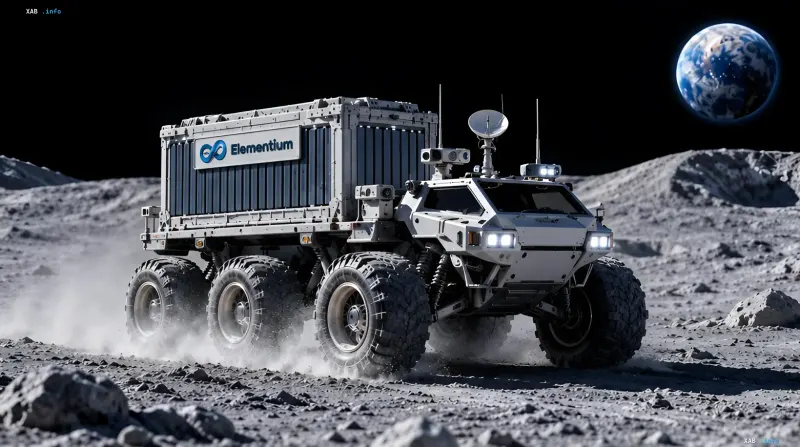
Among the Phase 1 projects, a robotic arm by Intelligent Fiber Optic Systems stands out, equipped with a camera and tactile sensors. The device will be able to determine surface texture, contact force, and temperature, helping rovers perform complex tasks without constant control from Earth. Another development is a battery by Elementium Materials designed to operate at temperatures down to −60 °C without active heating. According to the developers, it could prove useful for spacecraft and habitats facing a 14-day lunar night.
Rollout Solar Panels and Regolith Landing Pads
One of the Phase 2 projects belongs to Opterus Research and Development. It proposes a modular system of rollout solar panels that can be moved and installed by robots. The design is engineered to operate in dusty environments and can scale up to 50 kW of power. Such units are intended to power future infrastructure on the Moon. Another project, a joint effort between Slate Geotechnical Consultants and the Colorado School of Mines, focuses on creating reusable landing pads from lunar regolith. Without a reinforced surface, engine exhaust during landing kicks up dust clouds and scatters soil, posing a hazard to vehicles and nearby infrastructure. The developers will also study methods to repair such pads using rovers.
Strategic Context: From Lab Benches to the Lunar Surface
The funding volume and number of selected projects indicate that NASA is steadily expanding its technological foundation for a sustainable presence on the Moon and subsequent missions to Mars. The emphasis on small businesses allows the agency to quickly test unconventional approaches — from tactile sensors for robots to construction technologies utilizing local soil. Successful developments passing Phase 2 could eventually be integrated into spacecraft and modules that NASA plans to deploy to lunar orbit and the surface under the Artemis program and future initiatives.