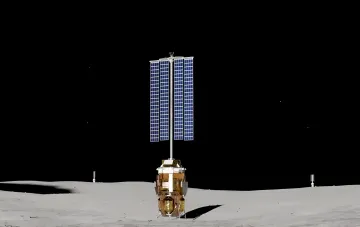
The NASA agency has awarded the private company Blue Origin a contract to develop and launch a new telecommunications network for Mars. The agreement is valued at approximately 700 million dollars, and its signing was the result of a tender that the agency organized back in May 2026. This is reported by RBC-Ukraine, citing the NASA press office.
Full cycle — on the contractor's side
Under the terms of the agreement, Blue Origin takes on the full cycle of project implementation: from initial design and development to integration, launch, and subsequent operational management of the network. The architecture being created will become an important part of NASA's broader space communication and navigation infrastructure, allowing the agency to delegate technical tasks to a private partner and focus on scientific priorities.
Three key functions of the network
The orbital vehicle will provide a high-speed channel for transmitting scientific results, high-resolution images, and operational commands. In addition to data transmission, the system will provide navigation services — precise coordinates and reference points for vehicles operating on the surface of Mars or in its orbit — and will support a stable communication channel during the most critical maneuvers and missions. In essence, this is about creating an "internet" for the Red Planet, capable of serving a growing number of robotic missions.
Timeline: platform by 2028, launch by 2030
Under the contract, Blue Origin is required to deliver the completed space platform to NASA no later than December 31, 2028, while the full launch of the system into operation on Mars is expected by 2030. These deadlines set the framework for all further work on deploying Mars communication infrastructure.
Strategic context: from Artemis to crewed missions
The development of Mars infrastructure is closely tied to the agency's long-term plans. Under the Artemis program, NASA is sending astronauts to the Moon to test technologies needed for future human presence on Mars, while robotic missions are paving the way for crewed expeditions. Delegating the creation of the network to a private company, similar to engaging commercial partners for logistics in Earth orbit and in the development of a lunar base, will allow the agency's scientists working under the Space Communications and Navigation program to focus on direct research and scientific discoveries.
The signing of the agreement marks an important stage in NASA's strategy to go beyond Earth and lunar orbit: the new specialized network is intended to meet the growing demand for transmitting large volumes of data, giving researchers greater channel capacity, high reliability, and operational flexibility.