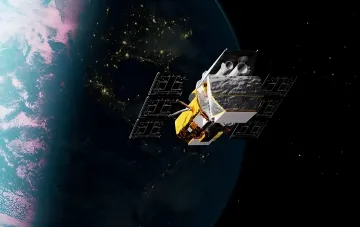
On August 20, 2026, Katalyst Space, in collaboration with NASA, officially abandoned a key phase of the experimental mission — the physical capture of the Neil Gehrels Swift space observatory and the raising of its orbit using the Link spacecraft. The decision was made following consultations with the U.S. space agency: ongoing issues with Link's attitude control system made an attempt to contact the telescope unsafe, according to SpaceNews. The cancellation marked a turning point for one of the first attempts in history to "rescue" an operational satellite that was never designed for on-orbit servicing.
What the Link Mission Was Supposed to Do
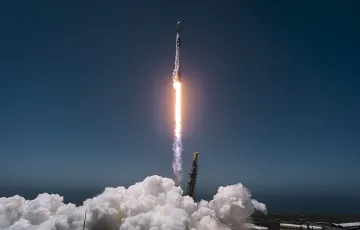
The Link spacecraft was launched into orbit on July 3, 2026, aboard a Pegasus XL rocket with an unusual task: to approach the Swift observatory, capture it, and use its own thrusters to raise it to a higher orbit. Such an operation could have significantly extended the operational life of NASA's scientific instrument, whose orbit is decaying faster than expected. A successful mission would have been a major demonstration of satellite life-extension technology for spacecraft that were not designed for post-launch servicing.
Attitude Control System Failure
Shortly after launch, Link itself experienced serious technical problems. On July 28, Katalyst Space reported that the spacecraft had entered an uncontrolled tumble on multiple axes due to malfunctions in its attitude control system. Specifically, it lost two of its three reaction wheels used for controlling its orientation in space, and the thrusters of its reaction control system were only partially functional. This put the entire subsequent approach phase to the target object at risk.
Stabilization and Updated Software
Engineers managed to significantly improve the situation. By early August, Link's rotation rate had been reduced from 9 to 1.47 degrees per second. To achieve stabilization, electric thrusters originally intended for raising the telescope's orbit had to be used. Later, specialists installed new flight software that was expected to allow the mission to continue. As late as August 11, Katalyst still anticipated that after the update, Link would be able to approach Swift and attempt to capture it.
Abandonment of Physical Contact
However, on August 20, the company, after consultations with NASA, definitively abandoned this part of the mission. The parties have not disclosed the specific criteria by which the operation was deemed too risky. Nevertheless, Link may still be used to test on-orbit servicing technologies: NASA and Katalyst are considering conducting an approach and close-proximity operations near Swift, but without physical contact and a subsequent orbit raise.
Context: Why Swift Is Losing Its Orbit
Swift has been operating in space since 2004 and specializes primarily in the study of gamma-ray bursts. Its orbit is gradually decaying due to the drag from the upper layers of Earth's atmosphere. High solar activity increases atmospheric density at the satellite's altitude, intensifying drag and accelerating the loss of altitude. NASA began exploring the possibility of rescuing the observatory using commercial spacecraft as early as 2025, and the Link mission became the first practical attempt to realize this idea.