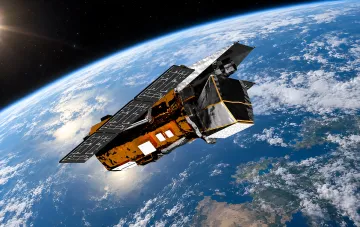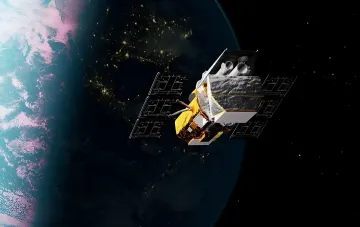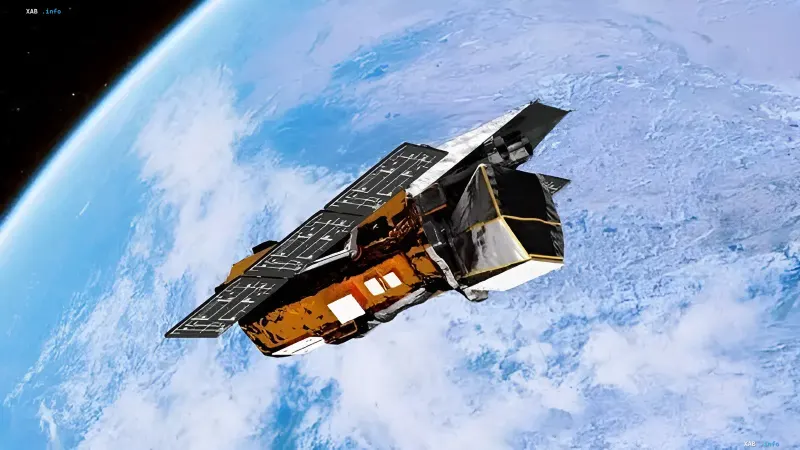
NASA's Swift space telescope, which operated in near-Earth orbit for over 21 years, has concluded its scientific mission. According to NASA, the spacecraft observed its final scientific target on October 20, 2026, while at an altitude of approximately 275 km above Earth's surface. At this point, atmospheric drag became so intense that the observatory lost the ability to steadily maintain its pointing direction. Engineers at NASA's Mission Control Center at Pennsylvania State University placed the spacecraft in safe mode and sent a command to cease operations. Entry into the dense layers of the atmosphere is expected within the next few weeks.
Solar Activity Accelerated Orbital Decay
The cause of the accelerated orbital descent was heightened solar activity, which heated the upper layers of Earth's atmosphere and increased their density. As a result, aerodynamic drag in low Earth orbit increased, and Swift began losing altitude faster than calculated. The accelerated descent was also facilitated by the observatory's return to full scientific operations in late August 2026. From early spring, specialists kept the spacecraft in a "compact" configuration—telescope protruding parts were stowed to minimize atmospheric drag and preserve the orbit as long as possible while awaiting a rescue operation.
Failure of the LINK Space Tug
The final hope for extending Swift's life was the LINK space tug mission by Katalyst Space. The LINK spacecraft was launched on July 3, 2026, on a Northrop Grumman Pegasus XL rocket from Kwajalein Atoll in the Pacific Ocean. The plan involved the tug rendezvousing with the observatory, capturing it, and lifting it to an orbit of about 600 km. However, in August 2026, LINK experienced attitude control system issues, prompting NASA and Katalyst Space to abandon the capture attempt. From that moment on, Swift was left without external support, and its orbit began a steady decline.
Scientific Legacy: 2,000 Gamma-Ray Bursts and 7,000 Publications
The Swift observatory was launched into orbit on November 20, 2004, to detect gamma-ray bursts—short-lived, powerful emissions of high-energy radiation. A key feature of the spacecraft is the combination of three scientific instruments: the Burst Alert Telescope (BAT), the X-Ray Telescope (XRT), and the Ultraviolet/Optical Telescope (UVOT). This configuration allowed it to detect a burst, determine its coordinates, and slew the other telescopes to the source in about a minute before the afterglow faded. Over its operational lifetime, Swift recorded more than 2,000 gamma-ray bursts, investigated over 1,400 supernovae, studied stars disrupted by black holes, active galaxies, asteroids, and comets. Observatory data contributed to approximately 7,000 scientific publications, and the mission archive contains about 12 TB of information, including over 1.5 million images obtained by UVOT, as well as brightness measurements and spectra of cosmic sources. The spacecraft was designed for a primary two-year mission but operated more than ten times longer than planned.
What Will Happen to the Debris
The exact date and location of Swift's entry into the dense atmospheric layers at the time of writing have not been determined: they depend on numerous factors, including future solar activity dynamics and the spacecraft's residual mass. Preliminarily, NASA expects the debris to burn up over the tropical zone—within 21 degrees latitude north and south of the equator. As with other large satellites being deorbited, complete structural degradation in the atmosphere is considered the most likely scenario, though individual elements could reach the surface. NASA does not anticipate significant risk to the public and infrastructure.