The U.S. space agency NASA has signed contracts totaling $1.3 billion to pre-purchase rocket launches and orbital tug services for lunar cargo delivery. According to Mark Wiese, the lead for NASA's lunar logistics, this involves six tasks under the Venture-Class Acquisition of Dedicated and Rideshare (VADR) program. The fundamental shift in approach is a change in logic: instead of ordering transport for each specific mission, the agency is forming a stockpile of available transport capacities and then selecting scientific instruments, satellites, and other cargo to fit them.
Three Rockets and Four Tugs
Three carriers have been selected for orbital insertion: SpaceX’s Falcon 9, Blue Origin’s New Glenn, and Relativity Space’s Terran R. Notably, Terran R has not yet flown — its first launch is expected in 2027. Orbital transport after insertion, i.e., orbital tugs, will be provided by four companies: Blue Origin, Firefly Aerospace, Impulse Space, and Quantum Space. Thus, NASA is immediately forming a diversified transport chain consisting of several independent contractors.
CAPSTONE 02 and Altus Communications Satellites
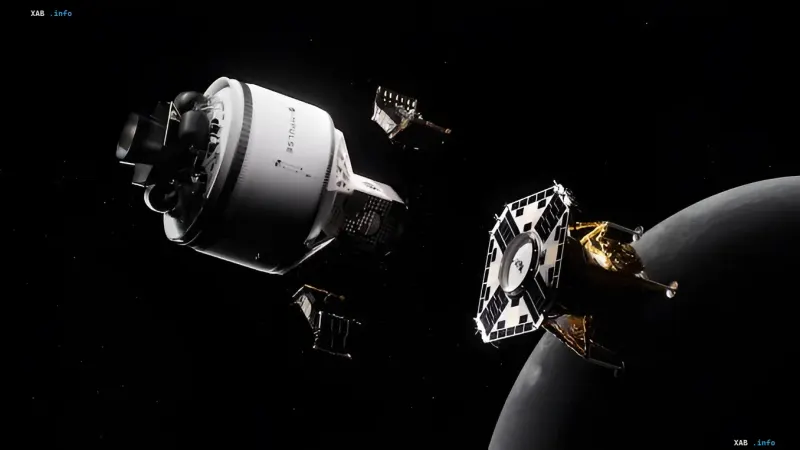
One of the six tasks, worth $185 million, involves the launch of two CAPSTONE 02 mission satellites in 2027–2028. They will continue the work of the first CAPSTONE mission, testing navigation and communication in cislunar space. A Falcon 9 will be used for the launch, with mission integration managed by Arrow Science and Technology, while Quantum Space will provide the Ranger orbital tug. A second Falcon 9 mission will deliver a group of Altus communications satellites developed by Intuitive Machines: Impulse Space will act as the prime contractor and integrator, and its Mira tug may be used for delivery. NASA plans to place several satellites in a single launch to avoid occupying capacity on future missions under the Commercial Lunar Payload Services (CLPS) program.
MoonFall Landers and Communication Tests
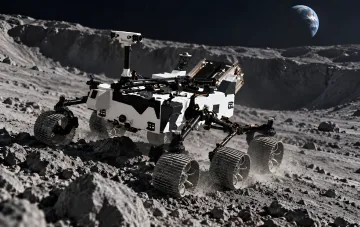
The next three tasks involve the New Glenn rocket. In one of them, Firefly Aerospace's Elytra tug will deliver three small MoonFall landers to the Moon, developed by NASA's Jet Propulsion Laboratory (JPL). They are intended to explore the surface by moving between selected points in short hops; using a tug will allow them to preserve more of their onboard fuel for surface operations. The other two missions will utilize Blue Origin's Blue Ring tugs — one of which, in addition to its primary NASA payload, is slated to test a communication system with satellites in cislunar space.
Terran R Demonstration and Horizons until 2029
The sixth task involves the launch of a Terran R rocket with a Helios orbital tug and a lunar lander from Impulse Space. The mission will demonstrate the delivery of an increased payload to the lunar surface. NASA has not yet selected the specific cargo: the agency is considering several options and intends to evaluate test results before making further decisions. NASA expects this new scheme to accelerate the creation of transport infrastructure for a permanent lunar presence: the first phase of the Moon Base program is planned through 2029 and includes technology demonstrations and scientific experiments necessary for operations in lunar conditions. At the same time, the contracts create demand for commercial systems, a significant portion of which are still under development.