Humanity continues active preparations for returning to Earth's natural satellite and subsequently exploring Mars. However, large-scale space missions will face monumental challenges, including deadly radiation, extreme temperature fluctuations, deep vacuum, and abrasive lunar dust. In these harsh environments, astronauts will require reliable support, which advanced robotic systems and humanoid androids are ready to provide.
The iMETRO Testbed and Valkyrie Robot
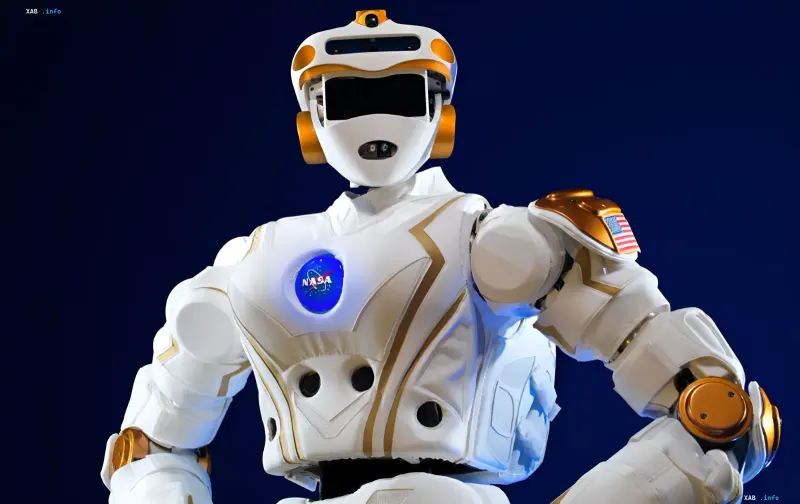
Building on years of operational experience with projects like Robonaut 2, engineers at the Johnson Space Center have deployed the advanced humanoid Valkyrie for work on extraterrestrial bases. At the specially constructed iMETRO test facility, specialists carefully replicate the conditions of the lunar and Martian surfaces. Here, both hardware and sophisticated software are tested, enabling robots to adapt to an unpredictable extraterrestrial environment without the need to wear heavy space suits or require constant supplies of oxygen and water.
Solving Signal Delay and Autonomy
One of the major technological hurdles in controlling equipment on the Moon and Mars remains the physical radio signal delay, ranging from several seconds to over twenty minutes. To overcome this barrier, developers are introducing semi-autonomous algorithms. During recent tests, software from PickNik allowed a robotic arm to autonomously locate a spacecraft hatch, turn the latch, open the heavy door, and move cargo inside. Now, the operator provides only a high-level command, while the robot handles fine motor coordination independently.
A New Approach to Designing Extraterrestrial Bases
The integration of humanoid robots into future expeditions fundamentally alters the philosophy of designing space modules and infrastructure. Engineers account for the needs of robotic assistants right at the blueprint stage: future residential and technical complexes on the Moon and Mars are equipped with large handles, contrasting markings, and specialized lighting. This ensures the infrastructure is equally accessible to living astronauts and their metallic counterparts.