In its October inflation report, the National Bank of Ukraine recorded the massive negative impact of Russian strikes on industrial infrastructure and the blockade of sea ports on the country's macroeconomic indicators. According to the regulator's estimates, in the second half of 2026, these very factors will reduce real GDP growth rates by 1.9 percentage points, while losses in the foreign trade balance will amount to $6.6 billion. RBC-Ukraine reports this citing the NBU document.
Gradual accumulation of damage: from 0.7 to 1.2 pp per quarter
The NBU broke down the losses by quarters: in the third quarter of 2026, the impact of shelling and the blockade on GDP is estimated at 0.7 percentage points, and in the fourth quarter at already 1.2 pp. Thus, economic damage accumulates as the destruction of production facilities mounts and enterprise downtime drags on. The regulator emphasizes that a significant portion of the losses falls not only directly on metallurgy, but also on related economic sectors that lose demand for their products and services due to the shutdown of key industrial consumers.
Metallurgy on the brink of shutdown: for the first time in a hundred years
The central element of the crisis was the de facto shutdown of the Ukrainian metallurgical industry. According to the Institute for Economic Research and Policy Consulting, in September 2026, for a whole week, not a single ton of steel was smelted in the country—for the first time in at least a hundred years. Following a ballistic strike on August 11, Zaporizhstal stopped operations, and on September 25, ArcelorMittal Kryvyi Rih announced the suspension of the steel plant until the end of the war. As a result, manufacturing industry in September shrank by 7% year-on-year, and mining by 12.3%, primarily due to a drop in iron ore extraction directly linked to lower metallurgical production. Ukraine's real GDP in September contracted by 2.4% year-on-year.
Blockade of Greater Odesa ports: baseline scenario until mid-2027
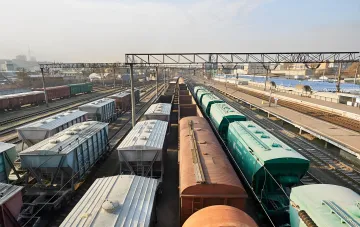
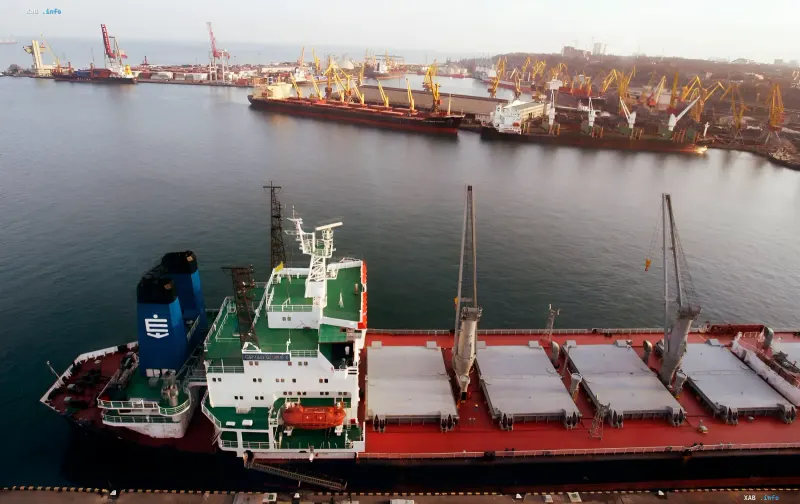
In its baseline scenario, the NBU assumes that the blockade of Greater Odesa ports will last until mid-2027. This will continue to restrict the export capabilities of both the mining and metallurgical complex and the agricultural sector. For the MMC, costly alternative logistics remain an additional risk: high transport costs reduce the profitability of iron ore extraction, and restricted sea exports lead to the accumulation of products in warehouses. The NBU explicitly warns that the destruction of production facilities and prolonged downtime of metallurgical enterprises will lead to a significant reduction in the production and export of metal products.
Agricultural sector and foreign trade balance: minus $6.6 billion
In parallel with metallurgy, the agricultural sector is suffering serious losses. The reduction in agricultural exports due to the inability to use sea ports will cause the foreign trade balance to deteriorate by $6.6 billion. The NBU notes that the intensification of attacks on enterprises and infrastructure, combined with the port blockade, has led to a sharp slowdown in economic activity and simultaneously increased price pressure—that is, a combination of recessionary and inflationary effects typical of the so-called stagflationary scenario.
Consequences will extend beyond 2026
The NBU warns that the negative effect of Russian attacks and export logistics problems will not be limited to the current year: "The negative consequences of shelling for economic activity and price dynamics will also be felt in 2027." On the foreign exchange market, the consequences are already manifesting: the official dollar exchange rate exceeded 45 hryvnias for the first time in history, and according to forecasts by banks and investment companies surveyed by Forbes Ukraine, by the end of the year it could range between 45.5–46.6 UAH/$. To stabilize the market, the NBU sold a record $5.5 billion from reserves in September, and the total volume of interventions for the first nine months of 2026 reached $38.5 billion compared to $26 billion for the same period last year. Thus, the shutdown of metallurgical enterprises, the destruction of infrastructure, and the prolonged blockade of ports form systemic losses for the Ukrainian economy across all key parameters: GDP, exports, production, and financial stability of enterprises.