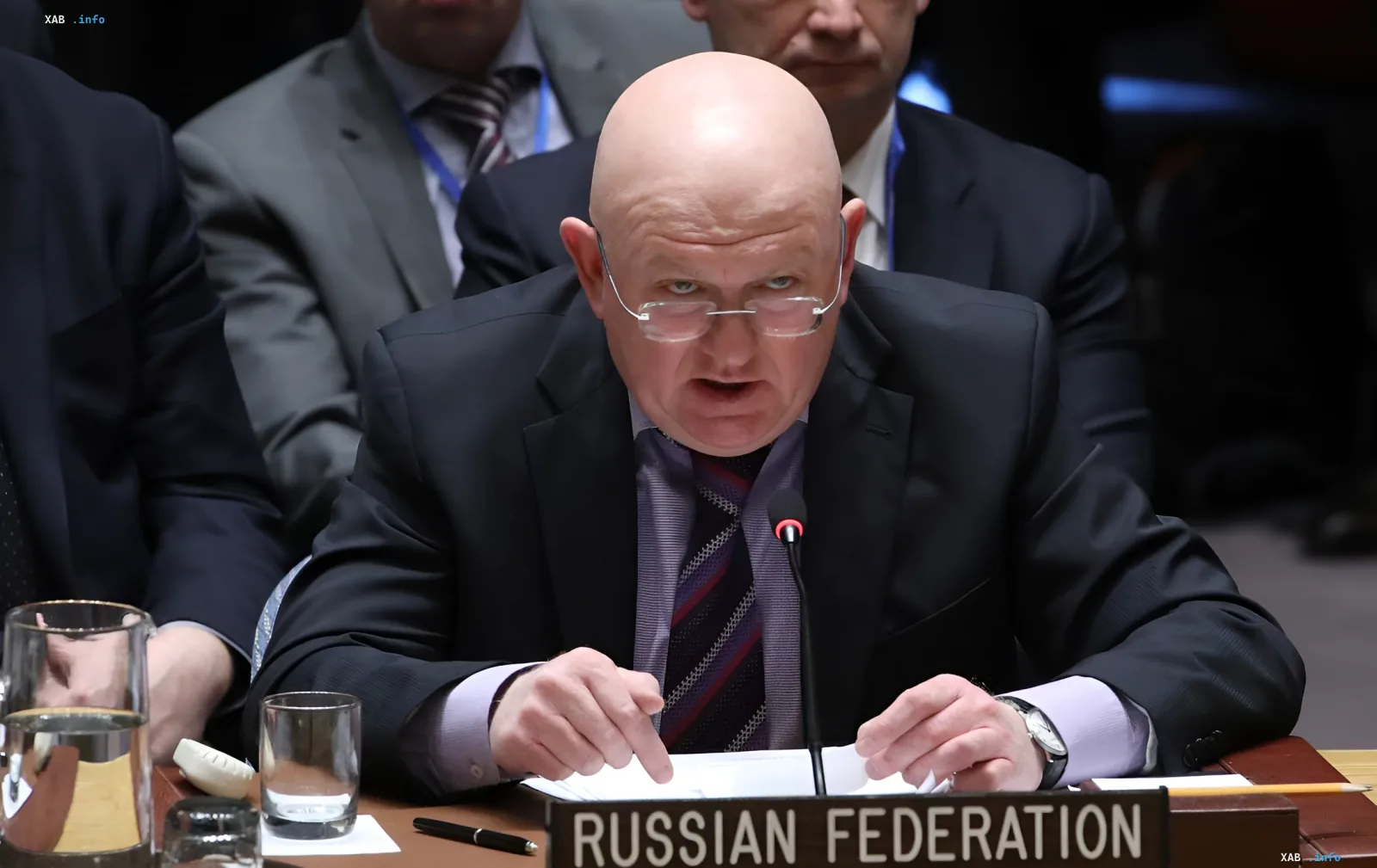
Vasily Nebenzia, Russia's representative to the UN, put forward a condition for Ukraine that Ukrainian and international media have characterized as an ultimatum: without recognition of the so-called "established realities on the ground" and the elimination of the "root causes" of the conflict, there will be no peaceful settlement. This is reported by RBC-Ukraine, citing a statement by the diplomat as quoted by RIA Novosti. According to Nebenzia, as long as Kyiv "clings to illusions" and "rejects the choice of millions of people," Russia will "consistently pursue the objectives of the special military operation by military means."
An Ultimatum in the UN Format
The wording of the Russian representative essentially repeats the position that Moscow has been building throughout the conflict: a readiness for diplomatic settlement on the condition that it takes into account the "new territorial realities." Nebenzia emphasized that future agreements must take into account Russia's interests in the sphere of security and, in his words, the "positions of the population of the occupied territories." Thus, from Moscow's point of view, the condition for ending hostilities becomes Kyiv's recognition of the seized territories, which contradicts the basic principles of international law and the territorial integrity of states.
A Practical Break with the West
Separately, the Russian diplomat stated that Russia's contacts with Western countries on the issue of Ukraine have "practically ceased." According to observers, this statement marks Moscow's shift from the rhetoric of possible multilateral negotiations to a unilateral dictation of terms, in which the diplomatic channel is effectively reduced to zero, and the main instrument of pressure remains military.
Contradictory Data
The statements of the parties, and even within Russian rhetoric, contain notable inconsistencies. On the one hand, Nebenzia at the UN speaks of the cessation of contacts with the West and of a readiness to continue the war by military means if Kyiv does not accept Moscow's conditions. On the other hand, on that same September 1, Russian Federation Council Chairman Valentina Matviyenko stated that the Russian side is "ready to return to negotiations" if a "reliable peace plan" is created, and emphasized that Moscow's conditions "have been unchanged since the start of the war." Thus, Moscow's public position simultaneously declares both a readiness for negotiations and a readiness to continue hostilities, and contains contradictory signals about the state of the diplomatic channel — from "practically ceased" to "ready to return to negotiations." Ukrainian media (RBC-Ukraine, Comments) interpret Nebenzia's words as an ultimatum, while Russian outlets (MK) emphasize the wording about "consistently achieving the objectives by any means."
Kyiv's Position
Ukraine does not agree with the demands put forward. Kyiv insists on the restoration of the state's territorial integrity and a return to the internationally recognized borders of 1991, that is, on a refusal to recognize any of the occupied territories. Thus, a fundamental gap remains between the positions of the parties: Moscow makes the condition for peace the recognition of the seizure, while Ukraine makes the condition for peace the return of the territories.
Context and Significance of the Statement
Nebenzia's speech at the UN, against the backdrop of Matviyenko's statement about a "reliable peace plan," shows that Russian diplomacy continues to use the format of international platforms to entrench in the public discourse the thesis of the "unchanging nature of Moscow's conditions." For Kyiv, this means that, in its assessment, no real diplomatic breakthrough is expected until Russia abandons the demand for recognition of the occupied territories. The statement thus marks a dead end in the negotiation track and shifts the emphasis to the continuation of hostilities.