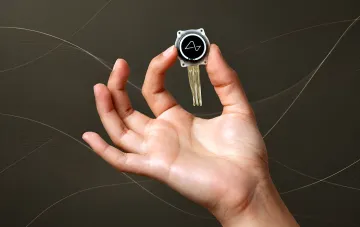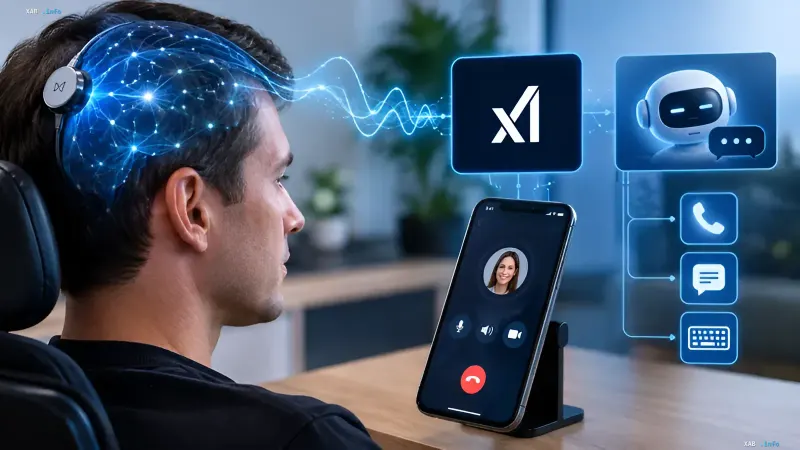
Neuralink has demonstrated a fundamentally new set of features for its N1 brain-computer interface, enabling a person with severe speech impairments to control artificial intelligence, make phone calls, and type text on an iPhone solely by 'thought alone.' The showcase trials took place as part of the VOICE clinical study, aimed at restoring communication capabilities for individuals who have lost their speech. The key difference between this new generation of features and previous versions is that the patient no longer needs to perform any physical actions to initiate most operations—it is enough to mentally utter the trigger phrase 'Hey Neuralink.'
72-Hour Marathon at the Patient’s Bedside
According to demonstration materials described by the 3DNews publication, most of the new capabilities were developed during a 72-hour engineering marathon conducted by Neuralink specialists directly at the home of one of the VOICE study participants. This working format—featuring real-time algorithm development and debugging in conditions as close as possible to the patient's daily life—makes it possible to quickly identify and eliminate bottlenecks in the 'neural signal → decoding → app command' chain. It was under these conditions that the launch of the Grok AI agent was fine-tuned via the mental utterance of the phrase 'Hey Neuralink,' after which the user similarly mentally formulated a task, and the system recognized the neural activity associated with the attempt to speak and transmitted the command to the agent, which independently performed the assigned actions on the computer.
Automatic Speech Activity Detection
One of the most practical new features is the automatic detection of the moment when a patient intends to speak. Previously, participants had to manually press a button to start and stop recording brain signals for subsequent speech decoding. Now, the algorithm independently determines the start and end of speech intent and enables or disables signal processing without any physical interaction from the user. This significantly reduces the cognitive and motor load on a person who may have extremely limited remaining bodily functions.
Calling a Wife via Synthesized Speech
A separate package of developments is tied to integrating the brain-computer interface into everyday communication tools. The Bloom application was taught to transmit synthesized speech directly into the iPhone microphone audio stream during a phone call: the interlocutor hears words generated by the computer based on the user's neural signals. During the test, the participant was able to call his wife and converse with her in a normal phone mode, without a physical keyboard and without speaking the words aloud. In addition, engineers implemented text input using brain signals directly into iOS applications, accelerated recognition error correction, and added a feature to launch the speech interface directly from the lock screen. To configure the system, real-time brain activity visualization is provided, showing the intensity and distribution of recorded signals and helping the user select the most effective mental speech commands.
What It Actually Is and What It Isn't Yet
It is important to emphasize that all listed functions are currently experimental developments and are by no means a finished commercial product. Neuralink has not published quantitative metrics for recognition accuracy and command processing latency for the new features, limiting the ability to independently assess their practical effectiveness. The N1 implant records electrical neural activity, and decoding algorithms convert it into presumed words or commands; this is not reading arbitrary thoughts, but recognizing brain activity associated with the intent to speak. The device has not yet received FDA approval for commercial use. The VOICE clinical study is intended for people with severe speech impairments, including those resulting from amyotrophic lateral sclerosis, spinal cord injuries, and stroke.
Context and Industry Significance
The demonstration, conducted against the backdrop of the current date of October 31, 2026, marks the transition of brain-computer interfaces from the stage of 'decoding individual characters' to the stage of 'controlling complex digital services, including AI agents and telephony.' The integration with a specific AI agent (Grok) and the iPhone ecosystem brings the system closer to a real-world user scenario than abstract laboratory setups. At the same time, the lack of public metrics for accuracy, latency, and sample size, along with the absence of regulatory approval, means that a significant path remains before mass or even wide clinical adoption. Nevertheless, the demonstrated scenario—mentally launching AI, automatic speech intent detection, and calling a loved one via a synthesized voice—sets a new benchmark for the entire brain-computer interface industry and for Neuralink's competitors in the race to restore communication for people with severe neurological disorders.