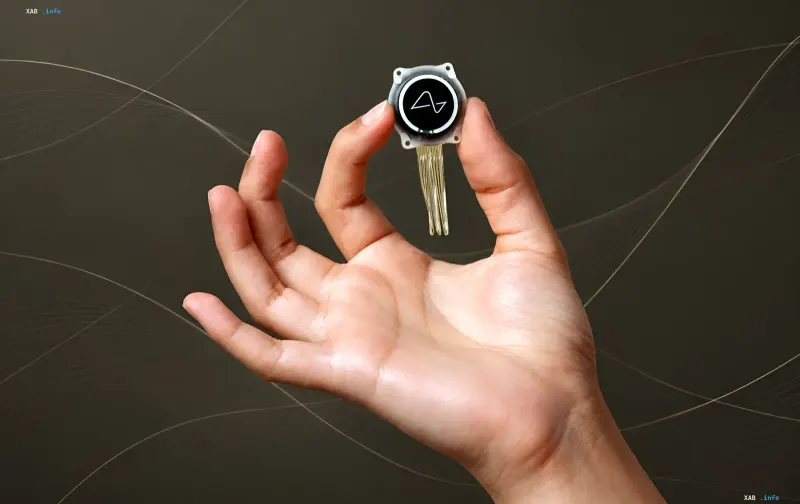
Neuralink has unveiled an updated feature set for its brain implant, allowing a person with severe speech impairments to conduct a full telephone conversation and issue commands to artificial intelligence purely by the power of thought. This is reported by RBC-Ukraine with reference to Interesting Engineering. During the demonstration, a patient with severe speech impairments successfully talked on the phone with his wife using a synthesized voice generated by the chip. The person on the other end of the line heard not a set of symbols or a delayed recording, but a natural voice stream transmitted directly by the implant into the iPhone microphone audio channel.
Grok Integration: Mental Launch of the AI Agent
One of the central innovations of the update is integration with the Grok AI agent developed by xAI. To activate the system, the user simply needs to mentally pronounce the phrase "Hey Neuralink" and then formulate a command. The AI agent independently interprets the intent and executes the action on the connected computer—from opening applications to running complex multi-step tasks. Thus, any intermediate keyboard, trackpad, or conventional voice assistant disappears entirely between the user's thought and the AI's result.
Automatic Speech Detection and Signal Visualization
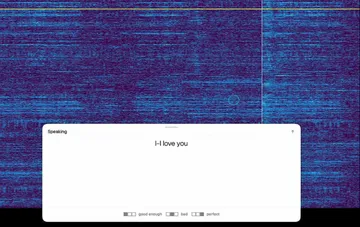
Previously, patients had to manually turn brain signal recording on and off every time they wanted to "speak." The new update introduces automatic speech intent detection: the system itself determines the moment a person is about to formulate a phrase and initiates recognition without pressing any buttons. Simultaneously, real-time visualization has been implemented—graphic effects on the screen display the intensity of the implant's signals, helping the user select more effective patterns of imaginary speech and gradually "tune" their inner voice to the decoding algorithm.
Practical Communication: Calls, Dictation, and Editing
The update has significantly expanded everyday communication scenarios. The Bloom application, which serves as the main interface for interacting with the chip, now features the ability to quickly correct improperly decoded text and work with the device right on the smartphone's lock screen—without unlocking or switching to a separate app. The developers also integrated a neural keyboard allowing text dictation into any mobile application. During the demonstration, the trial participant not only called his wife but also showed how the synthesized voice is transmitted into the standard iPhone audio stream, making the call indistinguishable from a regular voice conversation for the interlocutor.
72-Hour Patient Bedside Sprint
A significant portion of the new features was created during a 72-hour experimental sprint conducted by Neuralink engineers directly at the patient's home. This development format—dense iterative work under real-world usage conditions rather than in a laboratory environment—allowed for the rapid identification and elimination of practical inconveniences, ranging from recognition delays to decoding errors of individual-specific mental speech patterns. Essentially, the update is the result of "field" adjustments tailored to a specific user with severe disorders such as amyotrophic lateral sclerosis (ALS).
Limitations: Research Status and Lack of Quantitative Metrics
Despite the impressive demonstration, Neuralink did not publish exact quantitative metrics for speech decoding accuracy—neither the percentage of correctly recognized words nor the average delay between mental formulation and text appearance on the screen. Neuralink's brain implants currently remain research devices: they have not received approval from the US Food and Drug Administration (FDA) or other regulatory bodies for wide clinical use. This means that the shown features are available only within controlled trials, and mass adoption of the technology remains a subject of future regulatory procedures.