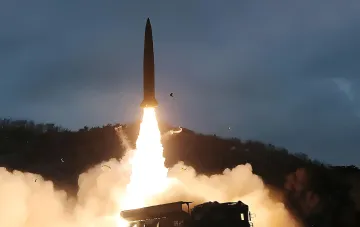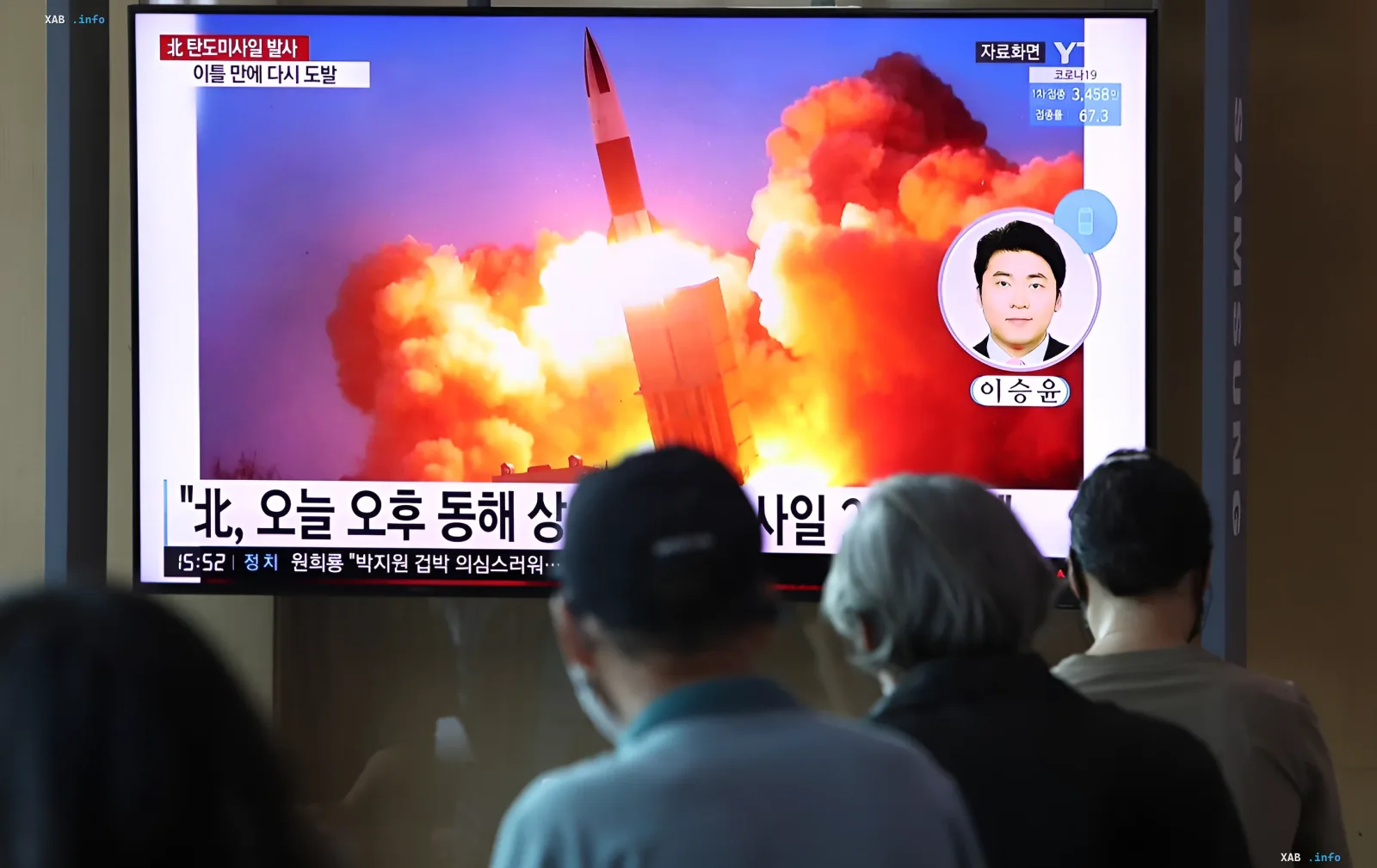
Kim Yu-jong, sister of North Korean leader Kim Jong-un, publicly stated that the multinational military exercises led by the United States in the region only strengthen Pyongyang's resolve to expand its nuclear arsenal and bolster its defensive capabilities. In her words, "it is inevitable that the growing threat to our national security from external forces leads to a steady increase in our physical might." The statement came against the backdrop of a series of maneuvers involving Washington, Seoul, and Tokyo and was accompanied by a new salvo of missiles from the North Korean side, which was captured on air by South Korean television channels.
Drills as a "military rehearsal"
Pyongyang accused the United States of stoking tensions on the Korean Peninsula over a series of multinational exercises, including the Pacific Vanguard naval drills involving South Korea and Japan, which concluded last week. Kim Yu-jong called these maneuvers "military rehearsals" led by the United States and emphasized that North Korea's pursuit of strengthening its nuclear deterrence would remain unchanged: "Our will to defend our sovereignty is expressed in clearer actions, and no changes will ever occur in the process of strengthening nuclear deterrence."
Missile salvo after the maneuvers
The warning came after the five-day Freedom Edge exercises, which the United States, South Korea, and Japan conducted in international waters east and south of the South Korean island of Jeju. According to US and South Korean military sources, the maneuvers deployed naval and air assets and practiced missile defense, cybersecurity, and medical operations; Seoul described the annual drills as defensive and aimed at countering the nuclear and missile threat from North Korea. The day after the operation concluded, North Korea launched several short-range ballistic missiles toward the east coast, prompting South Korea's National Security Office to convene an emergency meeting. According to South Korean military data, the missiles flew approximately 250 kilometers.
Diplomatic backdrop: Trump and "personal relations"
As Bloomberg notes, the escalating rhetoric is unfolding against the backdrop of US President Donald Trump's attempts to resume personal diplomacy with North Korean leader Kim Jong-un. In August, Trump abruptly scaled back planned joint exercises with South Korea, citing his "very good relationship" with the North Korean leader. Earlier, in 2025, he also stated that South Korea needed to spend more money on its own defense. Thus, the escalation in Kim Yu-jong's statements fits into the broader context of Washington's efforts to combine a show of force with a personal diplomatic channel.
Contradictory data
The available statements and reports contain several inconsistencies that are important to take into account. First, on the one hand, Trump in August scaled back part of the joint exercises with South Korea, citing "very good relations" with Pyongyang, yet at the same time large-scale multinational maneuvers Freedom Edge and Pacific Vanguard involving the US, Seoul, and Tokyo continued — meaning the public rhetoric of "close relations" does not match the actual schedule of military training. Second, the text interweaves two different cycles of exercises (Pacific Vanguard, which ended "last week," and the five-day Freedom Edge), and the missile salvo is tied to the conclusion of the Freedom Edge operation specifically; the exact chronology and sequence of events are presented with discrepancies across different reports. Both versions — of scaling back the exercises and of their continuation — reflect reality but diverge in interpretation: for Pyongyang, any maneuvers under the US umbrella are a "rehearsal" of threat, whereas Seoul and Washington stress their defensive character.
Taken together, Kim Yu-jong's statements and the subsequent missile salvo confirm Pyongyang's consistent line of refusing to make concessions on nuclear issues and of tying its own buildup of capability to any military activity by the adversary in the region. For regional security, this means the persistence of a cycle of "drills — retaliatory salvo — escalation of rhetoric," which complicates the parties' attempts to resume diplomatic contact.