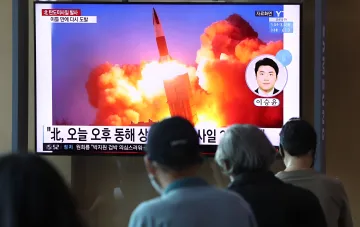
A joint study by Chinese universities and China's Seismological Administration has revealed an anomalous picture beneath one of North Korea's nuclear test sites: the underground explosions carried out by the DPRK may have activated ancient tectonic faults, which continue to shift and generate seismic activity nearly nine years after the last test. According to available data, North Korea has conducted at least six large-scale underground nuclear explosions, the last and most powerful of which took place in September 2017 with an estimated yield of 100 to 250 kilotons of TNT equivalent — at least ten times the energy of the bomb dropped on Hiroshima.
What seismologists found
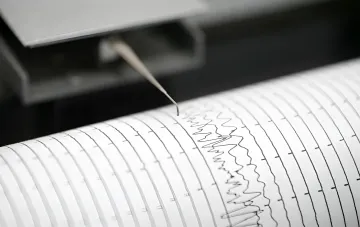
The key finding of the study is that seismic activity in the area of the test site (the sources mention Mount Mantap, where an estimated 1,400 test-related tremors have been recorded) has not weakened over time; on the contrary, it is expanding. This fundamentally distinguishes the situation from the typical behavior of aftershocks: after a powerful explosion, the Earth's crust usually 'settles down,' and residual tremors quickly fade near the epicenter. In the case of North Korea, by contrast, a sustained continuation and even spatial expansion of seismic activity is observed, pointing to a different mechanism behind its occurrence.
Difference from US and Soviet test sites
For comparison, the researchers cited the experience of Cold War-era underground tests in the US (the Nevada test site) and in the USSR (Semipalatinsk). There, the explosions also triggered aftershocks — so-called 'investigative stress' on the Earth's crust — but these tremors lasted only a few days or weeks and then quickly subsided near the epicenter. The contrast with the Korean case, where activity has persisted for years and has not diminished, is considered by scientists to be the main evidence that in North Korea it was not simply a local 'response' of the rock to the explosion, but a deeper tectonic process that was set in motion.
Tectonic faults as the cause
According to the authors of the study, the powerful underground explosion of 2017 (as well as the preceding tests) activated old tectonic faults, which have continued to shift gradually ever since. It is precisely this slow displacement of rock, rather than a direct consequence of the explosion, that sustains the background seismic activity in the area of the test site. Thus, the nuclear tests served as a kind of 'trigger,' waking up tectonic structures that had previously been in a relatively calm state.
A problem for the non-proliferation regime
The described dynamics creates a serious practical problem for compliance with and monitoring under the Comprehensive Nuclear-Test-Ban Treaty (CTBT). Since underground tremors are being recorded nearly nine years after the last known explosion, it is becoming increasingly difficult for international observers to distinguish natural tectonic earthquakes from possible clandestine underground nuclear tests. The background 'seismic noise' generated by North Korea's own tests effectively hampers verification and reduces the sensitivity of monitoring systems in the region.