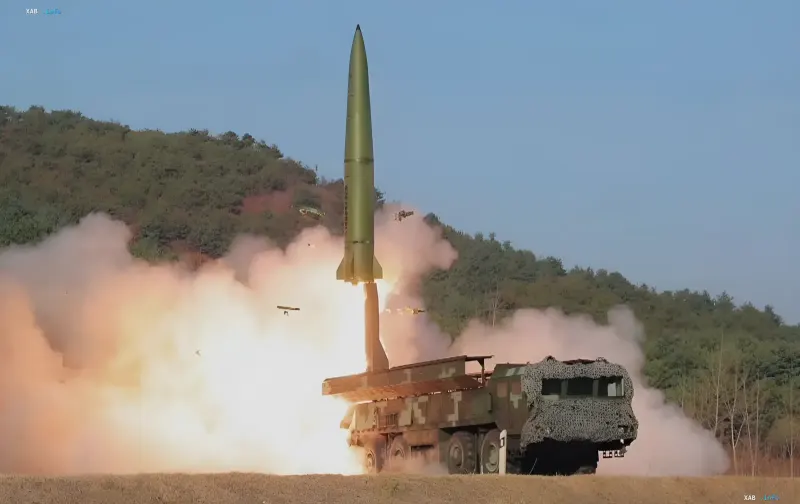
On August 12, 2026, North Korea conducted a ballistic missile launch from the Wonsan area on the country's east coast. According to the South Korean Joint Chiefs of Staff (JCS), the launch was detected around 06:00 local time. The missile traveled approximately 700 kilometers and fell into the water east of the Korean Peninsula, missing Japan's exclusive economic zone. This marks the eleventh ballistic missile test by Pyongyang this year and the second launch in the past week.
Timeline and Technical Parameters of the Launch
The launch occurred on the eve of joint US-South Korea military exercises named "Ulchi Freedom Shield," scheduled for the period from August 17 to 27, 2026. Pyongyang traditionally responds to such maneuvers with missile tests, referring to them as "war rehearsals." Japanese sources report that the missile reached a maximum altitude of about 90 km and traveled approximately 690 km. The South Korean side estimates the flight range at over 700 km. Both figures correspond to the characteristics of short-range ballistic missiles.
Possible Missile Identification: Hwasong-11A (KN-23)
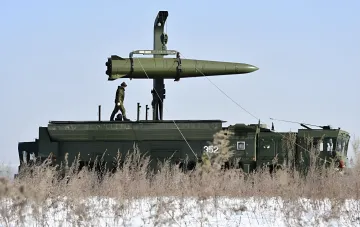
Experts believe the missile launched on August 12 could be a modification of the Hwasong-11A, known in the West as the KN-23. This solid-fuel missile is launched from a mobile launcher and has a range of 700 to 800 km depending on the modification. It is often compared to the Russian "Iskander-M" system due to its similar configuration. Professor Yang Mu-jin from the University of Korean Studies in Seoul suggests that the new launch may be linked to testing a modification of the Hwasong-11 capable of carrying a tactical nuclear warhead. However, there is no official confirmation of the missile type from North Korea.
Conflicting Data
There are discrepancies in estimates of the missile's flight range: Japanese sources indicate 690 km, while the South Korean side cites a figure of over 700 km. There is also no consensus regarding the success of the previous launch from the same Wonsan area, which took place six days ago and was not officially commented on by Pyongyang. Seoul admits that the previous test may not have been entirely successful, and the new launch was aimed at continuing the test program.
Context: Use of North Korean Missiles in the Conflict in Ukraine
KN-23 missiles produced by North Korea are actively used in the conflict in Ukraine. On the night of August 11, 2026, occupiers launched a massive strike on Zaporizhzhia using these missiles. According to the Institute for the Study of War (ISW), Russia has changed its tactics for using North Korean missiles: instead of massive salvos, single KN-23 launches are now carried out as part of night strike packages along with other types of weaponry. This allows for the conservation of scarce S-400 and "Zircon" systems.
Reaction of Regional Players
Tokyo reported that the missile fell outside Japan's exclusive economic zone, with no casualties or damage recorded. Washington and Seoul emphasize the defensive nature of the "Ulchi Freedom Shield" exercises, yet Pyongyang continues to view them as a threat to national security. Experts note that the frequency of North Korean missile tests in 2026 has increased significantly, indicating an intensification of its military program.